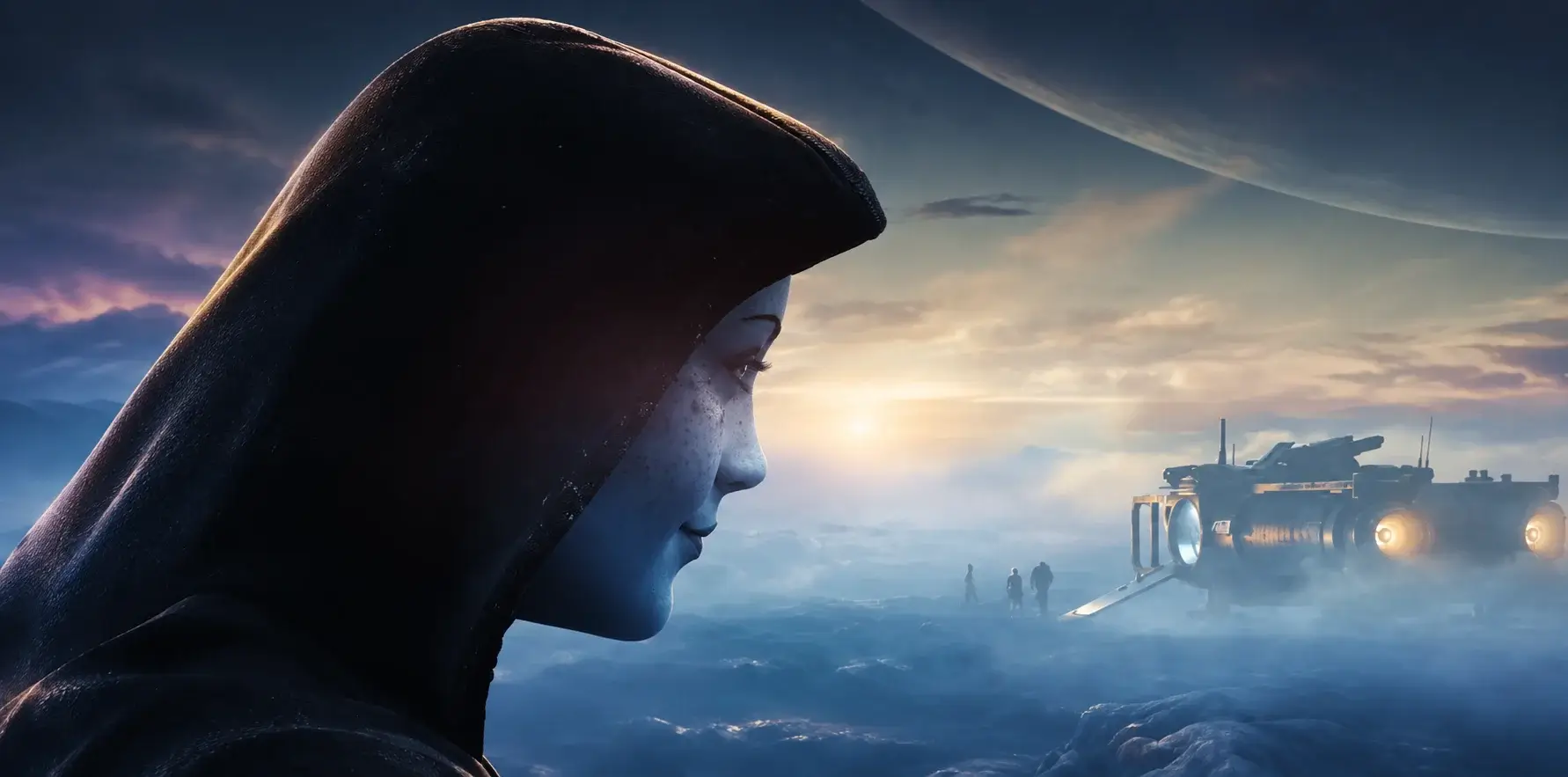


There could be no better way to bring this Mass Effect feature to a close than by exploring the future of the universe created by BioWare. A universe that has accompanied us for almost two decades, introduced us to characters we will never forget, and gave us the opportunity to write our own story through the choices we made. After the original trilogy, Andromeda, and the return to the first three games through the Legendary Edition, the next major stop is the television adaptation being developed by Amazon MGM Studios. However, before we get anywhere near its premiere, the future of BioWare itself has taken a very different and deeply disappointing turn.
The Mass Effect TV Series Moves to Amazon
The attempt to bring Mass Effect to the screen is nothing new. As early as 2010, plans were underway to create a feature film, with Legendary Pictures acquiring the relevant rights in collaboration with Warner Bros. The project, however, never moved forward and was eventually abandoned. In 2021, the first reports emerged about discussions between Amazon and Electronic Arts, but it took another three years before anything substantial happened.
In November 2024, Variety confirmed that Amazon MGM Studios was officially moving forward with the development of a television series based on Mass Effect. The production is intended for Prime Video and falls under the Amazon MGM Studios umbrella. However, no premiere date, episode count, or official release window has been announced so far. There is also no confirmed figure for the overall budget. Considering that we are dealing with a universe featuring different planets, alien races, spacecraft, advanced technology, and large-scale space battles, it is reasonable to expect a demanding production with significant visual effects requirements. That, however, does not allow us to quote specific figures in the millions without official information.
The latest update is particularly important: following BioWare's closure in October 2026, reports citing sources within Prime Video indicated that the television series remains in development and that the key creatives previously announced are still attached to the project. This does not mean that filming has started or that the series has received final approval for release. It does, however, mean that the television project was not cancelled alongside the next video game.
Who Is Behind the Production?
The name that stands out on the creative side is Daniel Casey, who has been appointed to write the screenplay and is also involved as an executive producer. Casey has worked on productions such as 10 Cloverfield Lane and Fast & Furious 9, and has also been associated with Kin. Doug Jung is serving as showrunner, known for his work on Star Trek Beyond, The Cloverfield Paradox, and Mindhunter. His role is particularly important, as he will be responsible for the overall creative direction and the organisation of the television narrative.
The executive producer team also includes Karim Zreik, through his production company Cedar Tree Productions, Ari Arad, and Michael Gamble from the BioWare and Electronic Arts side. Zreik has worked on Marvel television productions such as Daredevil, Jessica Jones, Luke Cage, and The Punisher, while Arad has been involved in film productions including Uncharted, Borderlands, and Ghost in the Shell.
Michael Gamble's involvement is perhaps the most interesting aspect for longtime fans of the franchise. Gamble was a key figure at BioWare and had been leading the next Mass Effect project. He knows the universe, its mythology, and the creative direction of the franchise from the inside. His presence in the television production represented an important link between Amazon and the people who created the games. Following the developments at BioWare, it remains to be seen how his role in the project will take shape in practice.
Another positive element is that, according to Daniel Casey, people from the team that worked on the television adaptation of Fallout will also be involved in the production. Fallout's success demonstrated that a television production can respect the source material of a video game while creating a standalone story that also works for viewers who have never played the game. That experience could prove extremely valuable for Mass Effect.
Will We See Commander Shepard Again?
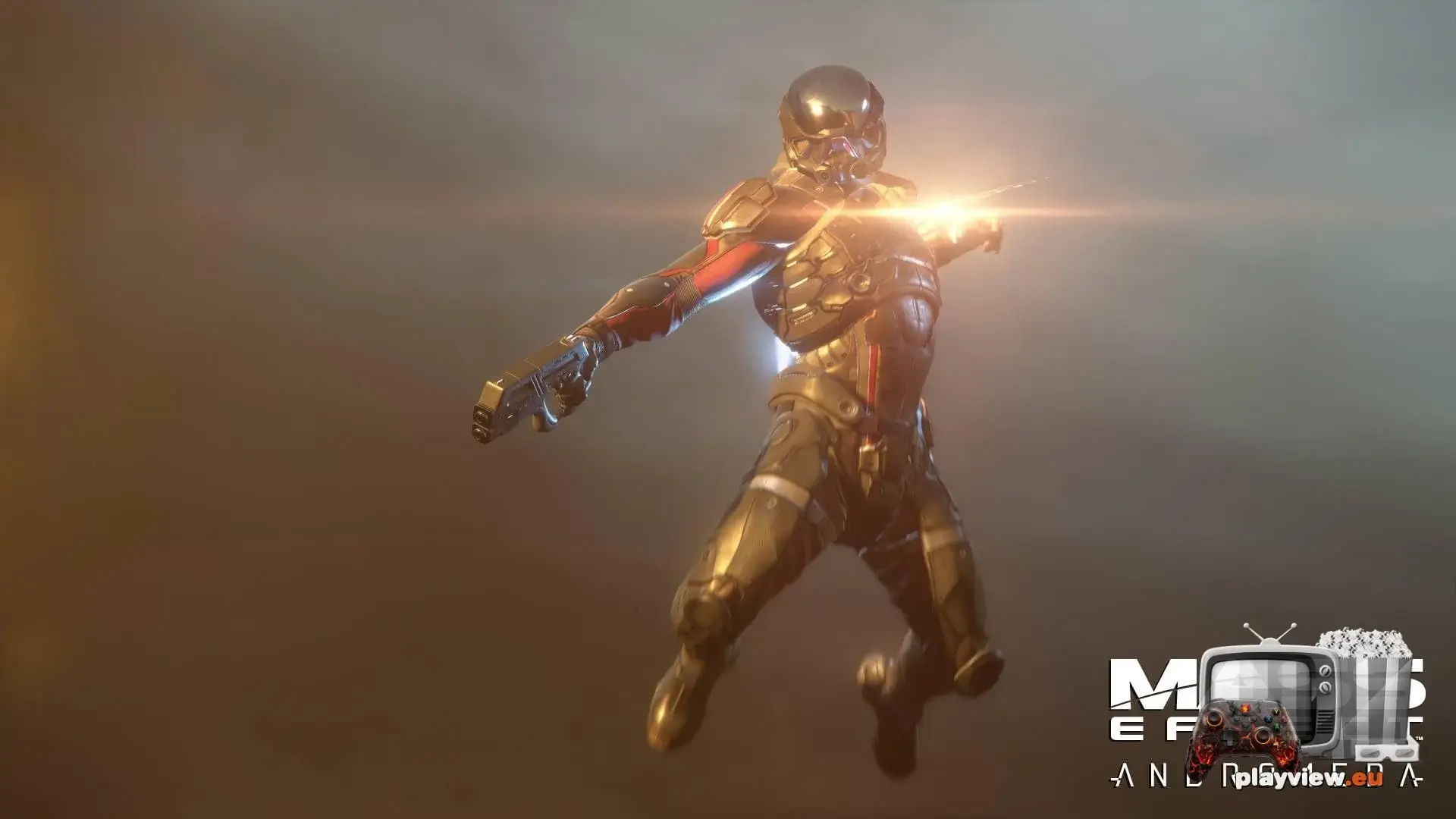
This is perhaps the most important creative decision that has become public so far. The series will not retell Commander Shepard's story, nor will it be a straightforward television adaptation of the original trilogy. Michael Gamble made it clear in 2025 that the production would present an entirely new story, set after the events of the original trilogy.
The decision makes sense. Anyone who has completed all three games knows that Mass Effect never had just one version of its story. Our choices influenced characters, relationships, political balances, and ultimately the outcome of the conflict with the Reapers. Even the ending of Mass Effect 3 could take different forms. A television production attempting to adapt Shepard's adventure directly would inevitably have to choose one specific version of events, leaving out a significant part of each player's personal experience.
By contrast, a new story set after the original trilogy gives the creators the opportunity to explore a galaxy that has already endured an enormous catastrophe. How have relations between the different species evolved? What is humanity's position now? What has become of the Citadel? How have the political and military powers reorganised themselves after the war? And, most importantly, what new threat could once again unite a galaxy that has only just managed to survive?
These are questions that could form the foundation of an excellent series. For now, however, no detailed plot synopsis has been made public, no new character names have been revealed, and there is no information about which familiar characters might return. The setting after the original trilogy is confirmed; what exactly will happen remains a mystery.
Is There a Cast? Which Actors Will Take Part?
As of November 13, 2026, there has been no official cast announcement. No actors have been confirmed for leading or supporting roles, and no characters have been introduced as the central figures of the story. Therefore, any lists of names circulating online should be treated as rumours rather than actual Amazon announcements.
One name that has been mentioned repeatedly among fans of the franchise is Henry Cavill. The actor has previously expressed his love for Mass Effect and his interest in potentially taking part in an adaptation. However, this does not mean that he has received an offer or been cast in the series. The fact that he has been associated with other major Amazon productions is not evidence of his involvement in this particular project.
Personally, I would prefer to see a cast that serves the new characters rather than an attempt to recreate the protagonists of the games at all costs. Mass Effect has an enormous universe and does not need to rely exclusively on Shepard, Liara, Garrus, or Wrex to tell a compelling story. What it needs is a cast capable of conveying the intensity, personal conflicts, and emotional weight that defined the original trilogy.
What Do We Know About the Script and the Changes That Were Discussed?
The fact that the series will tell a new story does not mean that it will distance itself from the history and established rules of Mass Effect. Gamble had mentioned that the writing team was working on the series' place within the official universe and its relationship with the next game. In 2025, he spoke about an active writers' room where significant elements connecting the television story to the franchise's canon had already been explored.
There were also reports during 2026 claiming that Amazon wanted changes to be made to the scripts so that the series would appeal more directly to viewers who had never played the video games. The information caused concern among many Mass Effect fans, who feared that the universe's mythology might be oversimplified. Daniel Casey, however, publicly responded that he had not been asked to do anything of the sort and that he did not know where the information had originated. Consequently, we cannot present the alleged changes as a confirmed creative directive from Amazon.
It is perfectly reasonable for the series to work for someone who has never spent hundreds of hours aboard the Normandy. That, however, does not mean it should lose the complexity that made Mass Effect special. The political balances, the different species, the relationships between characters, the history of the Protheans, and the technology behind the Mass Relays are elements that cannot simply be treated as decorative scenery. They are the heart of this universe.
BioWare's Closure and Electronic Arts' Decision
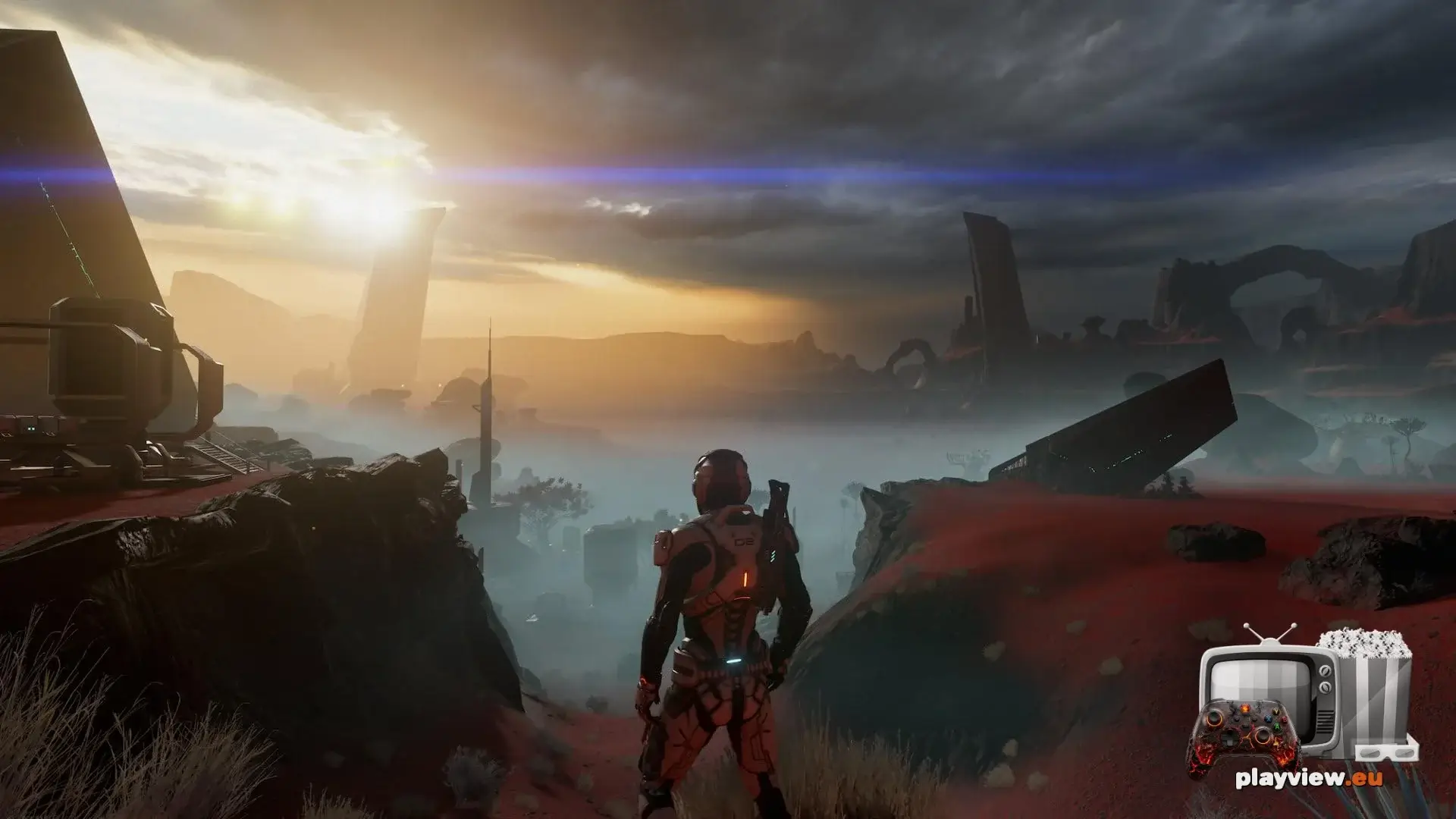
And while we are waiting to learn more about the television series, on October 21, 2026, news arrived that would have been difficult for any BioWare fan to imagine. Electronic Arts announced that it would no longer continue development of the next Mass Effect and that it would close BioWare's Edmonton studio, along with that particular workplace. The decision became known through an internal EA message to employees, which was subsequently made public.
The company described the decision as part of a broader restructuring and referred to changes in the market and its new priorities. For those who have followed BioWare's journey, however, the result is far more painful than a simple business restructuring. A studio that created Mass Effect, Dragon Age, and Baldur's Gate, helped shape the modern RPG genre, and spent decades giving players stories with genuine emotional weight had reached the end of its journey as an independent creative team.
This development came after years of problems, changes, and departures, as well as the release of Dragon Age: The Veilguard. The next Mass Effect was in development (there had been a teaser image released), but according to EA itself, only a small team was working on the project and the game remained in an early stage. The decision to discontinue its development also led to the studio's closure.
The ... Trailer for Mass Effect: Universe and the Bar Scene
One day after EA's announcement, on October 22, a video appeared on Reddit, presented as an internal trailer for the cancelled game. At the end of it, the title Mass Effect: Universe appeared. There were initially doubts about its authenticity, but Bloomberg journalist Jason Schreier confirmed that it was genuine material from the game BioWare had been developing. IGN also confirmed its authenticity.
The video begins with a warning explaining that it is in-engine footage created by a small team using pre-production assets. The central scene takes place in a bar, where a man wearing an N7 coat meets an Asari. The new protagonist appears to have served in the Alliance military and subsequently moved into a different, more unofficial line of work. He talks about his job and his efforts to stop conflicts before they begin, making decisions that others are not willing to make.
The conversation, however, turns out to be a trap. The Asari reveals that she is actually behind the conflicts he has been trying to prevent. His allies then appear, and an impressive fight breaks out inside the bar. We see the use of biotics, enemies trapped in mass effect fields, and objects crushing opponents. At the climax of the scene, Liara T'Soni is also revealed, apparently taking part in the action alongside the new protagonist.
The trailer also includes brief shots of other locations in the game: a vehicle travelling across an icy planet, a gigantic alien creature inside a glass chamber, and a group examining a holographic map filled with points of interest. All of this gives the impression of a game with considerable scale, but also with a more espionage-driven and political approach to its storytelling.
It is important to clarify that the video is not a gameplay presentation and does not reveal a complete script. It is a cinematic sequence from pre-production, created using material that had not yet been completed. We do not know whether the bar scene would have remained exactly as shown in the final game, or whether the story had reached its definitive form. Nevertheless, it gives us a valuable glimpse into the direction the team was exploring.
What Story Would the Cancelled Game Have Told?
Based on the trailer and the information that has been published, it appears that the new Mass Effect would have followed a new human protagonist with a military background, who would undertake missions to prevent conflicts before they developed into greater threats. Liara's presence suggests that the story would have maintained a direct connection to the original trilogy, while a return to the Milky Way would have allowed the creators to explore the consequences of the war against the Reapers.
Reports that followed the leak described the concept as a smaller-scale spy thriller set within the Mass Effect universe. This direction could have represented an interesting change from the story of an enormous, galaxy-wide threat. Instead of once again starting with a war that threatens all life, we would have followed a character moving between political conspiracies, covert missions, and conflicts involving different factions.

On the writing side, two names became known after the closure announcement. Catherynne M. Valente and Derek Künsken revealed that they had been working on the game for years. Künsken spoke enthusiastically about what the team had been preparing, while Valente described her involvement as one of the most significant creative experiences of her life. Their statements show that behind the cancelled project was a team of people who had invested considerable time and creative energy in it.
Despite all of this, the game's complete script has not been made public. There is no confirmed full synopsis covering every mission, character, and the ultimate direction of the story. It would be wrong to present the scenes from the trailer as though we know the entire plot. What was lost was a project that was still in early development, but had already begun to develop its own distinct identity.
The #SaveMassEffect Campaign and the Fans' Signatures
The community's reaction was immediate. On October 21, 2026, the #SaveMassEffect campaign was launched on Change.org, asking Electronic Arts to continue developing the franchise or, alternatively, to transfer or sell the rights to another studio capable of continuing the story. The request is about more than bringing back another game. It asks for the people who created this universe to be given the opportunity to continue working on it.
By the time this article is being written, the campaign has exceeded 326,000 verified signatures. I have, of course, already added my own signature. I do not believe that a single signature can overturn the decision of such a large company, but when we are talking about a franchise that has influenced millions of people, I believe the community deserves to have its voice heard. And we are certainly not a small community.
The mobilisation has not been limited to the internet. The community organised initiatives, raised money for advertising campaigns, appeared with messages outside EA's offices, and even brought #SaveMassEffect to Times Square. N7 Day on November 7, 2026, therefore took on a different meaning: instead of being solely a day celebrating the franchise, it became part of a worldwide effort to prevent its future from disappearing.
The Canadian Government's Intervention and the Possibility of Saving BioWare
One of the most interesting developments came from Canada, where BioWare was headquartered in Edmonton. New Democratic Party MP Don Davies supported the idea of giving BioWare employees the opportunity to reacquire the studio and operate it as an independent Canadian company. To that end, an official parliamentary petition was submitted to the Canadian government, asking it to consider providing the necessary capital for BioWare to regain its independence, together with its intellectual property.
This is not simply another online campaign. The parliamentary petition exceeded the required threshold of 500 valid signatures and can proceed to the process of being presented or tabled in the House of Commons. Following its formal presentation or tabling, the Canadian government is required to respond within 45 calendar days. The petition remains open for signatures until March 4, 2027.
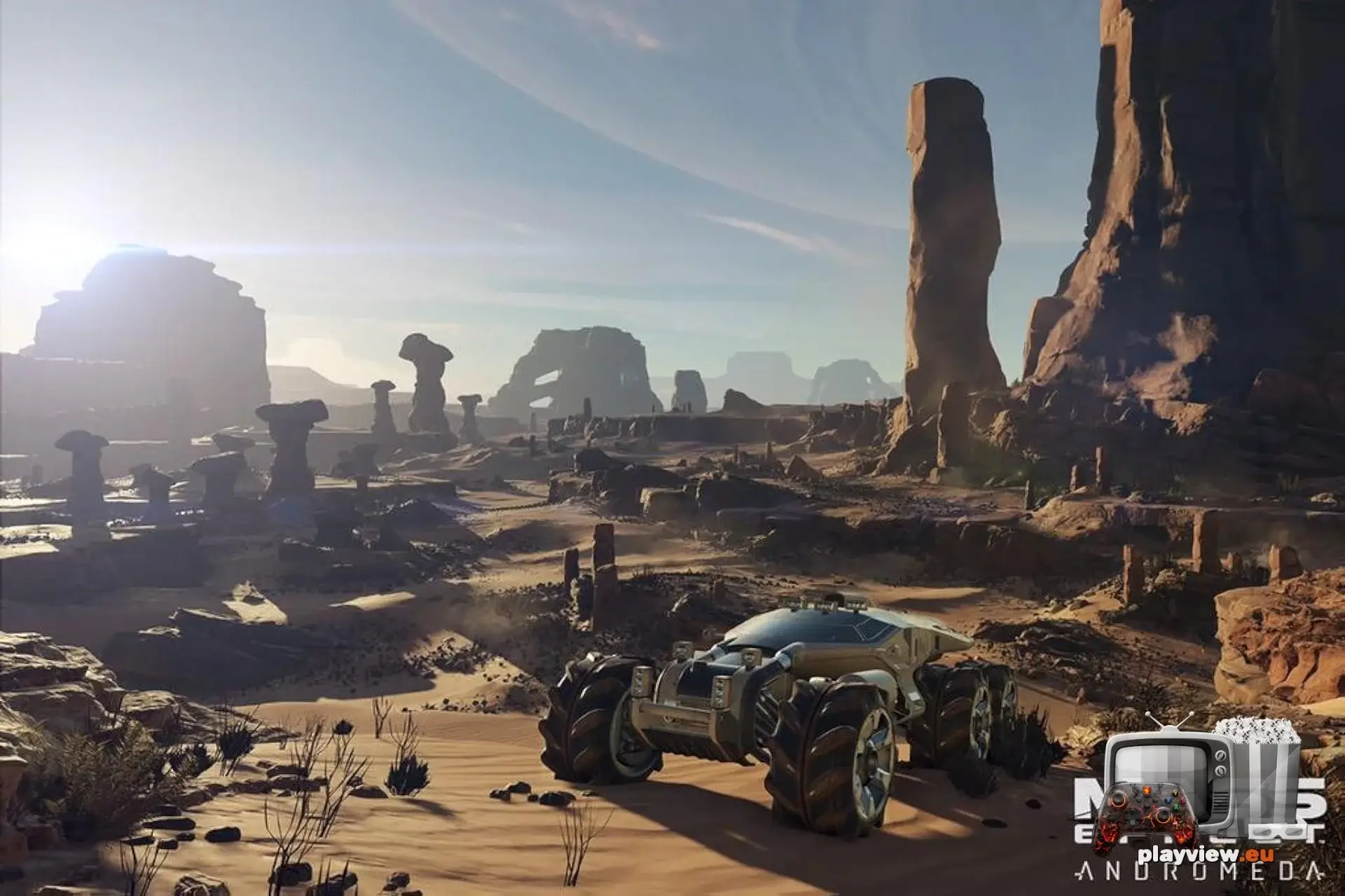
Don Davies has stated that BioWare represents an important part of Canada's cultural and creative industries and that its employees should have the first opportunity to buy the studio back. There has also been public support for the idea from NDP figures, with the proposal being to treat BioWare not simply as a company that has closed, but as an important creative asset that could continue operating under Canadian ownership.
Of course, this does not mean that the government has already decided to finance the purchase. There are significant obstacles. BioWare and the rights to its games belong to Electronic Arts, which has expressed no interest in selling them. Furthermore, the NDP is not the governing party. Therefore, the proposal is real and has formal institutional standing, but saving the studio remains a difficult possibility rather than something that is already underway.
Could Another Company Buy BioWare or the Mass Effect Rights?
As soon as EA's decision became public, discussions naturally began about whether another company could take over Mass Effect. The first possibility would be the acquisition of BioWare itself by another company, allowing the team to be preserved and game development to continue. The second would be the sale or licensing of the Mass Effect rights to a new developer, without necessarily reopening the original studio.
So far, however, there has been no confirmed acquisition offer from Larian Studios, Microsoft, Sony, or any other major company. Nor has there been an official announcement that EA is looking for a buyer for BioWare or Mass Effect. Therefore, any mention of a specific interested buyer should be treated as speculation.
One example that often comes up in these discussions is Larian Studios and Baldur's Gate 3. There is, however, an important clarification to make here: Larian did not buy the rights to Baldur's Gate or Dungeons & Dragons. It developed the game under a licence from Wizards of the Coast, which retains ownership of the intellectual property. The example demonstrates that an independent developer can take on a major and historic franchise through a licensing agreement, not that it necessarily has to purchase the entire intellectual property.
Something similar could theoretically happen with Mass Effect. EA could grant a licence to another studio or sell the rights if it chose to do so. An agreement could also include the involvement of former BioWare employees, helping preserve the franchise's creative identity. It is a possible business model, but so far there is no confirmed agreement or specific potential buyer.
My Personal View — A Universe That Deserves to Continue
If there is one thing this entire story leaves me with, it is a profound disappointment at the way a studio responsible for creating some of the most important RPGs in video game history has been treated. It is not just the fact that yet another Mass Effect game has been cancelled. It is the fact that behind that name were people, creators, writers, artists, and programmers who devoted years to building worlds we keep returning to again and again.
Mass Effect is not simply a video game franchise that can be continued by any team, as long as it has the name and the rights. It is a world with a specific philosophy, characters with history and development, choices that carry consequences, and an emotional connection that is not easily recreated. That is why the involvement of the people who created it should be a fundamental priority in any possible return of the franchise.
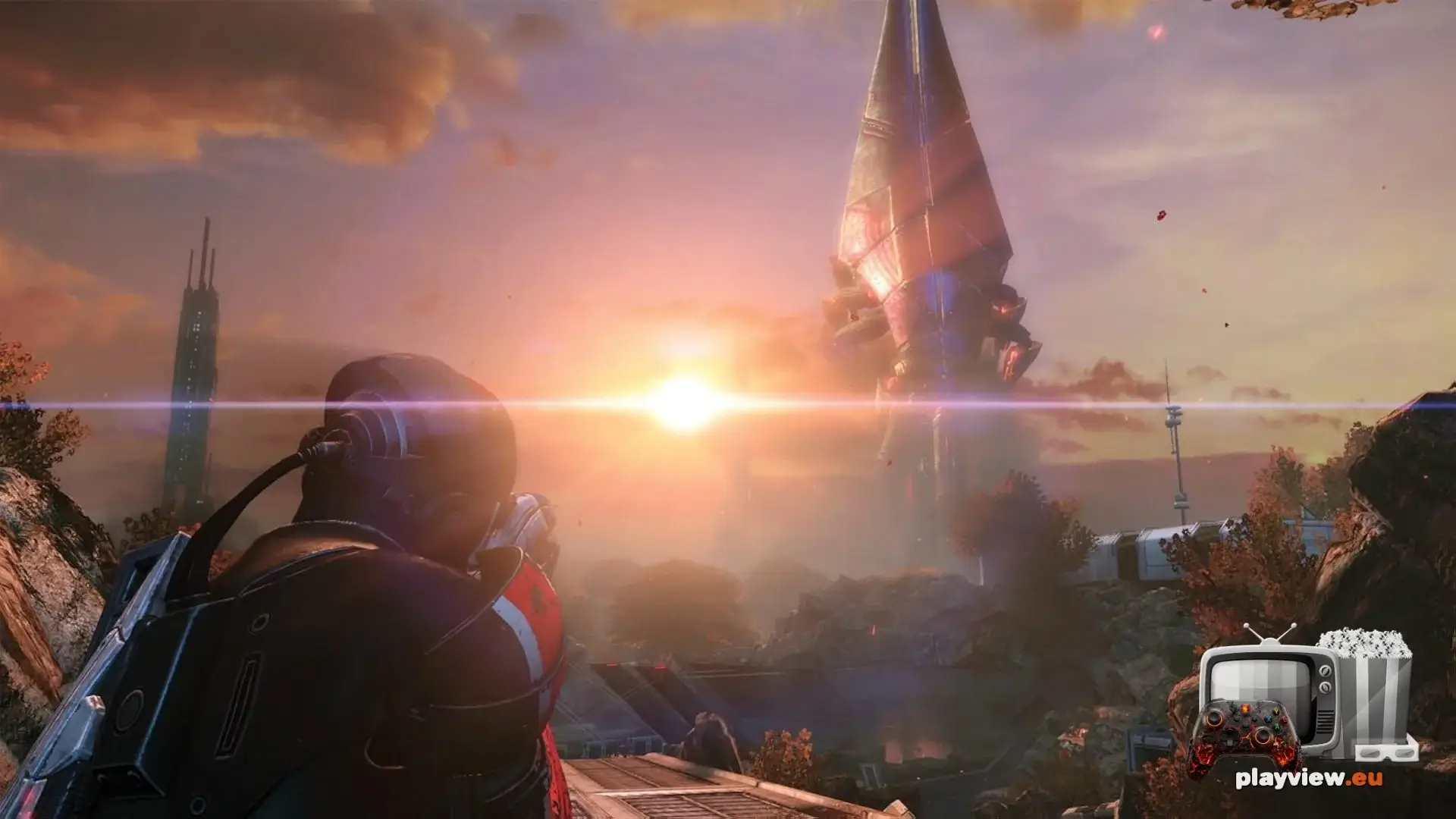
As for Amazon's television series, I genuinely want it to succeed. The idea of a new story set after the original trilogy is interesting and could open up new possibilities for the universe. We do not need to see Shepard fighting the Reapers again to feel that we are in Mass Effect. What we need is the same attention to mythology, characters, and choices that made this franchise special. And, of course, we need a production that does not treat this universe as just another recognisable brand with which to attract subscribers.
Verdict
This feature began with my personal love for the original trilogy and evolved into a journey through BioWare's history, its successes, disappointments, changes, and attempts to bring the franchise back. Today, it comes to an end with a question that remains unanswered: will there truly be a future for Mass Effect beyond Amazon's television series? I want to believe that there will be. And I would like that future to be written once again by the people who made us fall in love with this galaxy.
We are Mass Effect.


Comments
Loading comments…