
52 hours in Remedy's insane universe and a sequel that exceeded my expectations

When I started Control Resonant, I thought it would wrap up pretty quickly. The reason I had that impression was because I assumed they’d made a spin-off set in the Control universe mostly to test out a different gameplay style, without investing heavily in the game world itself. I was proven spectacularly wrong. It took me several days to beat—around 50 hours in total.
Granted, I got pretty bogged down in a few side stories I was determined to finish, but overall, the entire experience was stellar! A few times I felt like they were stretching the narrative a bit thin, but the graphics and the sheer amount of things you can do were wildly addictive. I read that sales have done exceptionally well, which is a huge relief for me since Remedy is a personal favorite studio, and I hope they keep doing what they’ve been doing for years: crafting fantastic gaming experiences.
A sequel that wasn't afraid to change everything
The original Control was released in 2019, introducing us to Jesse Faden as she searched for her brother, Dylan, inside the Oldest House—the strange headquarters of the Federal Bureau of Control. It was a shape-shifting building filled with supernatural entities, secret experiments, and objects that defied every law of physics.
CONTROL Resonant switches protagonists, finally giving us the chance to get to know Dylan better. He isn't just a familiar face from the previous game, but a character with a completely different perspective on the world, carrying a remarkably heavy past.
The story is set several years after the events of the first game. Dylan has spent seven years in a coma following what went down with the Hiss. The FBC still treats him as a highly dangerous subject, while his sister, Jesse, has now taken over running the organization.
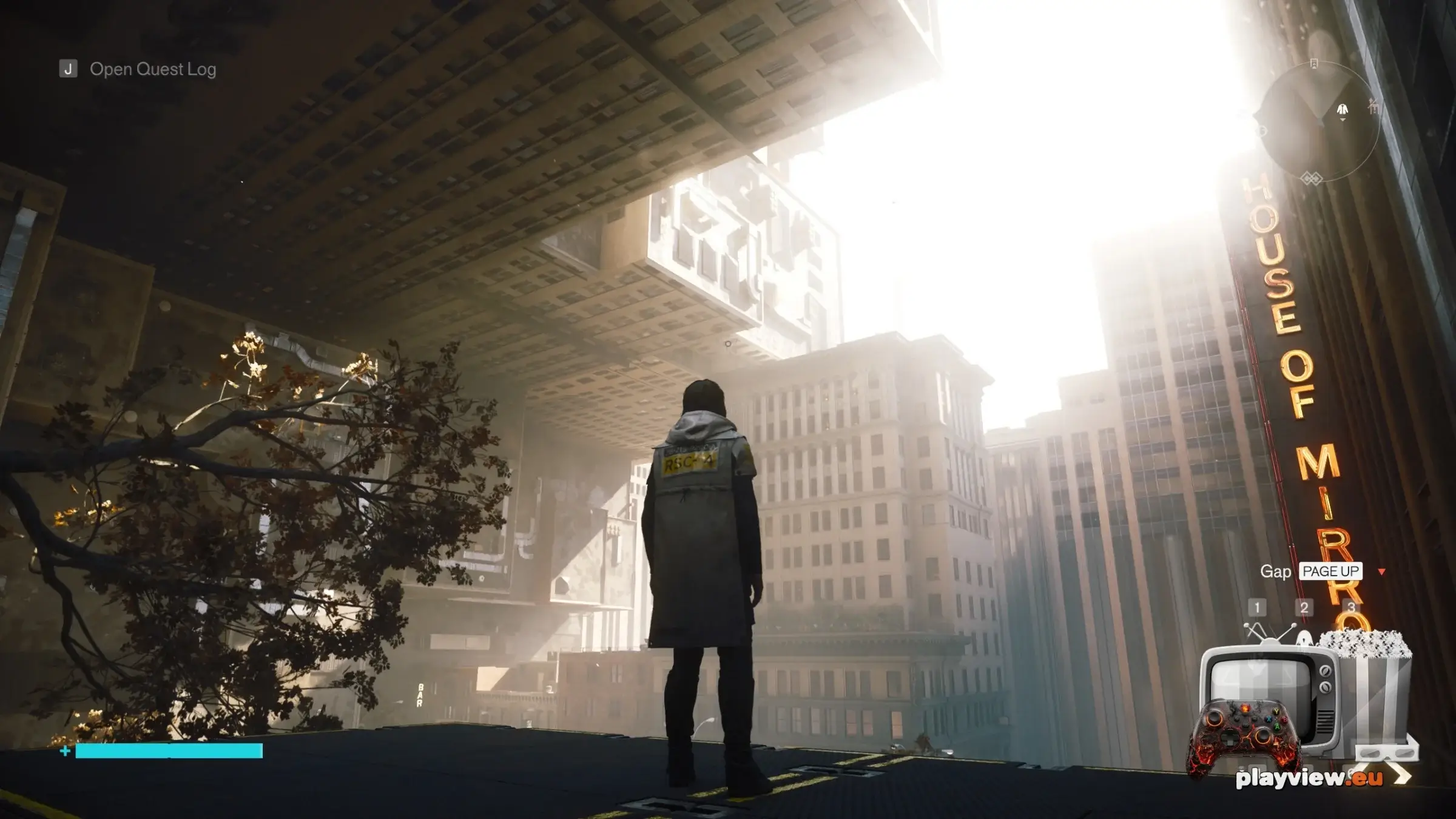
When a new paranormal crisis starts to spread, Manhattan transforms into a playground where reality no longer obeys the rules. Buildings morph, streets float in mid-air, entire neighborhoods warp into strange new geometries, and a fresh threat known as Patterning begins to take hold of the world.
Dylan suddenly finds himself right at the epicenter of it all. His mission is to confront the crisis, discover what happened to Jesse, and figure out where he truly belongs in a world that treated him for years as a prisoner and a lab rat.
What I appreciated most is that Remedy didn't treat the narrative as a mere excuse to build a bigger world. The bond between the two siblings forms the story's emotional core. Dylan is trying to find his identity, come to terms with what he did under the influence of the Hiss, and finally claim a normal life for himself.
And right here lies one of Remedy's most interesting choices: a character who in the first game was essentially at the center of a mystery now gets their own personality and takes center stage in a much bigger adventure.
Manhattan becomes a massive supernatural nightmare
If anything stands out from the very first minutes, it's the art direction.
Remedy takes a city we all know and turns it into something completely different. We’re not just talking about destroyed buildings or abandoned streets. The very architecture of the world seems to have lost all logic.
Areas connected in bizarre ways, floating buildings, colossal structures, and environments that feel straight out of a nightmare. Exploration plays a major role in the experience, and it's one of the main reasons I ended up sinking far more time into it than I had originally planned.
Especially once you start uncovering the city's secrets, side quests, and various FBC documents, you realize just how much work went into the world building.
Remedy has a special knack for building environments that tell a story without necessarily needing dialogue. A single room, an object, or a bizarre experiment can give you more information than an entire dialogue scene.
And that's something I love about their games.
The Aberrant completely changes the combat philosophy
The biggest change compared to the original Control lies in the gameplay.
Jesse had the Service Weapon at her disposal, a shapeshifting gun that offered different attack modes. Dylan takes a different path with the Aberrant, a supernatural weapon that transforms and serves as his primary tool in combat.
Remedy largely moves away from traditional shooter mechanics and leans much closer to the action-RPG genre. Engagements are much more close-quarters, demanding a different approach to managing abilities and placing a heavier emphasis on movement, attacks, and chaining your available powers together.
There's a character progression system, upgrades, and plenty of customization options. The Aberrant gains new forms and attacks, while Dylan's supernatural powers significantly expand our options.
What I really liked is that the use of powers isn't restricted to combat. Traversal and exploration are directly tied to his abilities, creating a very different experience from the one we got back in 2019.
Of course, this is also where I spotted some of the title's weaknesses. Certain encounters can feel repetitive, and there were moments where I felt the game was trying to pad out its runtime without always offering something genuinely new.
On the flip side, the variety of enemies, impressive encounters, and the steady progression of Dylan's abilities keep you thoroughly hooked.
The people at Remedy behind CONTROL Resonant
It's hard to talk about a Remedy game without mentioning the people behind its creation.
First on the list is, of course, Mikael Kasurinen, Creative Director of CONTROL Resonant and one of the studio's key creative forces. He has closely tied his name to the Control series, and this time around he takes on the tough task of steering the franchise in a fresh direction.
Switching from Jesse to Dylan, pivoting from a shooter to an action RPG, and creating a much larger Manhattan were no simple decisions. They demanded a different design philosophy and, above all, faith that the audience would embrace this new approach.
Kasurinen has described the game's development as a seven-year process filled with experimentation, tweaks, and redesigns until the team achieved the exact result they were aiming for.
Handling production is Juha Vainio, Executive Producer, who has a long history with the team and especially with the actors bringing the main characters to life. His contribution was also vital in maintaining continuity between the two games.
On writing duties, we find Ashley Smith, with Kasurinen himself also contributing to the game's writing. It's a key collaboration, given that the story had to tie together Dylan's past, his relationship with Jesse, and the new paranormal threats without losing Control's mysterious identity.
On the gameplay design front, Lead Gameplay Designer Sergey Mohov stands out, while Lead Level Designer Anne-Marie Grönroos played a major role in crafting the environments and missions. Elmeri Raitanen took charge of Art Direction, shaping the game's distinct aesthetic.
Composer Petri Alanko also deserves a special shout-out, having collaborated with Remedy on previous projects as well. The soundtrack is an integral part of the atmosphere, helping create that signature sense of unease that accompanies exploration.
Of course, I couldn't leave out Sam Lake. The creative director and one of the key figures who defined Remedy's identity has linked his name to major titles like Max Payne, Alan Wake, and the original Control. However, we shouldn't confuse the studio's overall creative legacy with a specific writing credit on Resonant. This new story has its own creative team.
The Actors Bringing the Characters to Life
Just as important is the cast, given Remedy's long-standing tradition of heavily investing in cinematic presentation and strong performances.
Sean Durrie – Dylan Faden: Takes on the lead role of the protagonist for the first time. His performance is particularly crucial, as he's tasked with portraying a man trying to escape his past and regain control of his life.
Courtney Hope – Jesse Faden:Returns to the role that defined her in the Control universe. Even though she's no longer the playable lead, her presence remains pivotal to how the story unfolds.
Frankie Kevich – Zoe de Vera: A major new addition, serving as Dylan's companion and FBC liaison throughout the adventure.
Antonia Bernath – Emily Pope: Returns to her role as Emily, who continues to hold a key position within the organization.
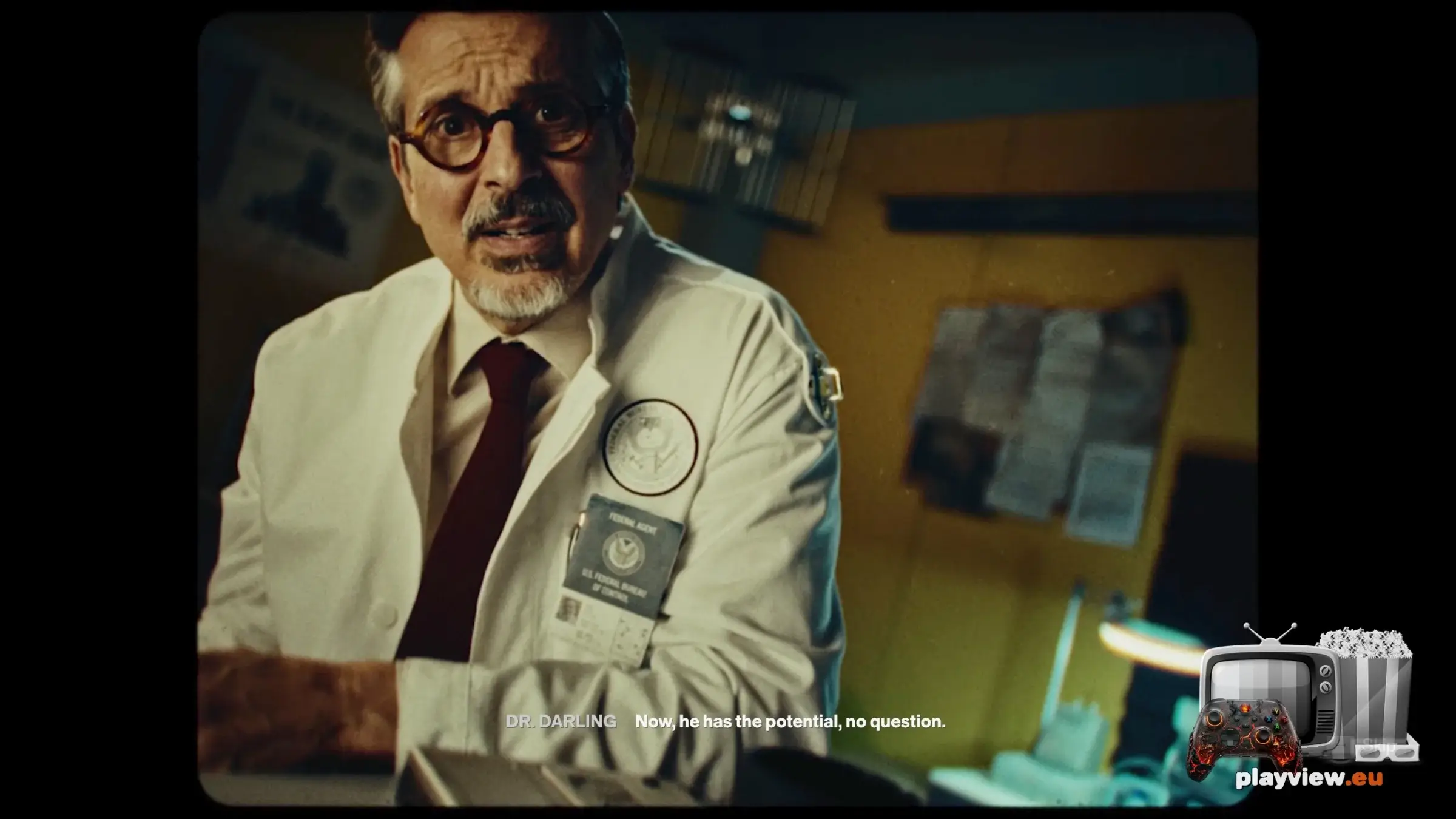
Matthew Porretta – Dr. Casper Darling: One of the first game's most memorable characters, with his past and research closely tied to unfolding events.
Ronan Summers – Simon Arish:Returns as a member of the FBC.
Derek Hagen – Frederick Langston: Another familiar face from the world of Control.
The dynamic between Sean Durrie and Courtney Hope deserves a special mention. Both actors have been tied to their characters for several years now, and their relationship serves as one of the story's main pillars.
Remedy didn't just need two strong performances. They needed to convince players that Dylan and Jesse are truly siblings, sharing memories, trauma, and emotions.
One of the most unexpected creative choices
One of the elements that stood out and sparked plenty of discussion is the Rebuild mission.
Without spoiling the details of the ending just yet, there's a point near the end where CONTROL Resonant temporarily abandons the third dimension, transforming into a game reminiscent of a classic '90s JRPG.
This particular section offers a fresh take on Dylan and Jesse's childhood, back when the pair first came into contact with the Slide Projector.
The aesthetic echoes games like EarthBound, Final Fantasy, and other classic titles of that era. But this isn't just a fun little interlude. The shift in gameplay serves the story, letting us experience the two characters' childhood from a completely different perspective.
In an interview with Game Informer, Lead Level Designer Anne-Marie Grönroos and Senior Level Designer Arhi Makkonen explained that the idea grew out of various pitches within the team. They initially discussed doing a text-based adventure, but ultimately opted to build a mini-JRPG instead.
What's most impressive is that this section was built right inside the Northlight Engine, which was never designed for games of this type. Makkonen explained that the 2D look is actually simulated inside a 3D space, with a significant part of the functionality coded specifically for this mission.
For me, decisions like these are exactly why Remedy stands out. They aren't afraid to take a risk, even if it means creating something they've never done before.
What Did the Critics Say?
The reception of CONTROL Resonant by the gaming press was overwhelmingly positive, though opinions varied when it came to the gameplay changes.
Based on Remedy's data from November 2, 2026, the game held an aggregate score of 83/100 on Metacritic. On Steam, 91% of recent reviews were positive, while the Metacritic user score had reached 8.8/10.
Some of the most notable reviews:
GameSpot – 9/10: Praised the new direction and the overall experience.
Video Games Chronicle – 5/5: Outstanding review, highlighting the successful genre shift, the atmosphere, and the performances.
IGN – 8/10: Positive take on the world and gameplay, with some reservations about the design of certain encounters.
Destructoid – 9/10:One of the highest scores.
PC Gamer – 76/100: Praised the exceptional work on the world building and atmosphere, but criticized the repetitive combat.
Eurogamer – 3/5: A more reserved review, raising reservations about its production direction.
The main takeaway across most reviews is that Remedy pulled off a tough feat: taking a recognizable franchise and shifting it into a different genre without losing its identity.
Personally, I agree that certain areas could have used a bit more polish, but I believe the overall creative effort deserves real credit.
The commercial success Remedy needed
Now, this is the part that made me happiest.
On October 15, 2026, Remedy announced that CONTROL Resonant had passed one million copies sold worldwide, just three weeks after its release on September 24.
Most importantly, it became the fastest-selling game in the company's 31-year history.
This success holds special weight, as Resonant marks Remedy's first major self-published release. The studio stepped up to handle publishing duties itself, while partnering with Annapurna for financing and expanding the franchise further.
Remedy CEO Jean-Charles Gaudechon described hitting the one million sales mark as an exceptionally strong start, emphasizing that the game managed to click with long-time fans as well as a sizeable chunk of newcomers.
In fact, according to data released by the studio, nearly half of Resonant's players were brand new to the Control universe.
That might actually be its biggest achievement. We're not just talking about a successful sequel, but a game that managed to expand the audience for a fairly niche franchise.
And there is another interesting angle to this. Remedy now has two recognizable universes—Control and Alan Wake—that it wants to keep investing in. The success of Resonant gives that strategy a major boost.
For a studio that has invested so much in storytelling and creating unique worlds, it’s really gratifying to see the audience responding.
SPOILERS – What happens at the end of CONTROL Resonant?
From this point on, major story spoilers are revealed, including the final showdown and the fates of Dylan and Jesse.
The finale revolves around Hedron, the entity behind the Patterning and the gradual distortion of reality.
As Dylan presses on with his mission, it turns out the threat is far bigger than a mere paranormal invasion. Hedron has linked itself to him, and destroying it isn't going to be a run-of-the-mill victory.
The final mission, titled The End, drives Dylan into a clash that transcends the physical realm. He initially tries to destroy Hedron's physical form, but it soon becomes clear that the entity has shifted its presence directly into his mind.
The FBC possesses a containment apparatus, the Mobile Containment Device (MCD), capable of incapacitating or even killing Dylan. When things spiral out of control, Zoe triggers the device, but it isn't enough to stop the threat.
Dylan manages to break free from the device and presses on in his attempt to confront Hedron inside his own mind.
This is where the story takes an even more personal turn. The fight is no longer just about saving Manhattan, but about freeing Dylan from the forces that have defined his entire life.
During the final showdown, even the Board tries to stop him from destroying Hedron. Dylan, however, presses on and ultimately manages to wipe it out inside Unknown 7.
The problem is that Hedron has become so deeply intertwined with his existence that destroying it threatens to drag him down with it.
And that's where Jesse comes in.
Just as Dylan is on the brink of destruction, his sister uses the Slide Projector once again and steps in to save him. Her move essentially swaps the positions of the two siblings.
Dylan survives, but Jesse ends up unconscious and in a coma.
This particular development carries a lot of emotional weight, as it essentially flips the ending of the original Control on its head. Back then, Jesse had managed to save Dylan, who was left in a coma. Now, Dylan is the one coming back to life, while his sister finds herself in the exact position he once was.
In the epilogue, titled The Beginning, we see Dylan trying to adjust to his new reality.
His relationship with the FBC shifts. The organization now officially acknowledges his existence, reissuing a birth certificate, while he takes on a new role as an associate of the Bureau rather than a prisoner.
The most pivotal moment, however, comes when he returns to the Oldest House to visit Jesse.
There he finds her in a hospital bed with Emily Pope at her side. Jesse remains in a coma, and Dylan essentially vows to find a way to wake her up.
The story wraps up without giving us a definitive answer regarding her fate.
Hedron has been destroyed, but the Hiss and the Mold still pose a threat in Manhattan. The Board remains a huge question mark, while the disappearance of Dr. Casper Darling has yet to be resolved.
And of course, Jesse's situation leaves a massive narrative window open for a continuation.
To me, it's a deeply intriguing finale. It doesn't take the easy way out with a clean-cut victory and a happy reunion between the two siblings. Instead, it concludes Dylan's personal journey while leaving Jesse's story open, alongside several of the universe's biggest mysteries.
Will We See CONTROL 3 or New DLC?
After an ending like that, it's virtually impossible not to ponder what comes next.
Remedy hasn't officially announced CONTROL 3, nor have they confirmed any story DLC that directly continues the narrative of Resonant.
However, the game's commercial success and management's own statements clearly show that Control is now one of the core pillars of the studio's future strategy.
Jean-Charles Gaudechon has spoken of Remedy's intention to expand the Control and Alan Wake universes even further. That doesn't necessarily mean the next project will be a third game, but it certainly proves they're not going to walk away from this world anytime soon.
Personally, I'd love to see a sequel focusing on Jesse and her struggle to pull back from the state Resonant leaves her in. There's also plenty of lore surrounding the Board, the Hiss, the Mold, and of course Dr. Darling that could be explored.
Even a smaller expansion could serve as a great bridge to the next major adventure.
The main thing is that they don't rush. Remedy has proven they can build remarkably unique worlds, and they don't need to churn out a sequel every two years to keep us hooked.
CONTROL Resonant was easily one of my most pleasant surprises of 2026.
I went in expecting a smaller spin-off—a Remedy experiment testing a fresh approach to the Control universe. Ultimately, I ended up sinking around 50 hours into a full-fledged experience that kept me hooked all the way through.
I won't say everything was perfect. There were moments when I felt the story dragged on longer than necessary, certain combat encounters got repetitive, and some side activities could have used a bit more polish. But when a game makes you want to explore every corner of its world, complete all the side stories, and uncover what lies behind every strange phenomenon, it has accomplished something truly meaningful.
Switching protagonists was the right call. Dylan deserved his own story, and Remedy managed to transform him from a mysterious figure into a lead with real emotional depth.
The same goes for the shift in gameplay. I might not love every choice they made, but I respect the fact that the studio wasn't afraid to step away from the first game's winning formula.
And of course, I'm genuinely thrilled by its commercial success. Selling a million copies in three weeks is a major milestone, and I hope it's just the beginning of even bigger things to come.
Remedy is one of those studios that shaped my personal relationship with gaming. From Max Payne to Alan Wake and Control, they've managed to craft experiences with a distinct identity, unique storytelling, and characters that stick with you for years.
I don't want to see Remedy try to become something it's not. I want them to keep experimenting, taking risks, and creating games that don't necessarily look or feel like anything else on the market.
Because that's precisely what makes them special.
52 hours later, I can safely say that CONTROL Resonant wasn't just a sequel worth making. It was further proof that Remedy still has so much to offer the gaming industry.


