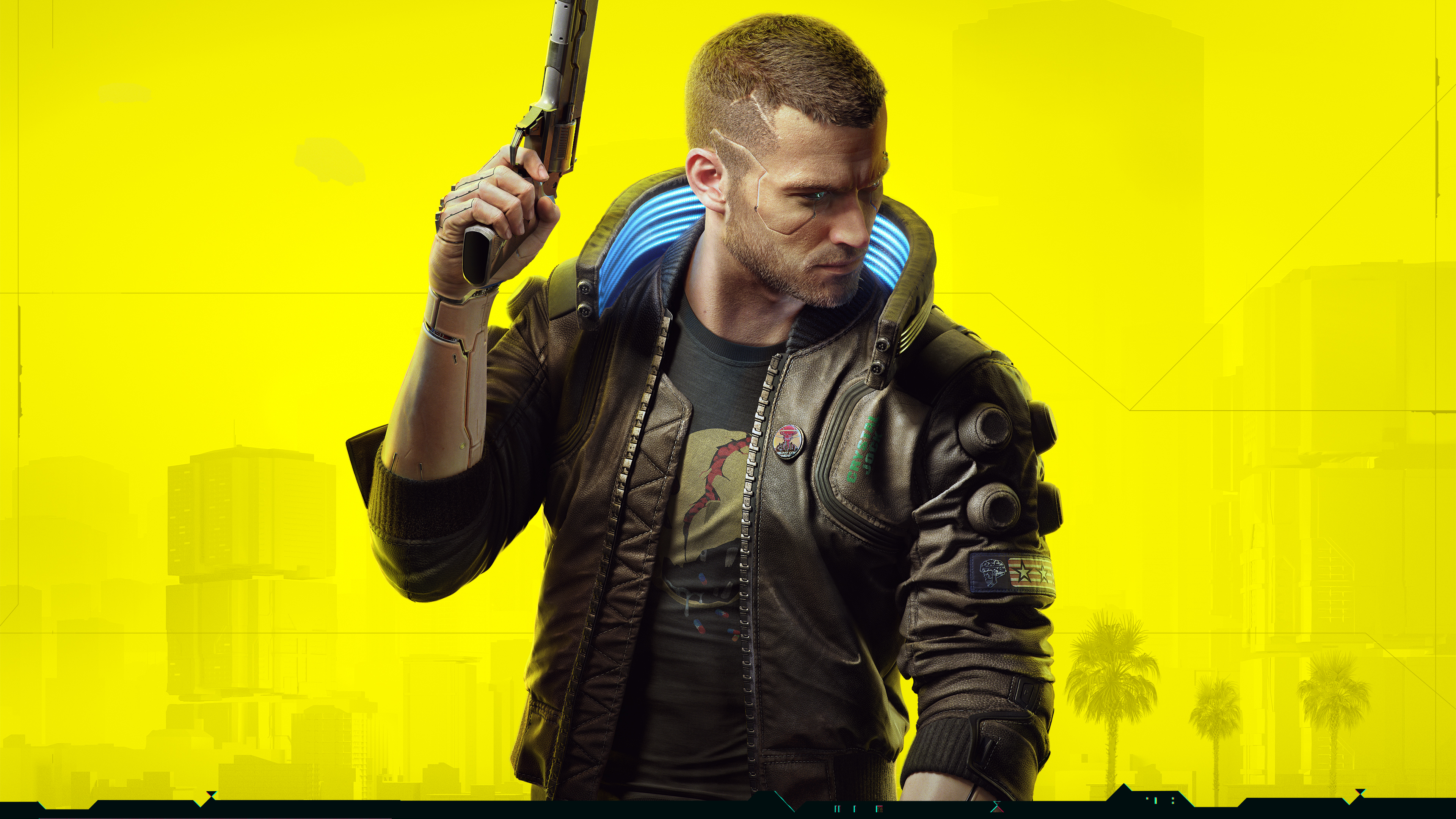
From Launch Disaster to the Top of Night City

Let's start with a fact. Personally, I experienced very few bugs with the game from the moment it launched! I know how much criticism it received, but I didn't have many issues with the PC version. The main problems were on consoles, although significant issues were reported on PC as well, which I simply didn't experience myself.
My beloved CD Projekt RED, which I had the pleasure of visiting way back in 2007, decided to explore another universe after The Witcher 3: Wild Hunt: Cyberpunk. The game may not have achieved the success we all expected because of its bugs, but through a tremendous amount of effort and continuous updates, the studio eventually turned it into one of its finest releases.
Incredible action, the beloved Keanu Reeves, multiple endings, and different ways to play the game. And all of this in first person!
That last point was something people discussed extensively before launch. Having already earned the trust of players with The Witcher 3: Wild Hunt, CD Projekt RED decided to leave behind medieval kingdoms, monsters, and Geralt's adventures to create something entirely different. An experience immersed in neon lights, corporate conspiracies, technological modifications to the human body, and a world where human life is often worth less than the next cybernetic implant.
Cyberpunk 2077 wasn't just another ambitious RPG. It was one of the industry's biggest gambles, a game burdened with enormous expectations and backed by a studio that had already proven it could deliver something special. The question was whether it could repeat that success on a scale far greater than anything it had attempted before.
Night City: A City That Forgives Nothing
In 2077, Night City is a Californian metropolis where technology has infiltrated every aspect of everyday life. People replace parts of their bodies with cybernetic implants, powerful corporations control the economy and politics, while violence, corruption, and social inequality have become part of the norm.
Playing as V, a mercenary trying to carve out a place in the city, we find ourselves caught up in a job that goes horribly wrong. An experimental biochip known as the Relic ends up in our head, bringing with it the digital personality of Johnny Silverhand. The problem is that Johnny isn't simply a voice inside our mind. His presence threatens to gradually overwrite our very identity.
This is where a story begins that combines survival, the search for identity, revenge, and conflict with people and organisations possessing far more power than we do.
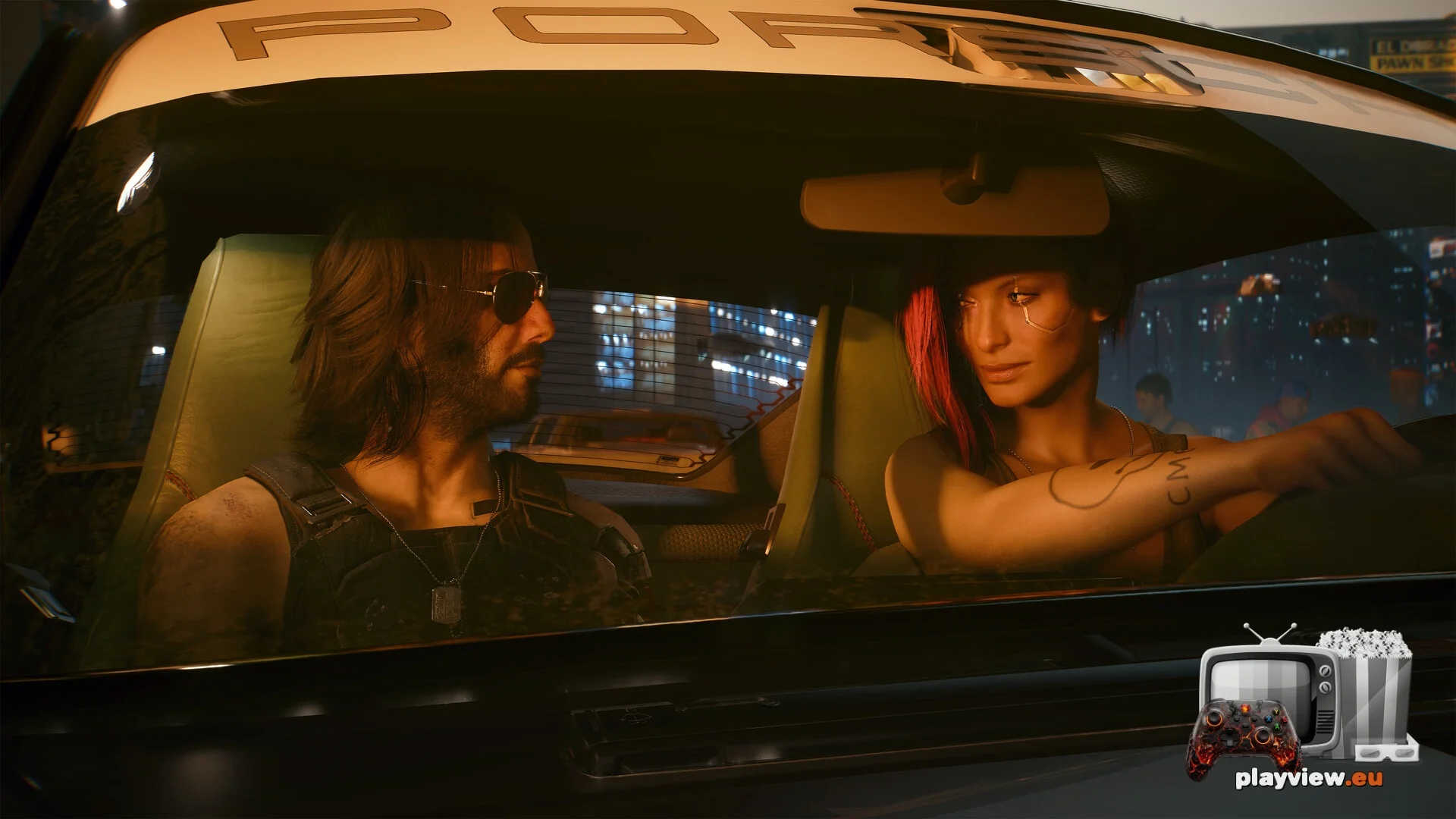
Keanu Reeves as Johnny Silverhand was one of the production's most successful choices. The character isn't simply a famous actor's appearance designed to impress audiences. He is a constant presence who influences our decisions, relationships, and understanding of the events unfolding around us. His relationship with V forms the emotional core of the adventure, and as the story progresses, distinguishing an ally from an enemy becomes increasingly difficult.
This is also one of the game's greatest achievements: Night City isn't merely the setting in which the action takes place. It's a world that wants to convince you that it existed long before you arrived and will continue to exist after you leave.
Its architecture, diverse districts, enormous advertising billboards, underground hangouts, crowded streets, and persistent contrast between wealth and poverty create one of the most distinctive digital cities we've seen in a videogame. That's no small achievement, especially for a title that relies so heavily on atmosphere and exploration.
From Tabletop RPG to Night City
Many people associate Cyberpunk with the books of William Gibson, and for good reason. Gibson is considered one of the most important authors in literary cyberpunk, with his 1984 novel Neuromancer standing as a landmark of science fiction, cyberculture, and the vision of a future in which technology and powerful corporations determine how people live.
However, Cyberpunk 2077 is not an adaptation of Neuromancer, nor is it directly based on any of Gibson's novels. Its actual source is the tabletop role-playing game Cyberpunk, created by Mike Pondsmith and first released in 1988. The original game was known as Cyberpunk 2013, followed by Cyberpunk 2020 and subsequent editions that expanded its universe and history.
CD Projekt RED took this already established universe and transformed it into a vast digital adventure. Pondsmith was involved in the creation and development of the world, helping ensure that the adaptation retained the philosophy and defining characteristics of the original material.
The connection to Gibson is therefore more intellectual and thematic than direct. Dystopian societies, powerful multinational corporations, technology capable of altering human consciousness, hackers, and the breakdown of traditional social structures are all elements found in different forms of cyberpunk fiction. Gibson helped shape the language of the genre, while Pondsmith's tabletop RPG gave the videogame its specific identity, history, and setting.
There's something else worth remembering: cyberpunk isn't simply an aesthetic of neon lights, rain, and robotic limbs. It's a way of discussing the present through the lens of a dystopian future. In Cyberpunk 2077, technology doesn't solve humanity's problems. More often than not, it makes them worse, creating new ways to control, exploit, and manipulate people.
The Launch That Became a Cautionary Tale
On December 10, 2020, Cyberpunk 2077 finally launched after years of anticipation and multiple delays. Expectations were enormous, and pre-orders had established it as one of the most significant releases of its generation. Reality, however, proved considerably more complicated.
On powerful PCs, the game could deliver an impressive experience, although bugs, crashes, and problems affecting missions, animations, and the city's systems were still present. On previous-generation consoles, namely the PlayStation 4 and Xbox One, the situation was considerably worse. Poor performance, graphical issues, frame-rate drops, and instability had a substantial impact on the experience.
The problem wasn't purely technical. The game's marketing had created expectations of an exceptionally sophisticated, living world, with systems that would take player freedom to a new level. When buyers discovered that the actual experience didn't always match that image, disappointment was inevitable.
Things reached an unprecedented point when Sony announced on December 18, 2020, that the digital version would be temporarily removed from the PlayStation Store, alongside the option of requesting refunds. The game returned to the store on June 21, 2021, although Sony continued to warn that PS4 players might still experience performance issues.
For a company that had built its reputation on quality and player trust, the damage was enormous. Cyberpunk 2077 had transformed from a highly anticipated production into one of the clearest examples of what happens when ambition, commercial pressure, and a game's actual condition fail to align.
My own PC experience was different, and that's an important distinction to make. The fact that I didn't encounter serious problems doesn't mean they didn't exist. Similarly, the significant shortcomings of the console versions don't mean that every PC player enjoyed a flawless experience. Differences in hardware, drivers, and individual system configurations could lead to dramatically different results.
CD Projekt RED now had to prove that it could fix not only its game but also its relationship with the audience.
The Patches That Changed the Game's Trajectory
The recovery didn't happen overnight. It required years of work, dozens of updates, and substantial changes to both technical and gameplay systems.
The early updates, from versions 1.04 to 1.06, focused on crashes, mission-related problems, and essential fixes. Patch 1.1, released in January 2021, improved memory management and stability, while version 1.2, released in March, delivered a much larger collection of changes affecting performance, police behaviour, driving, and various gameplay systems.
Additional hotfixes followed, along with version 1.3, which introduced further fixes and balancing improvements. The major turning point, however, came with version 1.5 in February 2022. The game received a free upgrade for PlayStation 5 and Xbox Series X|S, alongside new features, improvements to AI, and additional content.
Version 1.6, released in September 2022 and known as the Edgerunners Update, introduced equipment and content inspired by the anime, further connecting the videogame with the wider Cyberpunk universe.
The real relaunch, however, came in 2023.
In September, version 2.0 significantly overhauled the gameplay. Skill trees were redesigned, cyberware gained a more meaningful role in character builds, vehicle combat was expanded, and the police system and pursuits became far more functional. Combat and character progression felt more cohesive, giving different playstyles greater significance.
Version 2.0 wasn't just another patch fixing bugs. It was a fundamental revision of the experience, giving Cyberpunk 2077 a much more complete form. Version 2.1 followed in December 2023, introducing the NCART metro system, new exploration options, and improvements that made everyday life in Night City feel more developed.
Later updates in the 2.x series continued to improve stability and introduce new features, with version 2.3 standing out for its vehicle improvements and new driving automation options.
This journey matters because it demonstrates that CD Projekt RED didn't simply focus on making the game more stable. The studio recognised that certain systems required substantial reconstruction. The result couldn't retroactively erase the problems of 2020, but it fundamentally changed how we evaluate Cyberpunk 2077 today.
What Did the Critics Say, and What Is Cyberpunk 2077 Really Worth?
The critical reception of Cyberpunk 2077 had an interesting characteristic. Many reviewers immediately recognised the quality of its story, atmosphere, and world-building, but the game's technical condition made it impossible to overlook its problems.
On Metacritic, the PC version initially received a score of 86/100, with reviews highlighting the narrative experience and the impressive Night City. The picture was considerably worse for the previous-generation console versions, where technical problems significantly affected their reception.
What positive reviews praised was the ability to approach missions in different ways, the excellent performances, the dialogue, and the feeling of participating in a large, personal story. Night City could captivate players even when individual mechanics failed to match the quality of the rest of the production.
On the other hand, reviewers raised concerns about artificial intelligence, the repetitive nature of certain activities, and the fact that several promises concerning NPC behaviour and the city's dynamic systems hadn't been implemented to the extent the audience expected. The quality of the main story couldn't compensate for every weakness in such an ambitious open-world RPG.
For me, this is the heart of the discussion. Cyberpunk 2077 didn't become great simply because its bugs were eventually fixed. It already had an excellent narrative foundation, a distinctive world, and characters capable of leaving a lasting impression. The updates helped it realise its potential far more effectively.
That's what makes its current form so interesting. Put aside the negative reputation surrounding its launch and examine it as a complete experience, and you'll find an RPG with compelling missions, memorable moments, and considerable freedom in how you build your character.
A World Full of Small Stories
One of the things that won me over is how often Cyberpunk 2077 manages to tell a story without necessarily placing you in front of a major cinematic cutscene. A text message, a conversation overheard in passing, a small side mission, or an abandoned apartment can reveal an entire human tragedy.
Night City isn't presented as a world where every character simply waits for you to approach them. Stories intersect with your own, people struggle to escape their circumstances, and others have already accepted that nothing is ever going to change. The city is harsh, and the game doesn't try to make it more sympathetic than it needs to be.
A particularly interesting example is the use of braindances, digital recordings of sensory experiences. They're not merely an impressive science-fiction concept but also a narrative tool that allows us to investigate events through the senses and perceptions of other people.
The soundtrack also does an excellent job. The different radio stations, original songs, and distinctive soundscape create the impression that Night City has a culture of its own. Music isn't simply background noise. It's part of the world's identity.
And, of course, there's Johnny Silverhand. A character who could easily have become just another celebrity cameo in a videogame ends up being one of the most important elements of the story. His relationship with V is full of tension, irony, conflict, and moments that gain greater significance as we approach the ending.
Small Details That Make a Difference
The first is that Johnny Silverhand wasn't originally conceived in quite the form we know today. The casting of Keanu Reeves gave the character a different dynamic, while the actor's performance and involvement in the production helped make him a more substantial part of the story.
The second concerns V's identity. The character can be male or female, with different voice performances and romance options. The game doesn't force a single protagonist with a fixed personality upon the player. Instead, it allows you to shape your own version of V, without turning the story into an entirely different adventure for every player.
There's also Cyberpunk's relationship with real-world technology. The production made use of advanced graphics and lighting techniques, with ray tracing playing a significant role in reflections, lighting, and atmosphere. Night City looks genuinely different when neon signs reflect off wet pavements and the glass facades of skyscrapers.
That technological ambition, however, came at a cost. The game's hardware requirements were demanding, and differences between systems and available settings could lead to very different experiences. Cyberpunk 2077 consequently became one of the generation's most notable examples of how difficult it is to design an enormous world that must run properly across different platforms.
Finally, the game's story doesn't have a single ending. Our decisions, the relationships we've developed, and the choices we make at critical moments can lead to different conclusions. This gives replaying the adventure genuine value, especially when you want to explore the different sides of V and Johnny.
Phantom Liberty: The Return Night City Deserved
In 2023, CD Projekt RED released Phantom Liberty, the major expansion for Cyberpunk 2077. The story takes us to Dogtown, an isolated and extremely dangerous district of Night City, where political intrigue, espionage, and personal ambitions collide in an adventure with a strong spy-thriller atmosphere.
At the centre of the story is a mission connected to the president of the New United States of America, while Idris Elba portrays Solomon Reed, an intelligence agent who plays a pivotal role in the events. Phantom Liberty introduces new characters, missions, moral dilemmas, and a location with a distinct identity of its own.
Dogtown isn't simply another district added to the map. It's a world with different rules, controlled by armed factions and people trying to survive in an environment where power changes hands through violence. The expansion builds on the atmosphere of the base game while placing greater emphasis on espionage, deception, and choices that rarely have easy answers.
The most important aspect, however, is that Phantom Liberty launched alongside version 2.0, which substantially revamped the base game's mechanics. Returning to Night City wasn't just an incentive for those purchasing the expansion. The changes to combat, skill trees, and progression systems made the entire experience more complete.
The expansion received a particularly positive critical reception, with reviewers highlighting its story, Dogtown, and the new missions. In May 2025, CD Projekt RED announced that Phantom Liberty had surpassed 10 million copies sold. According to a subsequent corporate update in 2026, sales reached 15 million copies.
For me, Phantom Liberty is one of the most important parts of Cyberpunk 2077's overall journey. It doesn't simply attempt to add more hours of gameplay. It strengthens the experience with a story that has its own identity while providing the perfect reason to return to a world that has changed considerably since its original release.
Cyberpunk: Edgerunners — When Anime Gave the Game a New Lease on Life
Cyberpunk: Edgerunners, created by CD Projekt RED in collaboration with Japanese animation studio Trigger and released on Netflix in 2022, became one of the most successful animated adaptations of a videogame.
The series follows David Martinez, a young man trying to survive in Night City who gradually becomes involved in the world of illegal mercenaries. His story isn't simply an adventure filled with combat and spectacular action sequences. It's a harsh tale about ambition, exploitation, and the price paid by those trying to stand out in a world that consumes its own people.
The success of Edgerunners gave the Cyberpunk universe a new dimension. Many viewers returned to the game or discovered it for the first time, while CD Projekt RED took advantage of the renewed interest to introduce related content through update 1.6.
The anime achieved something that is far from guaranteed for a production based on a videogame: it told a story that could stand entirely on its own, without requiring viewers to know anything about the game. At the same time, it preserved the world's aesthetic and philosophy, strengthening Cyberpunk's overall identity.
The continuation arrived sooner than many would have expected. Cyberpunk: Edgerunners 2 premiered on Netflix on October 20, 2026, with ten episodes and a new standalone story featuring different protagonists and a fresh perspective on life in Night City.
The return of Trigger and CD Projekt RED demonstrates that Cyberpunk is no longer limited to a successful videogame. It has evolved into a broader universe with stories that can work across different media without necessarily following V and Johnny Silverhand every time.
40 Million Copies Sold and a Second Chance
In July 2026, Cyberpunk 2077 surpassed 40 million copies sold worldwide. The figure includes sales of both the standalone base game and the Ultimate Edition.
The scale of its success becomes all the more impressive when you remember how it started. The game launched amid one of the biggest crises of trust a modern AAA studio has ever faced, its reputation battered by technical issues and disgruntled buyers.
The journey towards 40 million sales cannot be explained by bug fixes alone. The quality of the story, its distinctive aesthetic, the music, the characters, Phantom Liberty, and the success of Edgerunners all helped maintain interest. Gradually, the game found a second life, attracting both returning players and a new audience.
It's a rare case in which long-term support didn't merely help maintain a product on the market. It played a decisive role in changing how that product was perceived. CD Projekt RED cannot erase what happened in 2020, but it managed to transform an extremely troubled launch into a major commercial and creative success.
Cyberpunk 2: What Do We Know So Far?
After this journey, the next big question is what CD Projekt RED has planned for the future. Cyberpunk 2, originally known by its codename Project Orion, represents the next major chapter in this universe.
The project has entered pre-production, with a significant portion of its development taking place within CD Projekt RED's North American team, centred around Boston and working alongside the company's studios in Poland and Canada. The company has stated its ambition to create an even more sophisticated game that builds on the experience gained from Cyberpunk 2077.
According to information released for the first half of 2026, the development team numbered 184 people as of July 31. However, there is no official release date, nor has a complete gameplay presentation been released that would allow us to draw firm conclusions about the title's new features.
One particularly interesting question is whether the studio will retain the first-person perspective of its predecessor and how it will evolve combat, artificial intelligence, and interaction with the world. These questions remain open. Any specific descriptions of new mechanics or locations would currently be speculation rather than confirmed information.
Personally, I'd like CD Projekt RED to preserve what made the first game special: its powerful storytelling, complex characters, and the sense that our decisions carry personal weight. Technical excellence is now an essential expectation for a production of this scale. The real challenge is to create a world that isn't merely bigger, but more convincing and more meaningful.
Naturally, following the experience of Cyberpunk 2077, the studio has an additional reason to be careful. Audience trust is difficult to build and easy to lose. The next game will have to prove that the lessons of 2020 haven't been forgotten.
My Personal Verdict
Cyberpunk 2077 is a fascinating case because its story outside the game is almost as interesting as what happens within Night City itself. Its launch became synonymous with disappointment, its subsequent support evolved into a prolonged recovery effort, and its current state is very different from the experience audiences encountered in December 2020.
My own PC experience was technically positive from the beginning, although I recognise that this wasn't the case for everyone. What kept me playing, however, wasn't simply the performance or the impressive graphics. It was the world, the story, Johnny Silverhand, the characters I encountered, and the different paths I could follow.
I particularly enjoy the fact that the game allows for different approaches. You can focus on close-quarters combat, make use of weapons and technological equipment, or rely more heavily on hacking and stealth. These choices don't turn every mission into an entirely different game, but they provide enough freedom to tailor the experience to your playstyle.
Most importantly, beneath its impressive presentation, Cyberpunk 2077 has something to say. It explores a world where technology evolves faster than society, corporations acquire power beyond that of traditional institutions, and people struggle to find meaning in a daily existence that often treats them as disposable.
It's not perfect. Some mechanics could have offered greater depth, certain activities become repetitive, and promises made during the original marketing campaign were never fully realised. These shortcomings, however, don't invalidate what the game achieves.
On the contrary, its current form demonstrates just how much of a difference sustained post-launch development can make. CD Projekt RED didn't deliver the experience audiences expected right from the start. It did, however, manage to evolve Cyberpunk 2077 into an experience worth discovering, even for those who never gave it a chance the first time around.
And that's where I find my answer to the question of whether the entire journey was worth it. For me, yes. Cyberpunk 2077 is one of the defining RPGs of its generation, with a world that's difficult to forget and a story that becomes more rewarding as you progress.
Night City, we'll be back. The only question is whether Cyberpunk 2 will manage to recreate that special first moment when you discover a city full of promises and dangers.


