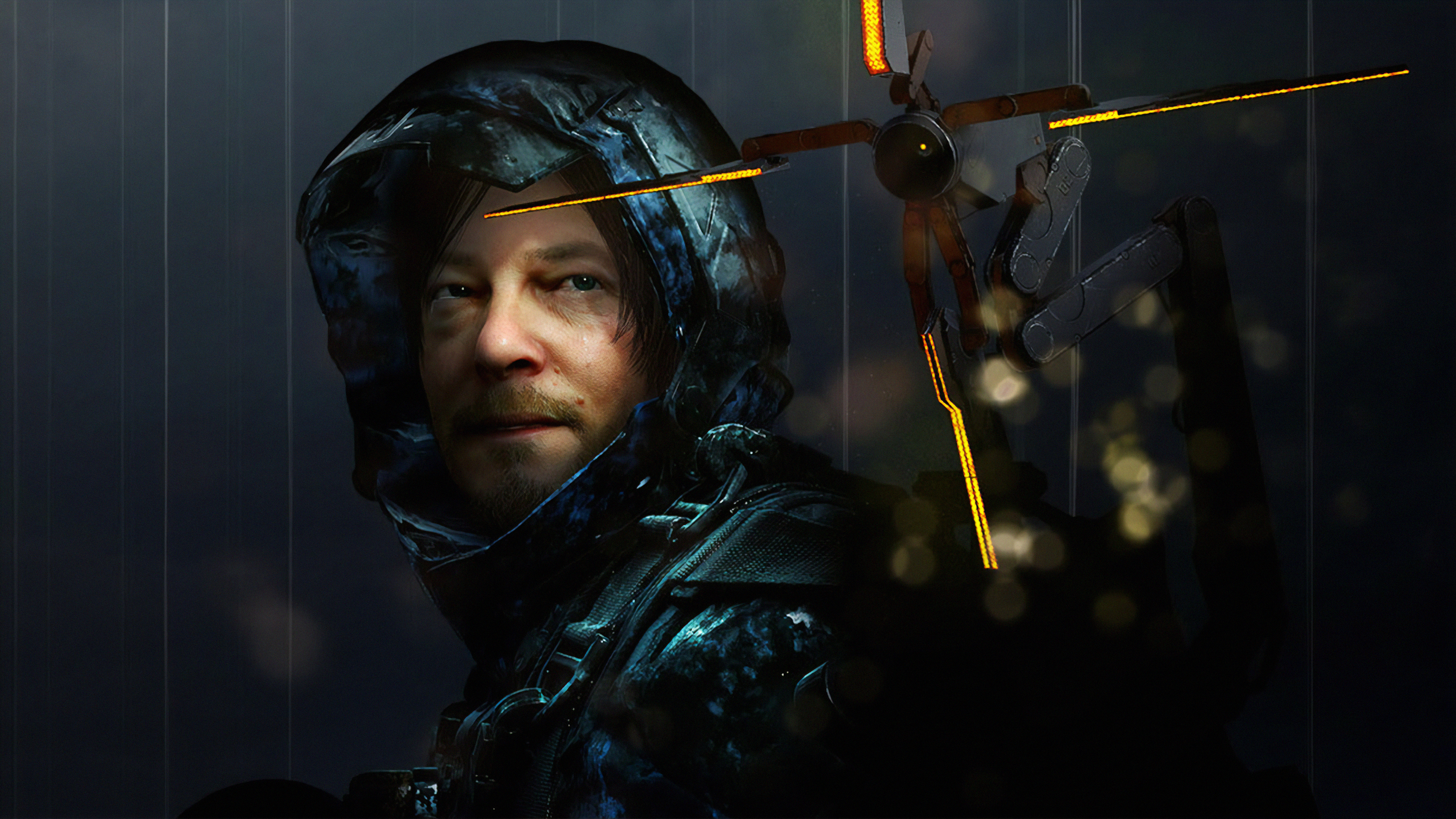
Death Stranding

There are creators who tell stories and there are creators who build worlds. Hideo Kojima belongs to that rare category of people who manage to do both, regardless of whether the result will divide the audience. After all, he was never interested in creating games that everyone would like; he was interested in creating games that no one would forget.
After his departure from Konami, his first big step was Death Stranding, a game that the entire gaming community awaited with immense anticipation. I would even say that it is perhaps the most personal game of his career, as it marks a new beginning, without restrictions and without compromises.
A game that dared to challenge almost every rule of modern AAA gaming. Where most invested in non-stop action, Kojima asked the player to walk. To observe. To listen to the silence. To find meaning in the journey and not just in the destination.
If you think about it as an idea, a game where you are... something like a courier and you transport packages from one point to another doesn't sound particularly exciting, right? And yet, when I started Sam Porter Bridges' journey, I didn't know exactly what to expect. The first chapters raise more questions than answers, but as you progress you begin to realize that Death Stranding is not trying to entertain you in the conventional way.
He's trying to make you feel.
And yet, behind this seemingly simple idea lies one of the most ingenious gameplay loops we've seen in recent years.
Every mission requires preparation. You choose equipment, calculate the weight of your cargo, plan your route, and try to anticipate the dangers that await you. The terrain itself becomes your biggest opponent. A river can prove more dangerous than a battle, while a steep slope can ruin a mission you've been preparing for quite some time.
Slowly, you stop thinking like a player and start thinking like a real deliveryman in a collapsed world. And that's exactly where the magic of the game lies.
Kojima creates a universe full of symbolism, metaphysical concepts, and science fiction, which at first seems almost incomprehensible. Terms like BTs, DOOMS, BBs, and Chiral Network appear constantly, but the answers come slowly and methodically.
But beneath all this complexity lies something very human.
A story about loss, loneliness, the need to trust others again, and the value of the bonds that unite us. And when the credits roll, that's what remains more than any major twist.
The cast is truly amazing. The protagonist is the beloved Norman Reedus, whom most of us know from the legendary The Walking Dead . He plays a character who, the more you get to know him, the more you understand that he carries a much greater weight on his soul than on his back.On the other hand, Mads Mikkelsen steals almost every scene he appears in, exuding intensity, emotion, and a unique cinematic presence.
Perhaps the game's biggest idea lies not in its story, but in how it brings people together without ever bringing them face to face.
A stranger may have left a ladder exactly where you need it.
A rope, a bridge, or a road may have been built by someone you will never know.
And without exchanging a single word, you have collaborated.
In an era where multiplayer relies almost exclusively on competition, Death Stranding proved that cooperation can be just as exciting.
Of course, like any great game, it is not without its weaknesses. Its slow pace discouraged many players accustomed to faster gameplay, while the excessive exposition of information — a hallmark of Kojima in almost all his games — becomes tiring at certain points.Death Stranding requires patience from the player. A lot of patience. If you try to play it with the mindset of a classic action game, you'll most likely get very frustrated very quickly.
Personally, I enjoyed it from beginning to end. It's not a game I would recommend to everyone, but it is a game I believe every video game fan deserves to try at least once. And soon I plan to start Death Stranding 2, so I can share my own experience from the continuation of this very special journey.
In an industry that often recycles the same ideas, Hideo Kojima dared to propose a different way to experience a video game. To make you think, observe, and connect with a world that seems desolate, but hides more humanity than meets the eye.


