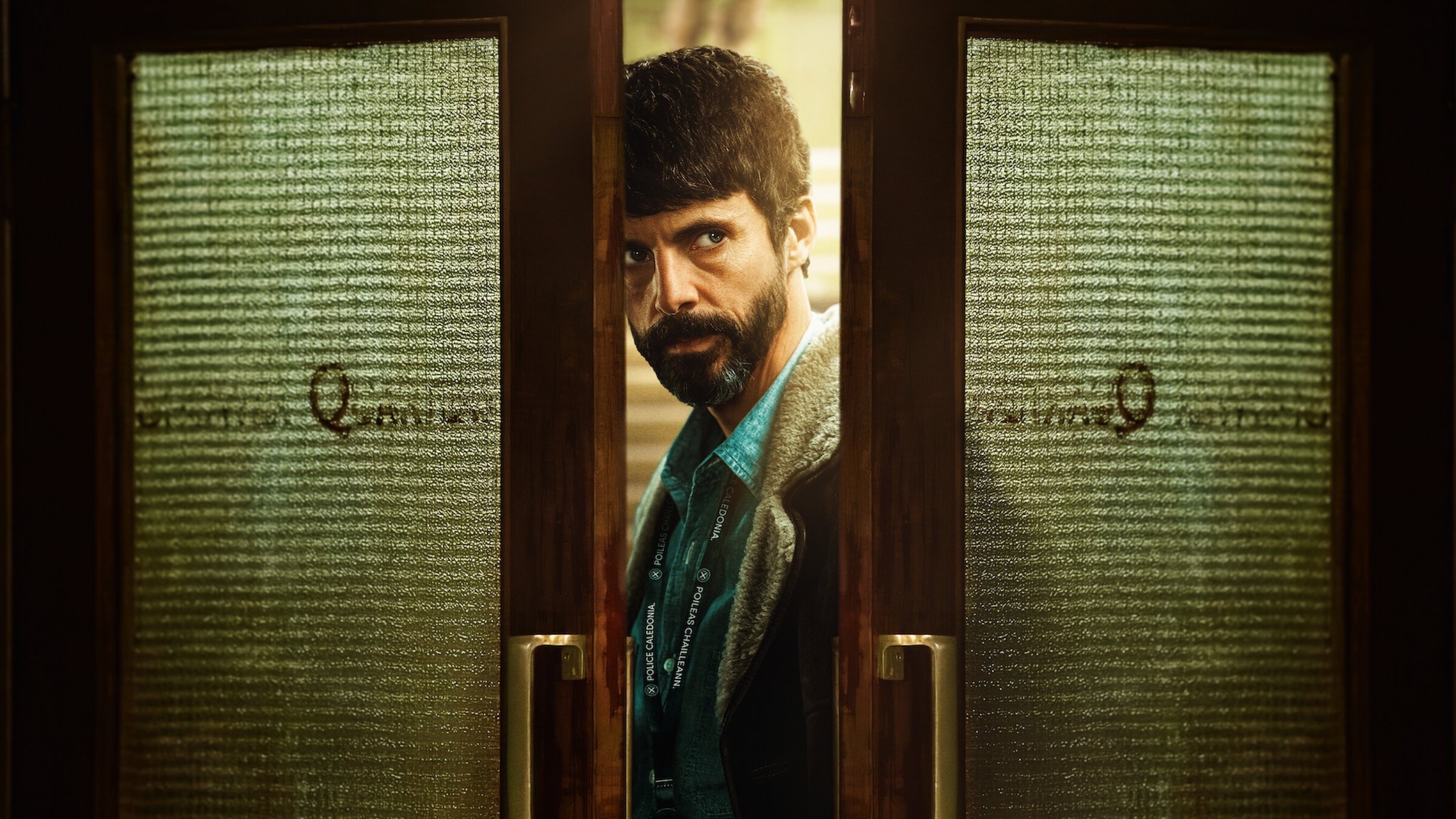
The past is never buried - What we saw in the first season

Dept. Q is a dark, sharply crafted crime thriller that understands the value of patience, atmosphere and proper timing. Above all, it serves as a reminder that cold cases aren't necessarily closed cases. Behind every file is a person, a family and a truth that might wait years until someone finally decides to go looking for it.
Let me start with a confession: For me, it was easily one of the best shows I watched in 2025, even if I don't feel like it got the chatter it deserved.
What hooked me wasn't just the dark atmosphere or the classic procedural hunt for a perpetrator. It was the way the series steadily dialled up the tension, letting the suspense build from one episode to the next. There was one question that kept becoming more and more agonizing: will they actually manage to find the victim in time? And, most importantly, how many pieces of the puzzle were they still missing?
The smart narrative trick is that Dept. Q doesn't just rely on hiding the killer's identity. It throws you into an investigation that runs parallel to a desperate fight for survival. You know there's someone in mortal danger, but the gap between the truth and the people who can save them feels massive. Every new clue could prove to be a breakthrough, every delay could cost a life, and every seemingly trivial detail takes on a whole different weight.
And just like that, a seemingly familiar crime drama manages to hook you for longer than you expected.
The Premise — A department for the cases everyone else forgot
The story kicks off in Edinburgh, where Detective Inspector Carl Morck returns to duty following a bloody attack that left his partner, James Hardy, paralyzed and another officer dead. Morck survived, but he’s carrying a heavy load of guilt, anger, and a near-total inability to get along with pretty much anyone in his orbit.
Morck is a brilliant detective, but he’s not the kind of hero you’ll warm up to right away. He’s abrasive, self-centered, frequently offensive, and profoundly isolated. His return to the force doesn't exactly mean his colleagues are lining up to work with him.
As a result, he ends up heading Department Q, a newly formed unit tasked with tackling unsolved mysteries—the so-called cold cases. We're talking about crimes that have been left without answers, case files gathering dust, and families still living with the void of uncertainty.
Initially, the new department feels more like a way to sideline Morck from the rest of the force than a serious attempt at solving crimes. Gradually, though, it carves out its own identity.
By his side are Akram Salim, an exceptionally sharp and observant partner, and Rose Dickson, an officer determined to prove her worth and play an active role in the investigation. Each of them brings their own baggage, vulnerabilities, and a completely different approach to police work.
The case that brings them together involves the disappearance of prosecutor Merritt Lingard, who has been missing for four years. Her vanishing act is tied to a dark chapter from the past and people who have a hell of a lot more to hide than meets the eye.
What makes the case stand out is that we aren't just watching a team piece together clues until they catch the culprit. We’re watching a victim who is still very much in danger, while the investigation inches forward through contradictions, red herrings, and bombshell revelations that completely flip everything we thought we knew.
The people behind Dept. Q
At the heart of the series is Scott Frank, the creator and primary creative force behind the TV adaptation, alongside Chandni Lakhani. Frank is known for stories that place a heavy emphasis on character work, slow-burn reveals, and building a world that goes far beyond the central case.
His name carries serious weight for anyone who remembers The Queen's Gambit, the Netflix limited series that blended a character's personal journey with competitive tension and became a massive hit. He also wrote and directed Godless, while his film credits include writing work on Logan and Out of Sight.
In Dept. Q, Frank is working with different source material, but he keeps his focus on flawed characters and the gradual uncovering of the truth. The show is in no rush to paint Morck as an instantly likable lead. It lets him be difficult, unfair, and abrasive, while slowly letting the scars behind his behavior peek through.
Chandni Lakhani is a key part of the creative team and adaptation process. Her work is all about translating the story into a contemporary British police procedural, shifting the character balances and team dynamics along the way.
In the lead role, we find Matthew Goode as Carl Morck. It's a performance built much more on restraint, dry irony, and internal tension than on easy emotional likability. Morck might get on your nerves, but he's rarely anything less than compelling.
Alexej Manvelov brings a quiet strength and a different perspective on the world to Akram. His presence acts as a counterbalance to Morck's abrasive edge, without ever reducing him to a mere sidekick. Leah Byrne, as Rose, rounds out the team with plenty of grit and a genuine contribution to the investigation.
Kelly Macdonald also stands out as Dr Rachel Irving, alongside Chloe Pirrie, Mark Bonnar, and Kate Dickie, who all add distinct shades of grey to a story where trust is never a given.
From Jussi Adler-Olsen's books to the screen
Dept. Qbased on the Department Q crime novel series by Danish author Jussi Adler-Olsen.
Adler-Olsen is known for his dark detective stories, which blend cold cases, social commentary, and characters who don't fit neatly into simple boxes of good and evil. The book series starring Carl Mørck achieved international success and was also adapted into feature films in Denmark.
There's an interesting twist here: the TV adaptation relocates the story from Denmark and Copenhagen to Edinburgh, Scotland. The shift isn't just geographical. It shapes the atmosphere, the police procedural setting, and the sense of place that drives the narrative.
The television adaptation doesn't attempt a word-for-word copy of the source material. It tweaks characters, relationships, and plot elements while keeping the core premise intact: a unit taking on cases everyone else has given up on.
And that's one of the things I appreciate the most. The show understands that an adaptation needs an identity of its own. It's not enough to just port a story from one medium to another; you have to figure out how to make it work all over again for a different audience.
The biggest asset Dept. Q has going for it is the way it paces and builds its suspense.
In plenty of crime shows, the hook revolves entirely around the "whodunnit" question. Here, that question takes on a second dimension: exactly what happened to Merritt, and can the team reach her before it's too late?
The disappearance isn't treated as some cold case gathering dust in the past. The series steadily reveals that there's an active, brutal reality lurking behind the case. The investigation and the captivity unfold in parallel, creating a uniquely tense countdown.
Here is the script trick I think actually works: the information the viewer gathers doesn't just serve to solve the mystery. It also ramps up the suspense over the outcome. You might suspect something's off, connect a few dots, and think you're getting close to the truth, but that doesn't mean the main characters are anywhere near as close to saving the victim.
The gap between knowing what's happening and being able to prove it is massive. And the gap between cracking a case and managing to save someone in time is even bigger.
The show plays on that exact distance to build tension. Every episode drops another piece of the puzzle, but it doesn't necessarily offer the relief you're hoping for. The characters' side stories add extra depth, while the main case never loses its heavy weight.
There are moments when the pacing could've been tighter. The storytelling lingers on certain subplots longer than it really needs to. Still, the overall suspense-building is strong enough to make the patience it asks of you totally worth it.
1. The story is not set in its original location.
Adler-Olsen's books are tied to Copenhagen and the Danish police. The Netflix series opts for Edinburgh instead, giving the story a distinct cultural and visual identity.
2. Department Q starts out as a fringe unit.
The concept of a team handling cold cases also serves as a commentary on how crimes are prioritized. When there's no immediate political pressure or media spotlight, certain cases risk being swept under the rug.
3. Carl Morck is not your typical charismatic detective.
His brilliance doesn't come packaged with social grace or easy teamwork. That friction is a core part of his personality and the series' dark comedic edge.
4. The show leans into an ensemble dynamic.
While Morck is the anchor, cracking the cases doesn't rest solely on his genius. The varied skill sets of Akram and Rose are essential for keeping the investigation moving forward.
5. The first season consists of nine episodes.
All of them dropped on Netflix on May 29, 2025. The finale is the longest episode of the season, clocking in at around 71 minutes, which gives the main plot threads plenty of room to converge.
Season one was warmly received by most professional critics. On Rotten Tomatoes it pulled in an 88% approval rating, while over on Metacritic it landed a 69/100, pointing to a generally favorable reception.
Entertainment Weekly singled out the way the show blends procedural crime-solving with the damaged characters' attempts to find some sort of personal redemption. The Guardian praised the careful storytelling and character development, noting that the relatively slow burn demands patience but ultimately rewards the viewer.
The Hollywood Reporter highlighted Matthew Goode's performance, the stellar ensemble cast, and the compelling mystery, while also mentioning that the story could have been told with a bit more economy. Similar reservations about the runtime and pacing popped up in other reviews too.
It wasn't, therefore, a show that pleased everyone to the same degree. Some critics found Morck too abrasive or the pacing a bit too drawn-out. The overall picture, however, was distinctly positive, with special praise for the atmosphere, the performances, and the mystery.
SPOILER ALERT — What actually happened in the finale?
From this point on, there are major spoilers for the end of the first season.
Merritt Lingard's case turns out to be far darker than a standard missing persons investigation. Merritt has been held captive for four years in a hyperbaric chamber by Ailsa and Lyle Jennings.
Their motive is tied to the death of Harry, whom they believe was killed by Merritt's brother, William, back when they were younger. Merritt's imprisonment is part of a vengeful punishment, with her abductors trying to force her to confess to the truth as they see it.
One of the major reveals is that Lyle Jennings uses the fake identity of Sam Haig, a journalist who had a romantic affair with Merritt. The real Sam Haig had been murdered by Lyle. This alias allowed him to get close to his victim and become part of her life without revealing his true intentions.
The investigation also brings to light corruption and apathy within the police force. Cunningham was aware of evidence that could have led to the truth, but chose to ignore it. When he discovers that Merritt is still alive, Lyle murders him.
At the same time, Carl and Akram try to piece together the final fragments of the puzzle. The clues lead them to an abandoned location connected to the Jennings. Time is running out, and the investigation turns into a race against the clock.
The team finally tracks down Merritt and manages to rescue her. Carl gets wounded in a shootout with Lyle, who is ultimately taken down by Akram. Ailsa takes her own life, while Merritt survives and begins the grueling process of returning to her family and the life that was stolen from her.
The finale works precisely because it doesn't treat the rescue as some clean, triumphant wrap-up. Four years of captivity don't just vanish because someone kicked a door open. Merritt is saved, but the trauma and the fallout from the case still linger.
At the same time, the show leaves lingering questions regarding the attack that left Hardy injured and upended Carl's life. So, closing the book on Merritt's case doesn't mean all of the team's problems are suddenly solved.
For me, Dept. Q was easily one of the best series I watched in 2025. And I say that knowing full well how often Netflix drops shows that generate buzz for a few days before getting swallowed up by the endless content machine.
Dept. Qdeserves more attention. It doesn't try to impress solely with massive plot twists or a lead character who always has the perfect comeback. It builds its story patiently, brings together a team of characters who aren't necessarily likable, and lets the mystery unfold without spilling all its secrets too early.
What stayed with me the most is the escalating tension. The further the episodes progressed, the more invested I became in whether they'd actually manage to find Merritt. It wasn't just idle curiosity about who was behind the whole thing. It was the nail-biting suspense of whether the truth would come out in time for it to actually matter.
The writing pulls off something that's far from a given: it keeps you hooked on the outcome of an investigation even when you've already started figuring out where it's heading. The information doesn't kill the suspense, because the real point isn't just piecing together what happened—it's watching to see if the characters can get there and do something about it in time.
Matthew Goode is outstanding as a man who struggles to communicate easily, while his chemistry with Akram delivers one of the series' most engaging dynamics. Rose effectively completes the ensemble and helps Department Q evolve from a nearly ridiculous administrative experiment into a team that can actually make a real difference.
Could it be a bit tighter in places? Yes. Would I have liked some of the subplot threads to run a bit shorter? Also yes. But those flaws don't take away from the final result.
Dept. Q is a dark, well-crafted crime thriller that understands the importance of patience, atmosphere, and proper timing. Above all, it serves as a reminder that cold cases aren't necessarily closed cases. Behind every file is a person, a family, and a truth that might wait years until someone finally decides to go looking for it.
If you slept on it back in 2025, it's well worth giving a shot. For me, it's one of those shows you discover and wonder why nobody was talking about it more.
And now, what are we expecting from season two?
The story of Dept. Q isn't over yet. Netflix has officially renewed the series for a second season, with Scott Frank returning to the creative team and production continuing in Edinburgh.
Matthew Goode returns as Carl Morck, alongside Alexej Manvelov as Akram Salim, Leah Byrne as Rose Dickson, and Jamie Sives as James Hardy. The team will once again need to combine their different skill sets to untangle a new case, which is expected to ruffle feathers among people of great power and influence.
According to reports, the new story will revolve around a serious crime hidden deep within the upper echelons of Scottish society. Power, cover-ups, and the unshakable belief that certain people are above the law look set to be key elements of the new case.
The cast is expected to expand with some fresh faces, including Aisling Franciosi, Greg Wise, Nicholas Rowe, Tony Curran, Hamish Clark, Alex Ferns, Ross Anderson, Rebecca Root, Isla Johnston, and Amy Brenneman, alongside returning actors from the first season.
Filming started in 2026 in Edinburgh, with the production schedule pointing toward a wrap in the latter part of the year. However, Netflix has yet to officially announce a premiere date. Given the production timeline and the time required to complete a show of this caliber, the second half of 2027 or early 2028 is a reasonable estimate rather than a confirmed release date.
Likewise, the episode count for Season 2 hasn't been officially confirmed, so reports floating around about an eight-episode order should be taken with a grain of salt until an official announcement is made.
Personally, what I'm most curious to see is whether the second season can sustain that slow-building tension that made the first one so effective. The Merritt Lingard case may be closed, but Carl and Hardy's personal story still leaves plenty of unanswered questions. And now that Department Q has proven it can crack cases everyone else has given up on, it remains to be seen just how high up the new revelations will reach.
If the series maintains the same balance between mystery, troubled characters, and the suspense over the outcome of each case, then we have a very good reason to return to Morck's basement.


