
Season 1: Before the Rings, Before the Legend

The first season of The Lord of the Rings: The Rings of Power was one of Amazon's biggest TV gambles following their acquisition of the television rights to J.R.R. Tolkien's work. The company invested in an ambitious production, attempting to bring Middle-earth's Second Age to the small screen—set several thousand years before the events of Peter Jackson's film trilogy—showcasing the Second Age of Middle-earth and the rise of Sauron.
The series introduced us to a very different Galadriel, determined to track down the evil she believes hasn't truly vanished, while we also watched the storylines unfold across the realms of Elves, Men, Dwarves, and Harfoots. At its core was the return of dark forces and the gradual setup of the conditions that would lead to the creation of the Rings of Power.
The finale was ultimately what finally gave the show the direction many viewers were waiting for. Halbrand, the man who had allied with Galadriel and posed as the lost king of the Southlands, was revealed to actually be Sauron. Galadriel realizes the truth, but it's already too late to stop his plans.
Meanwhile, the volcanic eruption transformed the Southlands into Mordor, establishing the new dark realm of the Orcs. In Lindon, Celebrimbor, assisted by Sauron without knowing his true identity, moves forward with crafting the first three Elven Rings: Vilya, Nenya, and Narya.
At the same time, the mysterious Stranger gradually reveals his magical nature and sets off on his journey alongside Nori, leaving the question of his true identity wide open. The first season essentially ends by setting up the key pieces on the chessboard. Sauron has returned, the first Rings have been forged, and Middle-earth stands on the threshold of a new era.
Amazon invested in a production of truly cinematic proportions. Behind the series are creators J. D. Payne and Patrick McKay, with Lindsey Weber and J.A. Bayona serving as executive producers. The latter also directed the first two episodes, setting the cinematic tone the production aimed for right from the start.
Also key is composer Bear McCreary, known for Battlestar Galactica, Godzilla: King of the Monsters, and The Walking Dead, who set out to create a new musical identity for Tolkien's world.
And of course, all of this is based on the work of J.R.R. Tolkien, with the production collaborating with the Tolkien Estate and the rights holders. It's worth noting that Peter Jackson had no creative involvement in the series, despite initial talks.
Reception for the first season was sharply divided. Critics praised its impressive production values, cinematography, score, and world-building, with Rotten Tomatoes logging 84% positive reviews, while over on Metacritic the critics' score sat at 71/100.
Audiences, however, were far more skeptical. On Rotten Tomatoes, the audience score plummeted to 38%, while Metacritic's User Score was a dismal 3.0/10. The main complaints centered on the sluggish pacing, character development, liberties taken with Tolkien lore, and how disconnected many viewers felt from the film trilogy.
On the other hand, it's hard to dispute the sheer scale of the production. With the first season costing roughly $465 million, it stands as one of the most expensive television productions ever made.
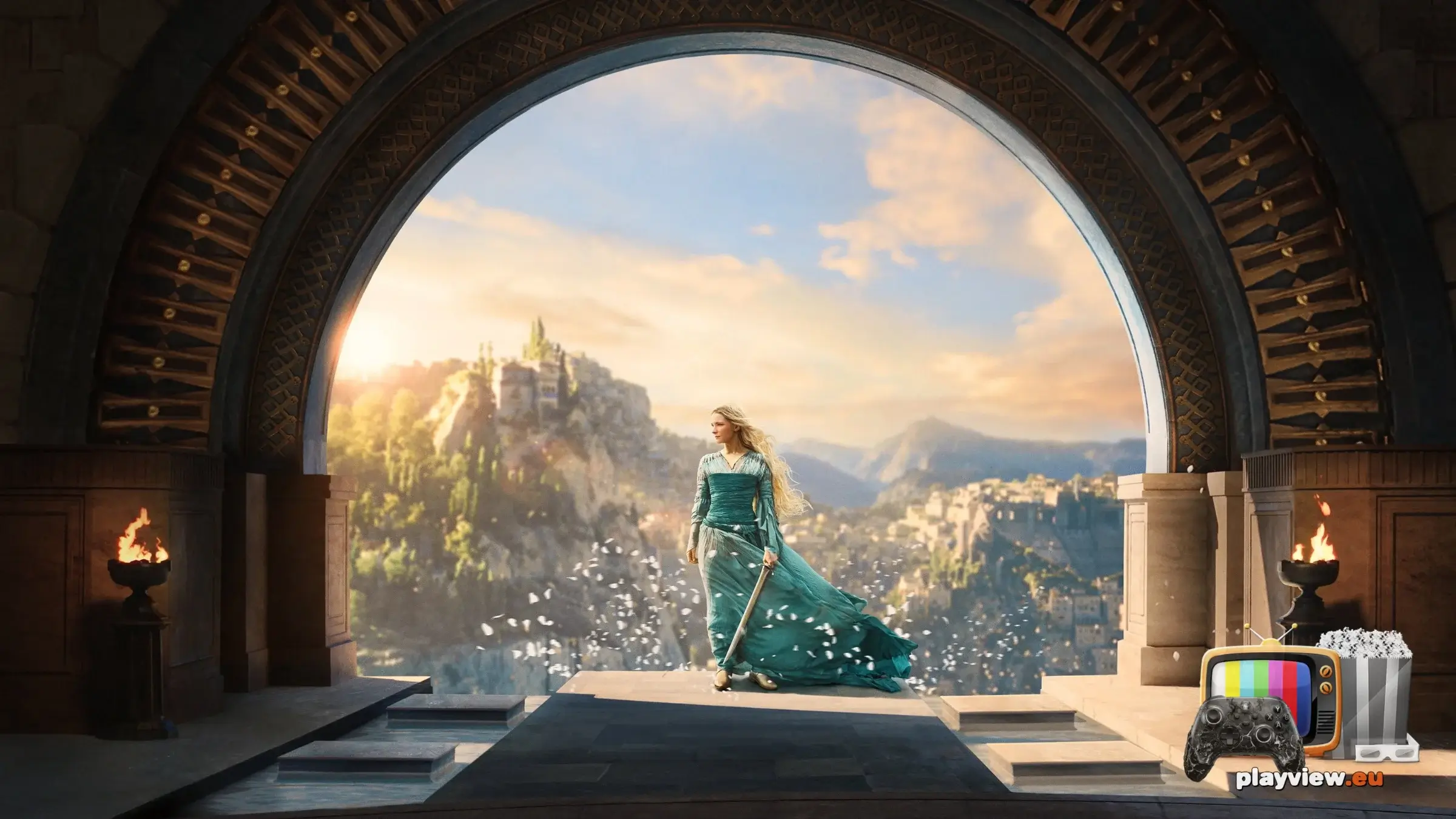
For me, the main takeaway is that the first season didn't just try to replicate the magic of the movies. It set out to forge its own identity, showcasing an era of Middle-earth we hadn't yet seen brought to life on screen at such scale. The stunning production design, the cinematography, Bear McCreary's score, and above all, that sense of a grand journey are elements that are hard to ignore. There are moments where you really feel like you're back in Tolkien's world.
On the other hand, the show had its obvious flaws. The pacing was quite slow at times, with certain storylines taking a long time to become genuinely engaging. Character development wasn't always balanced, while Galadriel, despite her commanding presence, was often presented as a difficult character who wasn't easy to relate to. There were also mysteries dragged out far longer than necessary, causing some of the big reveals to lose a bit of their punch.
However, there were also some standout performances, with Charles Edwards as Celebrimbor, Robert Aramayo as Elrond, and Joseph Mawle as Adar particularly shining. Adar in particular was an intriguing addition, giving the Orcs a whole new dimension compared to what we're used to.
I don't think the first season reached the level of the movie trilogy, nor did it always make proper use of the vast material at its disposal. That said, the finale, with the reveal of Sauron and the forging of the first Rings, finally gave the story a clear direction. And that is perhaps the first season's biggest win: it laid the groundwork for a much larger conflict, leaving plenty of room for the show to evolve and really find its footing.
I'll be back with a new piece covering everything we saw in Season 2.


