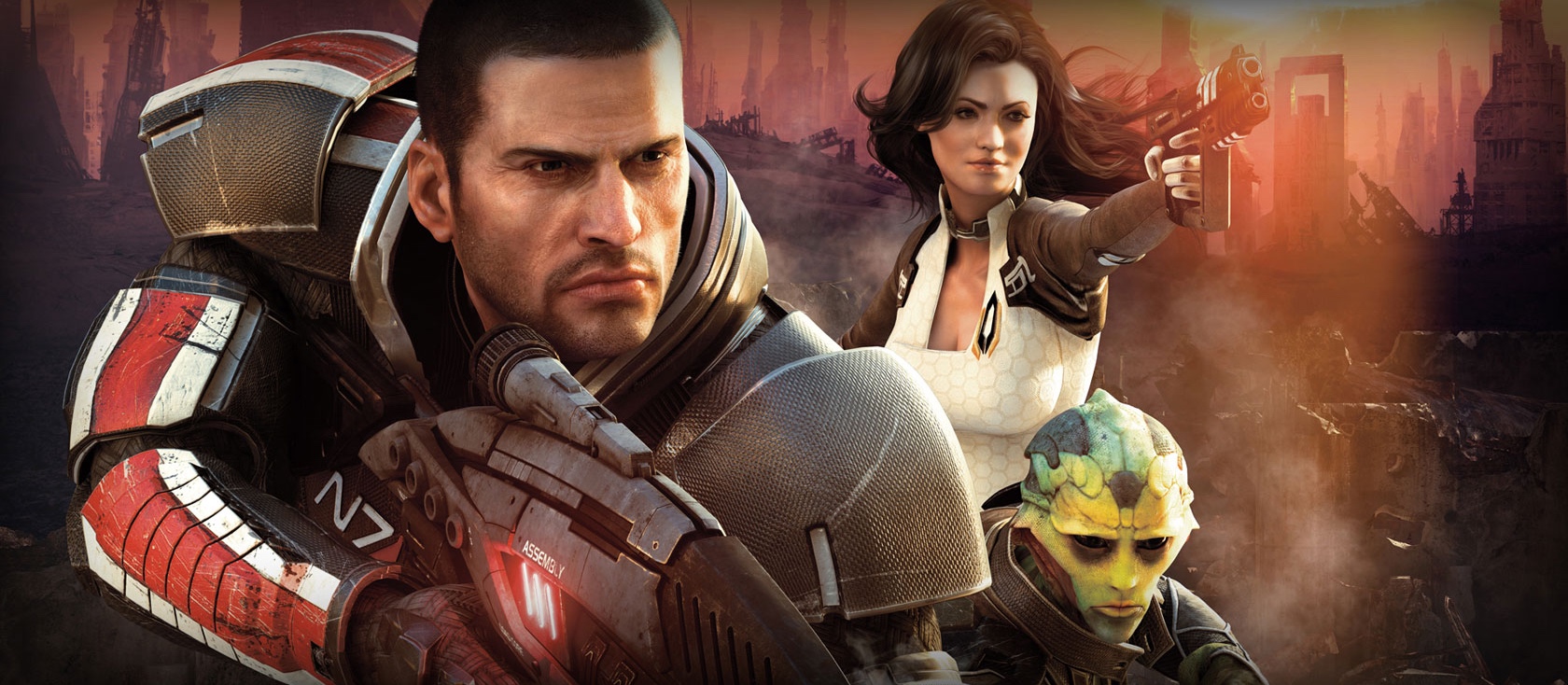
Played on PC Windows
The legacy that became a legend

When BioWare completed the first Mass Effect, it had already achieved something extremely difficult: creating an entirely new science-fiction universe, with its own history, civilizations, and characters who could stand alongside those found in some of the greatest film and television productions. Most importantly, it had given players the feeling that their decisions genuinely mattered. And this was only the beginning.
In 2010, BioWare returned with Mass Effect 2, a game that did not simply attempt to repeat the success of its predecessor. Instead, it made several bold decisions, significantly changed the gameplay, placed even greater emphasis on its characters, and presented a much darker story. In many ways, it even felt more like a cinematic space thriller than the traditional RPG we had experienced in the first game.
Personally, having fallen in love with the Mass Effect universe and played every game in the franchise, I consider this second entry to be one of BioWare's finest hours. It isn't necessarily the game that expands the Reaper lore the most or moves the trilogy's overarching story forward the furthest. It is, however, the one that takes the characters and relationships forged in the original game and transforms them into the beating heart of an intensely personal adventure.
And, of course, for those coming from the first Mass Effect, there is something even more important: the story does not start from scratch. Commander Shepard is our Shepard, our decisions have already been recorded in the previous game, and the galaxy remembers what we did.
From the First Mass Effect to BioWare's New Direction
Mass Effect 2 was released on January 26, 2010, in North America for Xbox 360 and PC, while it arrived in Europe on January 29. The PlayStation 3 version followed in January 2011.
BioWare now had the support of Electronic Arts and greater production capabilities, but it also faced a difficult task. It had to create a sequel that would satisfy those who had loved the first game while also attracting a broader audience.
The development team, led by Casey Hudson, knew very well which aspects of the first game had received criticism. The combat system, inventory, equipment management, and certain repetitive mechanics needed improvement. BioWare decided to address these problems in a fairly radical way.
The result was a different approach. Mass Effect 2 became faster, more immediate, and clearly more action-oriented. At the same time, the company chose to invest even more in character development, their personal stories, and the feeling that the player was commanding a team of individuals with different personalities and motivations.
This change did not appeal to everyone. Some players wanted more RPG elements, greater equipment management, and more freedom in character progression. Nevertheless, it is difficult to deny that BioWare created one of the most complete and memorable sequels of its time.
The Story — A Mission Beyond the Borders of the Known Galaxy
The story of Mass Effect 2 takes place two years after the events of the first game.
Shepard and the Normandy crew have managed to stop Sovereign and prevent the immediate return of the Reapers. Although the threat remains, the galaxy is attempting to return to normality. The Council, in particular, does not seem to take the warnings about the Reapers as seriously as it should.
The new adventure begins with a surprise attack on the Normandy by an unknown and extremely powerful spacecraft. The crew attempts to confront the threat, but the ship is destroyed. Shepard manages to save Joker, but is left floating in space and loses their life.
Here, BioWare makes a remarkable narrative choice. The series' protagonist dies within the first few minutes of the game.
Two years later, Shepard is brought back to life thanks to the Lazarus Project, an extremely ambitious and expensive Cerberus initiative. The organization, which in the first game had been presented as an extremist paramilitary force with strongly anti-alien characteristics, now plays a much larger role.
At the center of the story is the Illusive Man, a mysterious and extremely powerful individual who believes that humanity must establish a dominant position in the galaxy. He is portrayed by Martin Sheen, in one of the most distinctive performances in the entire series.
The Illusive Man informs Shepard of a new threat. Entire human colonies are mysteriously disappearing, leaving almost no trace behind. Behind these abductions are the Collectors, a mysterious species operating in the most remote regions of the galaxy.
Cerberus believes that the Collectors are connected to the Reapers and are part of a much larger plan. Shepard is asked to cooperate with an organization they do not trust in order to assemble a team of specialized fighters and undertake a mission from which nobody may return.
The objective is to travel through the Omega-4 Relay, a mass transit gateway from which no known spacecraft has ever returned.
This mission will become known as the Suicide Mission.
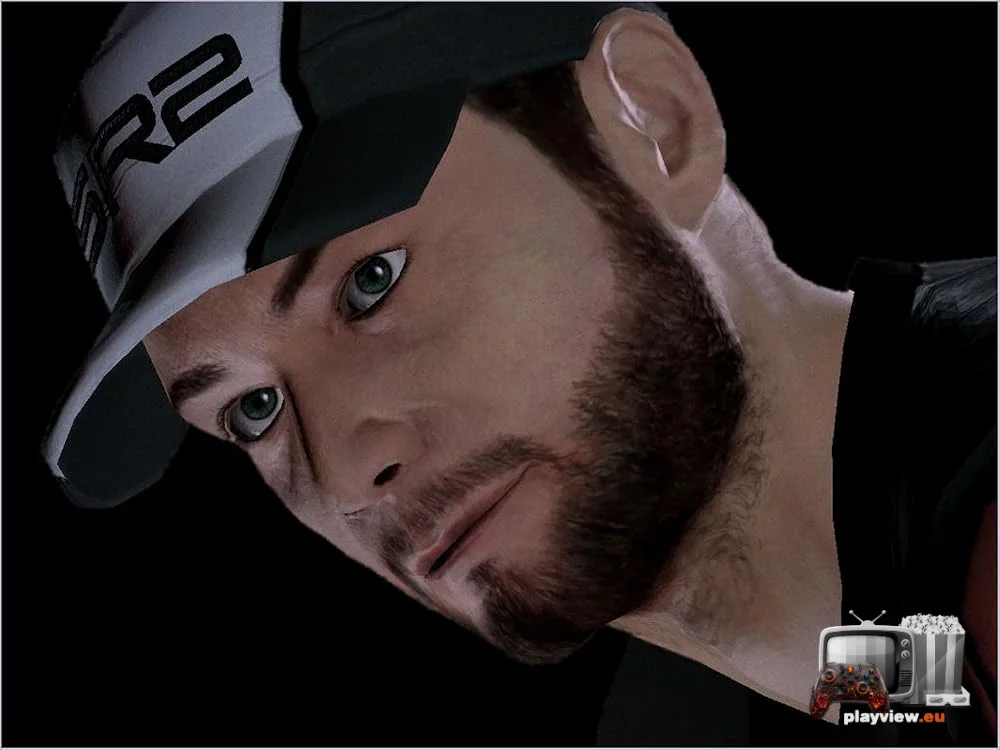
Commander Shepard and the New Normandy
One of the first things we notice is that the new Normandy is not simply an upgraded version of the previous spacecraft.
The Normandy SR-2 is larger, more modern, and offers more space for its crew. It becomes Shepard's new operational base and the place we return to after every mission.
The relationship with the crew takes on much greater importance. We are no longer simply talking about two companions whom we select before a battle. The entire Normandy now functions like a living organism. Every character has their own place, daily routine, and personal story.
Miranda Lawson, Jacob Taylor, Mordin Solus, Garrus Vakarian, Tali'Zorah, Grunt, Jack, Samara, Thane Krios, and Legion form the core of the team, while additional characters such as Zaeed Massani and Kasumi Goto can also join through extra content.
They are not all available from the beginning, and they do not all have the same role. Some are soldiers, others are scientists, assassins, mercenaries, or representatives of entire civilizations. What brings them together is that each of them has a personal reason for joining the mission.
And this is where one of the game's greatest achievements lies. Shepard is not simply assembling a team with powerful abilities. Shepard is bringing together individuals who carry their own pasts, their own regrets, and their own conflicts.
Gameplay — More Action, Less Management
The biggest change in Mass Effect 2 lies in its gameplay.
BioWare decided to move away from several traditional RPG mechanics found in the first game and place greater emphasis on combat as a third-person shooter. The cover system was improved, aiming became more immediate, and encounters gained greater intensity.
Weapon use is now more specific. Each category has a different role, and the game no longer follows the same approach of constantly collecting dozens of weapons with minor differences in their statistics. Ammunition types, special abilities, and squad choices become more important during combat.
The health system also changed. Instead of the previous system, which relied heavily on managing the character's condition and Medi-Gel, health now gradually regenerates when the player remains in cover and avoids incoming fire.
Character abilities were reduced compared to the first game, but became more clearly defined and functional. Each class has a specific identity, and players must make proper use of their squad's capabilities.
The old inventory, which had been one of the most tedious mechanics in the first game, was removed. Players now select their weapons before each mission and upgrade their equipment through the Normandy. Research in Mordin's laboratory allows the development of new technologies, provided we have collected the necessary minerals.
This change made the game easier to manage, but at the same time removed part of the RPG identity that the first Mass Effect had established.
Personally, I believe combat became significantly better and more enjoyable. The use of the cover system, the different powers, and cooperation with squad members created a much smoother experience. On the other hand, simplifying equipment and placing less emphasis on traditional character progression are changes that not every RPG fan would appreciate.
Exploration and the Galaxy Map
Exploration remains an important part of the experience, but the way it works changes significantly.
Instead of using the Mako to travel across large planetary surfaces, we now visit different systems and scan planets to locate minerals and resources. These resources are essential for research and equipment upgrades.
The process takes place through the Galaxy Map and its scanning system, while exploration is directly connected to preparing for the final mission.
Of course, this mechanic is not without its problems. Constantly scanning planets and launching probes can become repetitive, especially when we need to collect large quantities of resources.
Nevertheless, BioWare managed to establish a clearer rhythm between missions, preparation, and conversations with the crew.
The Characters and the Loyalty System
If there is one area in which Mass Effect 2 genuinely surpasses its predecessor, it is character development.
In the first game, we met Shepard's crew and learned quite a bit about their personal stories. In the second, however, BioWare decided to dedicate entire missions to every major member of the team.
The Loyalty System is at the heart of this approach.
Every companion has a personal mission connected to their past, relationships, or a conflict they have been unable to overcome. Shepard must help them deal with that situation and earn their trust.
Miranda must confront her family conflicts. Jacob searches for his father. Garrus comes face to face with his past and the failure of a previous mission. Mordin must deal with the consequences of his involvement in the Genophage project. Tali faces an especially difficult situation involving her father and the Quarian society.
Jack attempts to confront everything she has suffered throughout her life, while Thane is called upon to reconnect with his son. Samara faces a personal and moral conflict connected to the Justicar code, while Grunt must find his place among the Krogan.
And, of course, there is Legion, a character who brings with him one of the most interesting philosophical and political discussions in the entire franchise: what does it mean to possess consciousness when you are a synthetic form of life?
The personal missions are not simply additional content. They are essential to the success of the final mission, as the trust we earn from our squad members can determine whether they survive.
Here, BioWare achieved something extraordinary. It made us genuinely care about the fate of every member of the Normandy crew. We did not simply want to complete the mission. We wanted everyone to make it back alive.
Personal Relationships and the Romance System
The romance system evolved significantly compared to the first game. BioWare introduced more options and gave greater depth to the relationships we could develop with members of the crew.
For male Shepard, the main romance options are Miranda Lawson, Jack, and Tali'Zorah. For female Shepard, the options include Jacob Taylor, Garrus Vakarian, and Thane Krios. Liara T'Soni returns through the Lair of the Shadow Broker downloadable content, continuing the story of her relationship with Shepard.
Relationships develop through conversations aboard the Normandy, personal missions, and dialogue choices. It is not simply a matter of selecting a romantic partner, as every character has a different personality and a different approach.
What is particularly important is that these relationships continue to be part of the story in Mass Effect 3. BioWare does not treat the Romance System as an isolated feature, but as another element of the trilogy's continuity.
And this is something that makes the overall experience even more personal. We are not simply choosing which character we like the most. We are creating a relationship that can influence our own version of the story.
Carrying Over Choices from the First Game
One of the most important features of Mass Effect 2 is the ability to import a saved game from the first Mass Effect.
BioWare had promised that our choices would carry over, and the second game provides the most meaningful proof of this philosophy.
The returning Shepard can have a different gender, appearance, military specialization, and moral alignment, depending on the previous game. Even more importantly, however, our decisions influence the world.
Who survived? Whom did we choose to save? How did we deal with Saren? What happened to the Council? Which relationships did we develop?
The answers do not necessarily change the entire central plot of Mass Effect 2, but they influence dialogue, references, characters, and specific developments.
Even those starting with the second game for the first time can create a new Shepard and select a predefined history. However, for someone who has completed the first Mass Effect, importing the save offers a much more personal experience.
This is perhaps one of the greatest achievements of the original trilogy. BioWare did not simply create three games featuring the same protagonist. It created a story that could remember our choices and carry them from one adventure to the next.
The Additional Content That Expanded the World of Mass Effect 2
BioWare did not stop expanding the Mass Effect 2 universe after the game's release. Through a series of downloadable content (DLC) packs, the studio introduced new characters, missions, locations, and stories that significantly enriched the overall experience. Some were smaller supplementary adventures, while others carried such narrative weight that they are now considered an integral part of Commander Shepard's story.
Two of these DLC packs initially introduced new characters to the Normandy's crew. Zaeed – The Price of Revenge introduced Zaeed Massani, a veteran mercenary and founding member of the Blue Suns, who asks Shepard for help in getting revenge on the man who betrayed him. Similarly, Kasumi – Stolen Memory added Kasumi Goto, an exceptionally skilled thief with a personal mission revolving around the recovery of a valuable and dangerous piece of data. Both characters received their own Loyalty missions, offering additional content and new opportunities to develop the team.
The Firewalker Pack brought a different dimension to planetary exploration, adding five missions featuring the Hammerhead, a lightweight hovercraft capable of hovering above the ground and navigating difficult terrain. It did not carry the same narrative weight as the larger DLC packs, but it offered a different gameplay experience. In Normandy Crash Site, on the other hand, Shepard returns to the location where the original Normandy crashed, in a short but particularly emotional mission that serves as a small farewell to the first game and its former crew.
One of the most interesting narrative expansions was Overlord. The mission takes Shepard to a Cerberus research facility, where an artificial intelligence experiment has spiralled out of control. Along the way, the tragic story of David Archer is revealed, as well as his brother's attempt to use David's unique abilities to communicate with the Geth. It is one of the game's darkest and most emotionally charged stories, exploring the limits of science, the ethics of experimentation, and the cost of human ambition.
However, Lair of the Shadow Broker is perhaps the most important DLC in Mass Effect 2. The story brings us back together with Liara T'Soni, who has now dedicated herself to tracking down the Shadow Broker, a powerful information dealer pulling strings throughout the galaxy. Her partnership with Shepard leads to a series of revelations, intense battles, and a confrontation that changes the balance of power. This DLC does not simply offer another mission; it meaningfully develops Shepard's relationship with Liara and represents an important chapter in her character's evolution.
Finally, Arrival serves as the direct narrative link between Mass Effect 2 and Mass Effect 3. Shepard is assigned a rescue mission involving a scientist held in a region controlled by the Batarians. What initially appears to be a routine operation develops into a critical mission with enormous consequences for the entire galaxy. Without revealing too much, Arrival explains much of the situation leading into Mass Effect 3 and is essential content for anyone who wants to experience the complete story.
It is also worth mentioning Mass Effect: Genesis, an interactive digital comic that allowed players to make important decisions from the first game when they did not have an existing Mass Effect 1 save file available. Alongside this, several additional packs featuring weapons, armour, and alternative character appearances were released, offering even more options for the team's equipment and appearance.
Looking at all this additional content today, it becomes clear that BioWare did not treat every DLC as a simple commercial add-on. Some added essential pieces to the story, developed characters we had grown to love, and laid the groundwork for what would follow. Lair of the Shadow Broker and Arrival, in particular, stand out as two of the most important expansions in the original trilogy, with the latter making the transition towards the grand finale even smoother.
Graphics, Atmosphere, and Music
Mass Effect 2 took a significant step forward in both its technical and artistic presentation.
Unreal Engine 3 was put to better use, with more detailed environments, improved character models, more stable performance, and significantly better lighting. The presentation became more cinematic, while dialogue scenes gained greater intensity.
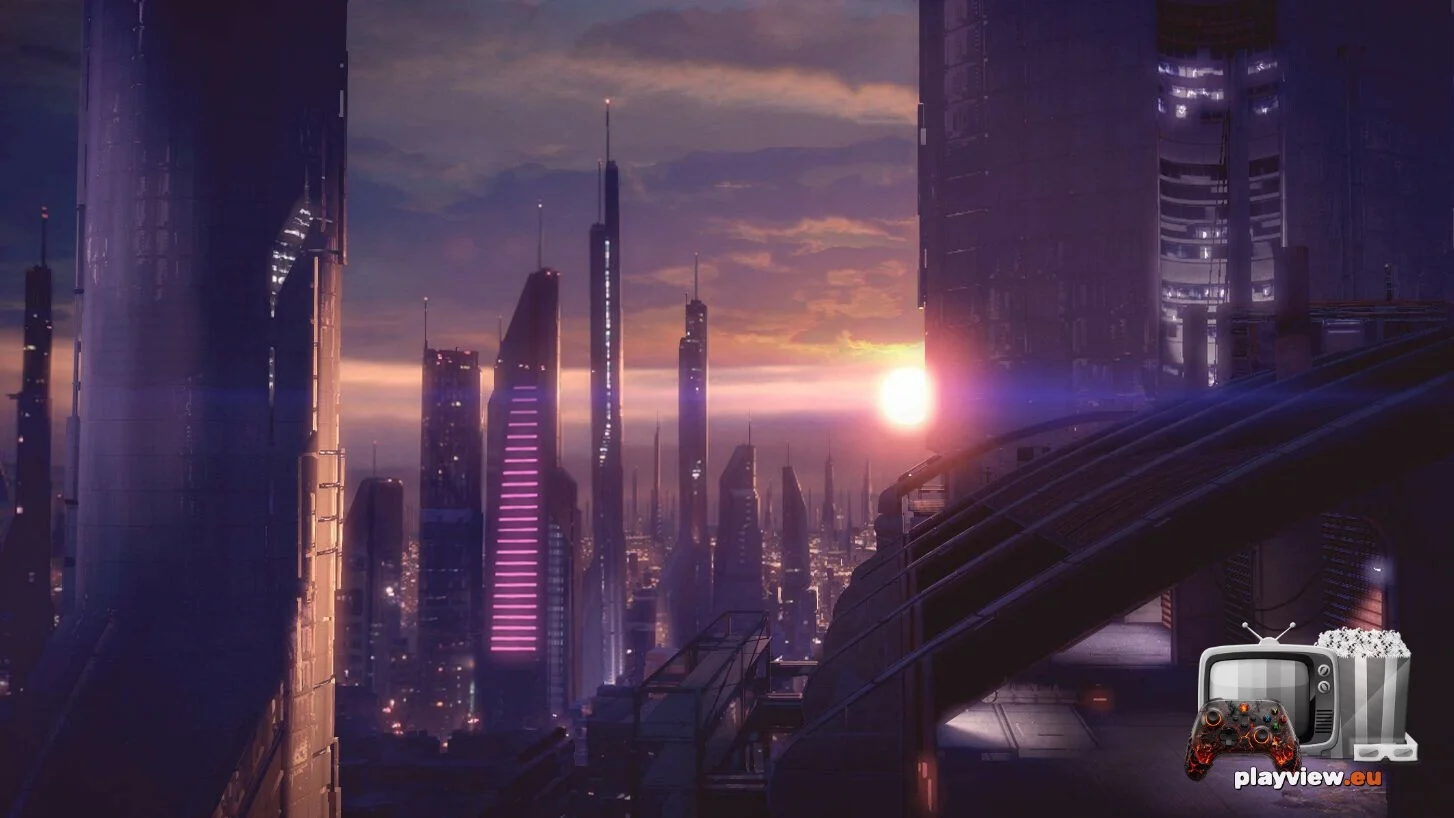
The difference in atmosphere is apparent from the opening minutes. The game has a darker and more mature aesthetic. The areas of Omega, Illium, and the Citadel present different sides of the galaxy, while missions in abandoned facilities and colonies create an intense sense of danger.
The PC version offers higher resolutions and the flexibility we expect from a computer. The overall presentation is particularly good, while the improved technical foundation makes the experience smoother compared to the first game.
One of the most important elements, however, is the music.
Jack Wall returned to compose the soundtrack, joined by Sam Hulick, Jimmy Hinson, and David Kates. The music follows the game's darker direction, with electronic sounds, atmospheric compositions, and more intense orchestral themes during the most important moments.
The most distinctive track is, of course, Suicide Mission, the musical theme accompanying the final mission. Its composition was designed to reinforce the feeling that Shepard and the team are facing an almost impossible undertaking.
The music does not simply serve as background accompaniment. It is an integral part of the game's tension and emotional experience.
What Didn't Work Quite as Well
Despite its excellent overall presentation, Mass Effect 2 is not without its weaknesses.
The biggest change that divided the audience was its departure from several RPG elements. The inventory was removed, equipment management was simplified, and character progression became less complex.
For those who had loved the first game precisely because of its management freedom, different equipment options, and the depth of its progression system, these changes felt like a step backwards.
Furthermore, planetary exploration through scanning can become monotonous. Collecting minerals is essential for upgrading the Normandy and equipment, but it does not always offer the variety we would have liked.
There is also an interesting narrative criticism. Mass Effect 2 dedicates a huge portion of its runtime to assembling the team and exploring the characters' personal stories. This is simultaneously its greatest strength and something that may disappoint those expecting greater progress in the central story of the Reapers.
The Reaper threat remains in the background for much of the game. The story focuses primarily on the Collectors and Cerberus's mission, meaning that the second chapter functions more like an enormous preparation for the final confrontation.
I do not necessarily consider this a mistake. On the contrary, BioWare chose to give the characters room to develop before the final showdown. However, this is a decision that explains why some players feel Mass Effect 2 does not advance the overall mythology of the trilogy as much as they would have expected.
Critical and Public Reception
Mass Effect 2 received an impressive reception and surpassed the first game in several respects.
On Metacritic, the Xbox 360 version achieved a score of 96/100, while the PC version reached 94/100. These scores placed it among the greatest games of its generation.
GameSpot awarded the game 9/10, placing particular emphasis on the intensity of the action, the quality of its characters, and its cinematic presentation. Kevin VanOrd's review focused especially on the darker atmosphere, the improved combat balance, and the game's ability to create strong emotional bonds with the crew.
Ars Technica, on the other hand, examined the major change in gameplay philosophy. It pointed out that the second game had moved away from several traditional RPG mechanics, but acknowledged that the new direction better served the pacing and intensity of the story.
The recognition was not limited to reviews. Mass Effect 2 won the Game of the Year award at the 14th Annual Interactive Achievement Awards of the Academy of Interactive Arts & Sciences, while it also received the Best Game award at the 2011 BAFTA Games Awards. It also won the Outstanding Achievement in Story award at the Interactive Achievement Awards.
Commercially, its success was equally significant. According to Electronic Arts, the game surpassed two million copies worldwide during its first week of release. The company also announced that it had received 40 perfect scores from publications and media outlets, as well as more than 30 Editors' Choice awards.
It is worth clarifying that the two million figure referred to the first days of release and not the game's total lifetime sales.
This success confirmed that Mass Effect had now evolved into one of Electronic Arts' most important franchises and that BioWare had managed to create a series with enormous commercial and artistic potential.
The Suicide Mission — What Happened at the End (Spoilers)
The final mission of Mass Effect 2 is one of the clearest examples of how player choices can directly influence the outcome of a game.
After assembling the team and completing the companions' personal missions, Shepard must travel through the Omega-4 Relay and reach the Collectors' base.
Preparation for the mission is crucial. Normandy's upgrades, the trust of the squad members, and the choices we make during the operation can determine who survives.
The assault begins with the team entering the Collectors' base, while its members take on different roles. Someone must make their way through the ventilation shafts, someone else must lead the second team, while a biotic specialist must create a protective field to allow the others to pass through.
There is no single simple solution that works for everyone. Every character has different abilities, and choosing the right person is crucial.
If we have not properly prepared the Normandy, if we have not earned the trust of our companions, or if we assign the wrong people to certain tasks, we may lose members of the team. And most importantly, these losses are permanent.
Anyone who dies during the Suicide Mission remains dead, and their absence may affect Mass Effect 3.
At the end, Shepard discovers that the Collectors are not simply another alien species. They are transformed Protheans, a civilization that was wiped out by the Reapers and is now being used as a tool to prepare for their return.
The Collectors are creating a gigantic human-Reaper hybrid, using genetic material from the humans they have abducted. Their goal is to create a new Reaper, which will become another part of the ancient machine responsible for destroying organic civilizations.
Shepard and the team manage to destroy this construct and confront the threat inside the base.
Before the final departure, however, the Illusive Man contacts Shepard and asks them to preserve the Collectors' base. He believes its technology can be exploited by humanity and used against the Reapers.
Shepard faces a difficult decision: destroy the base or hand it over to Cerberus.
This choice represents the game's final major moral dilemma. On one hand, there is the possibility of obtaining valuable technology. On the other, preserving a facility that was used for the mass extermination of humans is something that conflicts with Shepard's principles.
Regardless of the decision, the mission is completed, and Shepard now knows that the Reaper threat is real and far greater than anything they could have imagined.
In the final scene, we see an enormous fleet of Reapers moving towards the galaxy. Their return is approaching.
And this is where Mass Effect 2 completes its own mission: it does not give us the final battle, but prepares us for a war that can no longer be avoided.
A Few Details Worth Knowing
BioWare had designed Mass Effect as a trilogy from the earliest stages of development of the original game. This allowed the team to create a story with a clear direction and plan from the beginning how player choices would carry over from one chapter to the next.
Casey Hudson returned as project director, while Drew Karpyshyn and Mac Walters played important roles in writing the story. Karpyshyn left the project during development, with Walters gradually taking on an even greater role in the writing direction.
Martin Sheen, known for his work in film and television, provided the voice of the Illusive Man. His presence gave the character a particular weight, making him one of the most recognizable and controversial figures in the universe.
Seth Green returned as Joker, while Jennifer Hale and Mark Meer continued to voice the two versions of Shepard. The cast also included Yvonne Strahovski as Miranda Lawson, Tricia Helfer as EDI, Carrie-Anne Moss as Aria T'Loak, and Michael Dorn as Gatatog Uvenk.
Jack Wall's music has an interesting story. For the second game, BioWare wanted a darker and more mature musical identity, with influences from 1980s science fiction and composers such as Vangelis. The result was a soundtrack that differs noticeably from the first game and reinforces the series' new direction.
The Suicide Mission was designed so there’s no single predetermined outcome. Depending on our choices, upgrades, and relationships, everyone can make it back alive, several squad members can be lost, or Shepard himself can die. The possibility of losing the protagonist in a game meant to carry over to the next installment was an exceptionally bold design choice.
Mass Effect 2 also received several important DLC expansions. Among the highlights are Kasumi – Stolen Memory, Overlord, Lair of the Shadow Broker, and Arrival. Lair of the Shadow Broker, in particular, is one of the most worthwhile additional chapters in the series, as it brings Liara back and continues her personal story with Shepard.
Arrival, on the other hand, serves as a bridge to Mass Effect 3 and connects the events of the second game with the impending return of the Reapers.
In 2021, Mass Effect 2 was included in Mass Effect Legendary Edition, with improvements to its visual presentation and its previously released additional content brought together in one package. This makes returning to the game today easier and offers a more complete experience.
Perhaps One of the Most Important Sequels in Gaming History
For me, Mass Effect 2 is one of the most important games BioWare has ever created. It is not simply a successful sequel. It is a game that managed to take the characters and world of the first chapter and give them an even greater emotional dimension.
I love its atmosphere, the darker direction of its story, the music, and, above all, the way it develops the Normandy crew. Every character has their own identity, and their personal story makes you genuinely care about what happens to them.
The Loyalty System and the Suicide Mission are, for me, two of the game's greatest achievements. The idea that you can lose a character you have come to know and love because you failed to prepare properly or made the wrong decision creates a level of tension that is difficult to find in other games.
Of course, I do not agree with every change BioWare made. Removing the inventory, simplifying the RPG mechanics, and repeatedly scanning planets are elements that could have been handled better. I would have liked more of the first game's freedom to remain, without sacrificing the improvements to combat.
However, when I think about Mass Effect 2, these problems fade into the background. What remains is the Normandy, the conversations with the crew, the personal missions, the difficult decisions, and the tension of the final mission.
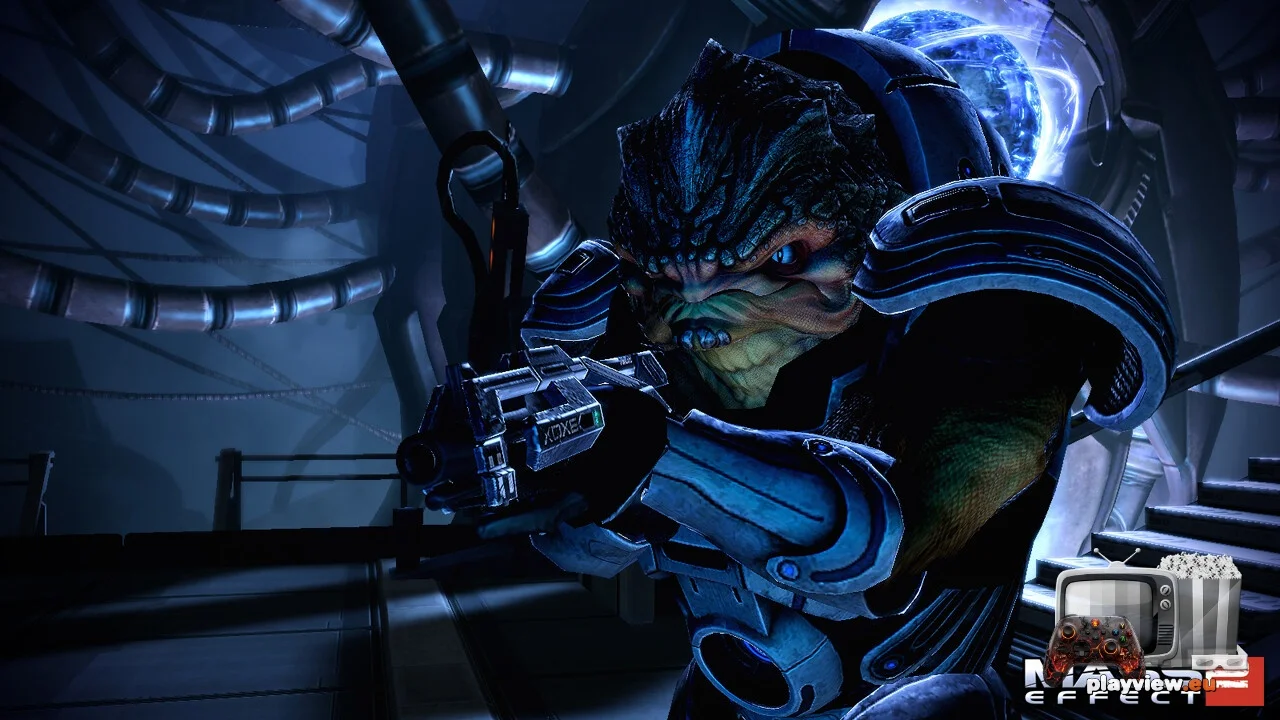
And, of course, for someone who has come to love characters such as Garrus and Wrex since the first game, returning to the Mass Effect galaxy carries even greater significance. BioWare did not simply create interesting companions. It created characters you want to meet again, discover what happened to them, and continue following their stories.
The Continuation in the Mass Effect Hub on Playview.eu
Following the first My View article, Mass Effect 2 represents the next important chapter in the Hub we are preparing on Playview.eu.
Our goal is to bring together all the games in the series and their corresponding My View articles in one central location, allowing readers to follow the entire journey of the franchise. We do not simply want to present each game individually, but to highlight how the universe, characters, storytelling, and BioWare's overall philosophy evolved.
The first Mass Effect introduced us to the galaxy and revealed the threat of the Reapers. The second gave us the opportunity to get to know the humans and aliens who would stand alongside Shepard more deeply, bringing together a team that would face an almost impossible mission.
The next step will be Mass Effect 3, where the choices made in the previous two games will come together and the story will move towards its final confrontation.
The Hub will serve as a comprehensive guide to the franchise, featuring analyses, characters, creators, and the most important moments from every game. We want readers to be able to discover the series from the beginning, but also return to specific chapters and see how they connect with one another.
Because Mass Effect deserves to be treated as one unified work rather than three independent releases.
The second game is perhaps the best proof of this. It taught us that a great space adventure needs more than just an outstanding protagonist and a massive enemy. It needs people worth protecting, decisions you are afraid to make, and moments you will remember even after the credits have rolled.
Mass Effect 2 isn't just the continuation of Shepard's story. It's the story of the crew he assembles to face the impossible. And when it's time for the Suicide Mission, you don't just want to save the galaxy. You want everyone to make it back to the Normandy together.


