Played on PC Windows
The end of an era

If the first Mass Effect was the beginning of a great adventure, and the second was the moment BioWare proved it could raise the bar in every possible way, Mass Effect 3 had a completely different mission ahead of it: to bring to a conclusion a story that had been built across two games, hundreds of choices, and characters with whom we had by now developed a personal connection. It was not simply another sequel. It was the end of a journey that began in 2007 and had managed to create one of the most recognizable universes in gaming history.
BioWare knew that expectations were enormous. Players were not simply waiting for a good RPG or another impressive sci-fi game. They wanted to see their decisions carry real meaning, meet the characters they had come to know once again, and discover what had happened to the galaxy they had been trying to protect. Above all, they wanted to find out whether Commander Shepard would finally manage to stop the Reapers.
Mass Effect 3 was released in March 2012 for PC, PlayStation 3, and Xbox 360, with BioWare promising the biggest and most dramatic chapter of the trilogy. This time, however, there was no room for another delay. The Reapers had arrived, and the entire galaxy was at war.
The Return of the Reapers and the Beginning of the End
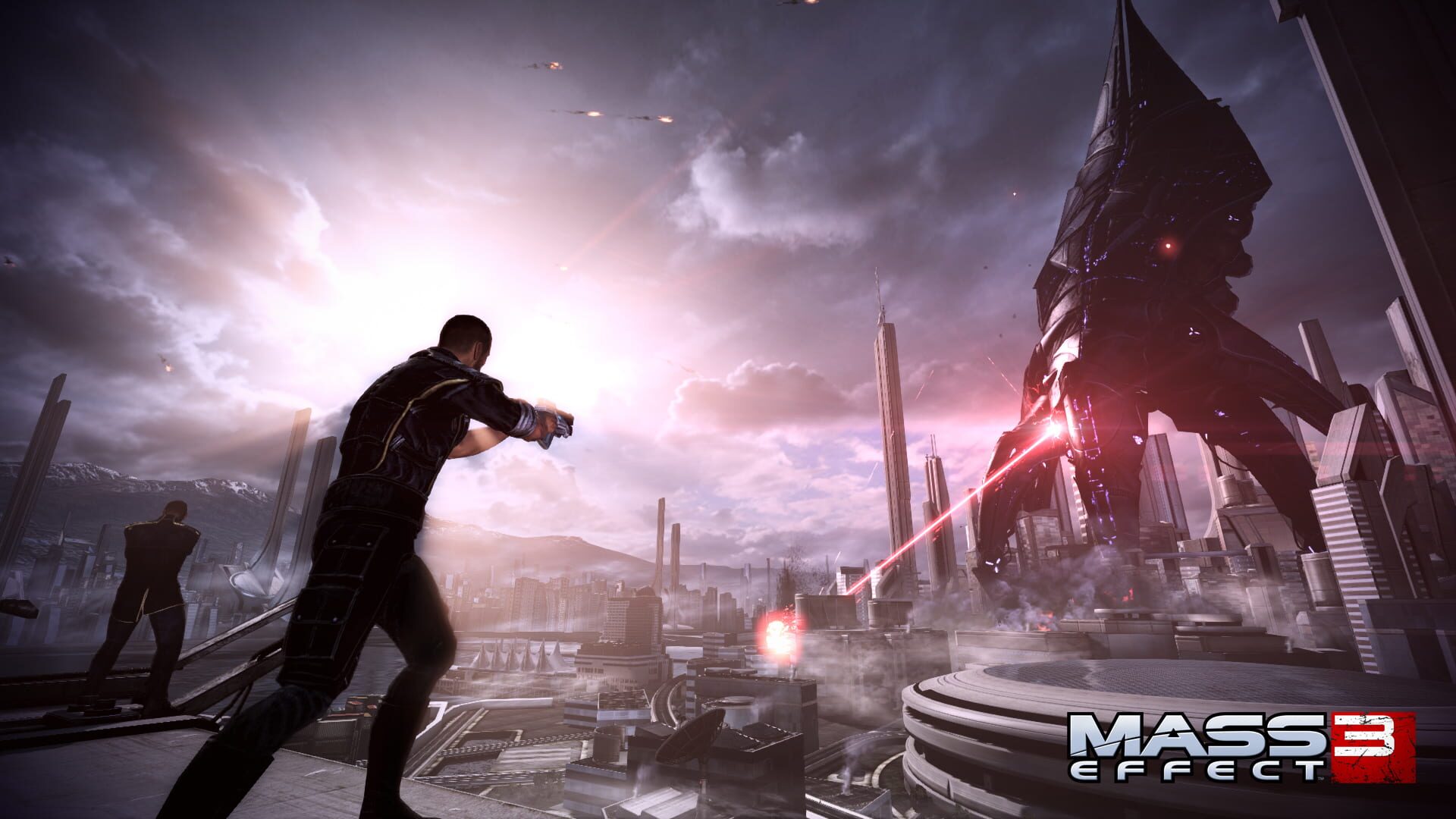
The story begins on Earth, with Shepard under Alliance custody following the events that preceded the Reaper invasion. The situation is already tense, and humanity knows that the threat Shepard had been warning everyone about for years has finally become reality. When the Reapers attack Earth, its defences collapse within moments. Shepard is forced to leave the planet alongside Admiral Anderson, leaving behind a world on the brink of total destruction.
From that moment on, a race against time begins. Shepard must unite the different species of the galaxy, overcome old rivalries, and build an alliance powerful enough to face the Reapers. The only real hope appears to lie in a mysterious superweapon known as the Crucible, for which references have been discovered in ancient Prothean data. The problem is that nobody knows for certain how it works or whether it can actually stop the invasion.
In an effort to gather the necessary forces, Shepard visits different systems and civilizations, while every mission becomes more significant than a simple military operation. The fate of the Krogan, the conflict between the Quarians and the Geth, the political balance of the Citadel, and the influence of Cerberus are just some of the issues that must be addressed before the final confrontation.
Meanwhile, the Illusive Man returns as one of the game's most important antagonists. Cerberus is no longer simply a controversial organization operating in the shadows. It has become a military force actively interfering in the war, attempting to gain control of the Reapers and impose its own vision for humanity's future.
Arrival and Its Connection to Mass Effect 2
Before moving further into the story, it is worth taking a moment to return to Mass Effect 2, and specifically to the Arrival DLC, which we had already covered in my previous My View article.
Arrival was not just another additional mission. It was essentially the prologue to Mass Effect 3. Shepard is assigned to rescue Dr. Amanda Kenson, a scientist who claims to have discovered evidence of the Reapers' impending arrival. The mission takes him to the asteroid Aratoht, where a Mass Relay is located, one that the Reapers intend to use to accelerate their invasion of the galaxy.
In order to delay their arrival, Shepard is forced to destroy the Alpha Relay. This decision has devastating consequences, as the destruction of the system results in the deaths of approximately 300,000 Batarians. It is one of the heaviest decisions the protagonist has to make throughout the entire trilogy, because regardless of his intentions, his actions result in the deaths of an enormous number of civilians.
These events explain why, at the beginning of Mass Effect 3, Shepard is under arrest on Earth and waiting to answer for his actions. More importantly, the destruction of the Relay delays the Reapers' advance, although it cannot, of course, prevent their eventual invasion.
This is also why I consider Arrival an essential part of the overall experience. Anyone who wants to follow Shepard's story from the first game to the last should experience this particular DLC, as it adds an important chapter between the two games and makes the opening of Mass Effect 3 feel much more complete.
A Galaxy at War — The Choices That Shape the Future
One of Mass Effect 3's greatest strengths is that it does not treat the different species of the galaxy as simple missions we need to complete. Every conflict has its own history, political implications, and consequences built upon the events of the previous games.
On the planet Tuchanka, Shepard faces one of the series' greatest moral dilemmas: the possibility of curing the Genophage, the genetic disease imposed on the Krogan that had dramatically limited their ability to reproduce. This decision is not only about the survival of an entire species, but also about trust between the Krogan, Turians, and Salarians. The outcome depends on choices made earlier, even going back to events from the first game. (And of course, I personally saved them.)
On Rannoch, the story of the Quarians and the Geth also reaches a critical point. The conflict between the creators and their creations, which began many years earlier, can lead either to total destruction or to a rare opportunity for peace. It is one of the game's strongest narrative sequences, forcing the player to consider what life, consciousness, and the right to exist truly mean.
Meanwhile, the Reaper invasion of Thessia, the homeworld of the Asari, becomes one of the most defining moments in the story. For the first time, the alliance Shepard is building seems insufficient. Even the galaxy's most powerful civilizations can collapse within a matter of hours, and this defeat has a significant impact on both the protagonist's state of mind and the course of the mission.
Mass Effect 3 manages to tie all these stories together around a shared goal, without ever forgetting that behind every military force lie characters, families, and entire civilizations just trying to survive.
Shepard, the Normandy, and the Returning Characters
If there is one thing that makes Mass Effect 3 stand out from many other games, it is the relationship it has managed to build between players and its characters. After two full games, the Normandy's crew is no longer just a group of NPCs following us on missions. They are companions with whom we have shared battles, losses, personal moments, and difficult decisions.
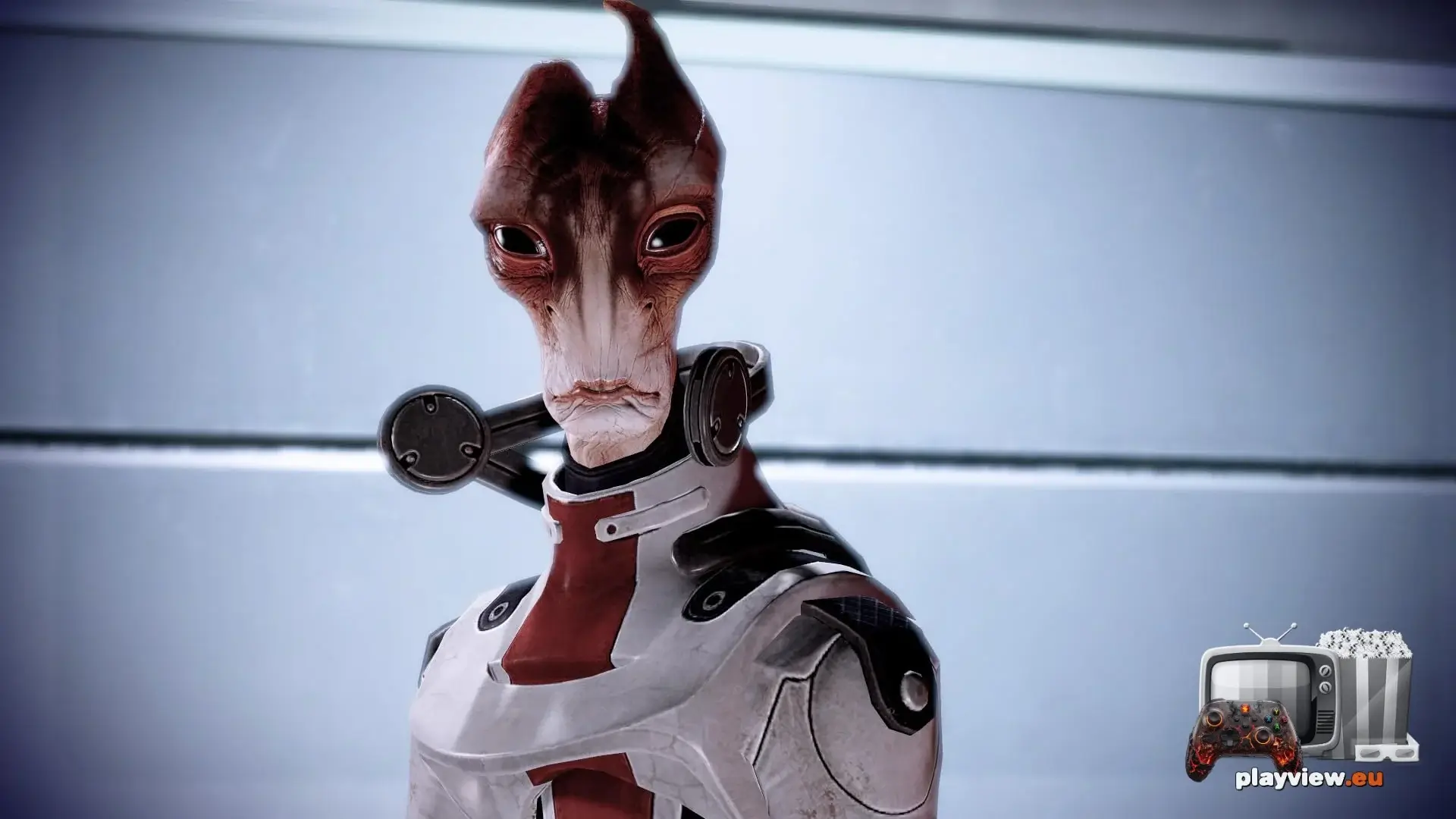
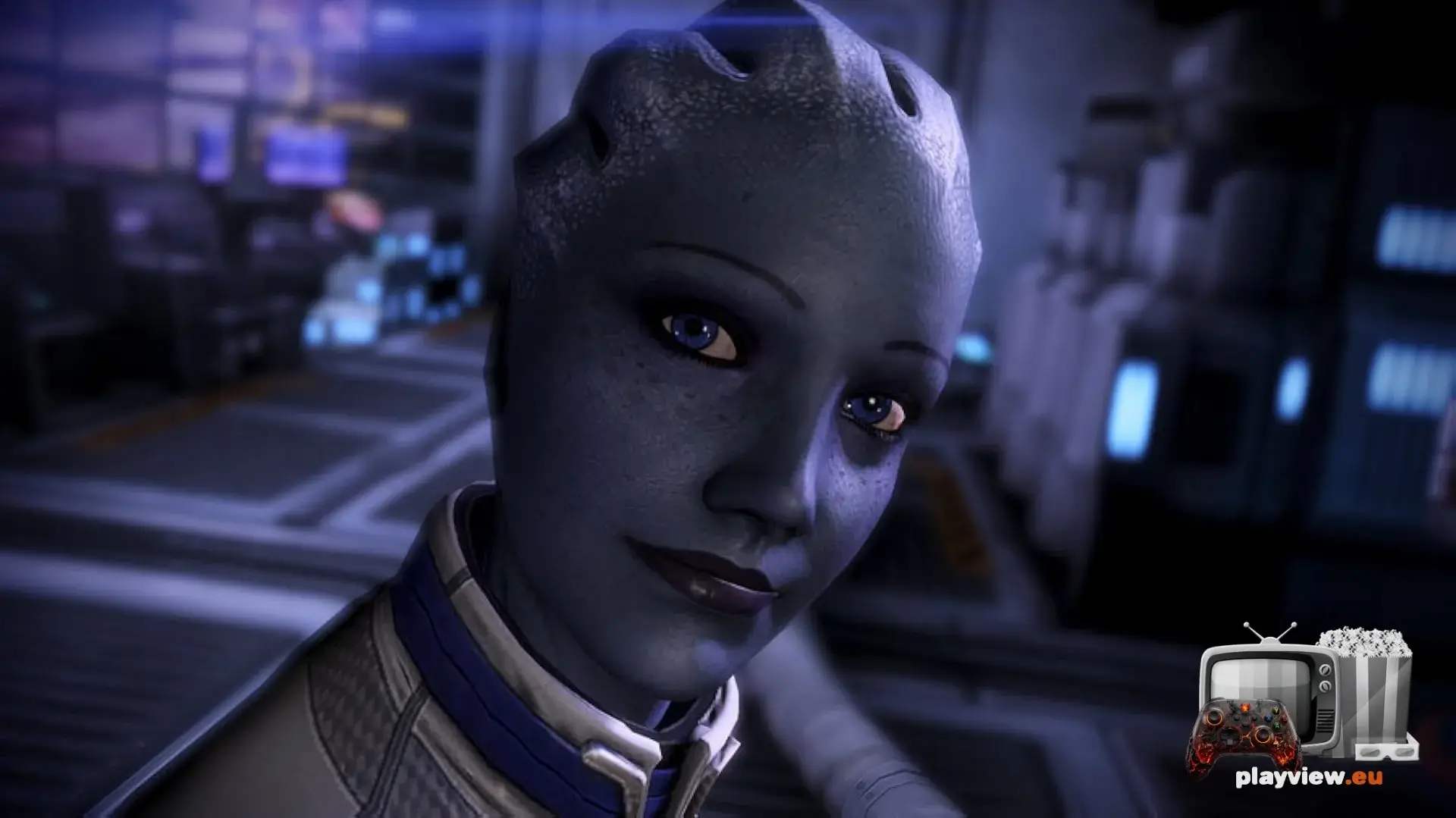
Many familiar characters return, some as permanent members of the crew and others through specific missions and storylines. Garrus, Liara, Tali, Joker, EDI, and many others are once again alongside Shepard, while the presence of characters such as Wrex and Mordin becomes particularly important to the development of the Krogan storyline.
The return of the crew creates a feeling of farewell that runs throughout the entire game. Conversations aboard the Normandy, small personal moments, encounters on the Citadel, and changes in the relationships between characters all carry greater weight precisely because we know we are approaching the end.
The dialogue and relationship system continues to give players the ability to shape Shepard through their choices. Romantic relationships from previous games can be continued, while new possibilities are also available depending on the character's decisions and history. The connection with the previous games makes these moments more meaningful, because we are not starting from scratch.
Gameplay — The Best Balance Between RPG and Action
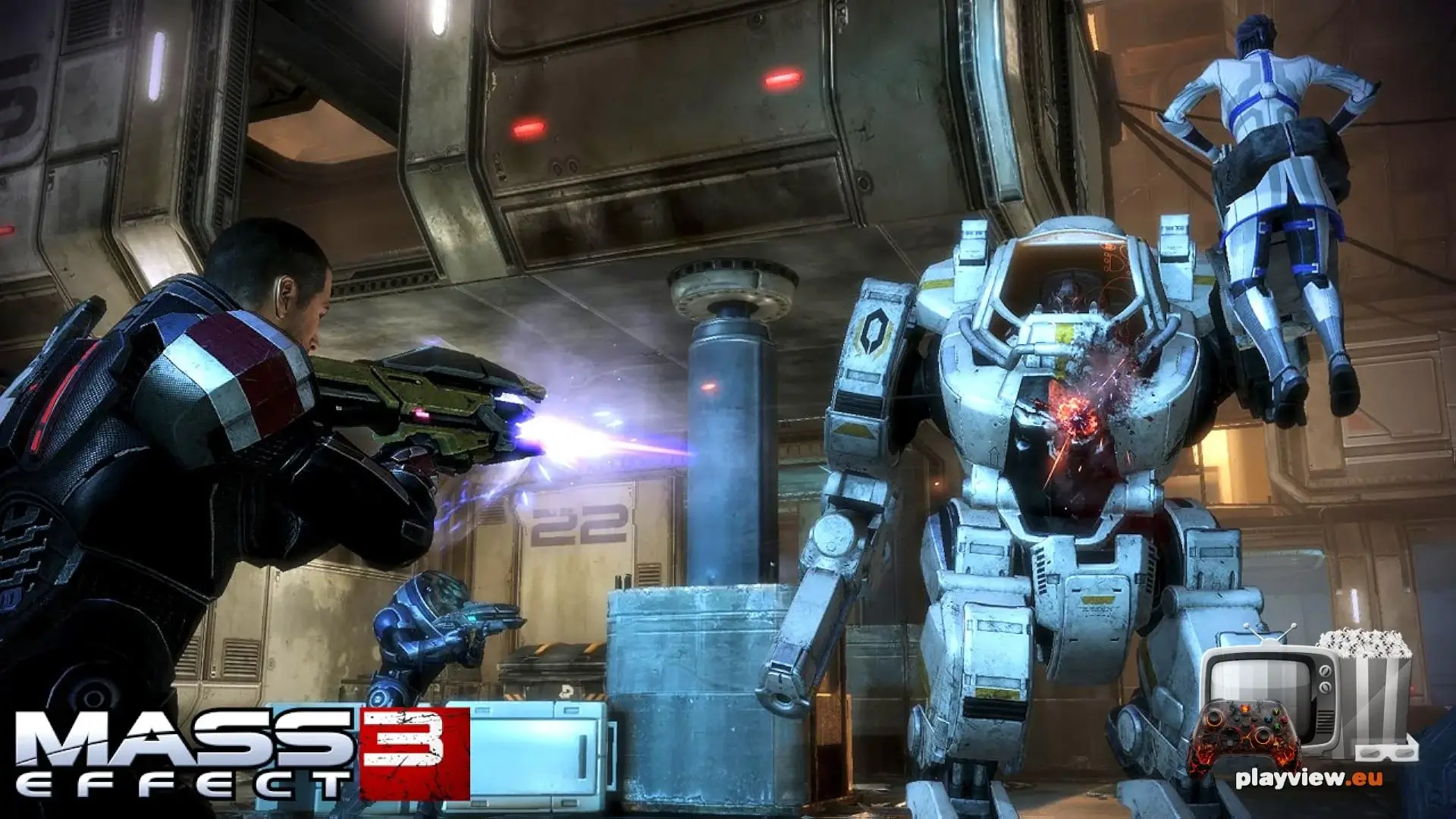
BioWare continued along the direction it had chosen with Mass Effect 2, retaining the third-person shooter approach while pushing the action even further. The cover system, weapon handling, character abilities, and teamwork are more immediate and responsive than ever.
The gameplay is more intense, with battles becoming more demanding and enemies using different tactics. The Reapers, Cerberus, and the Geth all have different units and behaviours, forcing players to adapt their approach to every encounter.
Character classes, different weapons, and upgrades all return, while the weapon weight system affects the recharge speed of abilities. Players must therefore decide whether to carry heavier weaponry or favour greater flexibility when using their biotic and technological abilities.
The squad continues to play an important role in combat, with players able to issue commands to their companions and combine their abilities for more powerful results. The outcome is a combat system that retains the strategic dimension of the previous games without sacrificing its faster pace.
In terms of RPG elements, the game offers character progression, equipment upgrades, and different approaches to missions. It may not place the same emphasis on management and exploration as the first Mass Effect, but it represents a much more refined version of the direction BioWare had chosen with the second game.
Galaxy at War and Multiplayer — A War That Didn't Stop at Single Player
One of the most significant new additions was multiplayer, which brought cooperative gameplay to the main Mass Effect series for the first time. Up to four players could work together in survival missions against successive waves of enemies, choosing different species, classes, and characters with unique abilities.
Multiplayer was connected to the Galaxy at War system, which monitored the readiness of different regions of the galaxy against the Reaper invasion. Players' performance in cooperative missions could influence the Galactic Readiness level and, consequently, the overall military strength Shepard would have available for the final battle.
It was quite an interesting experiment, as BioWare attempted for the first time to connect a multiplayer experience with the development of a single-player story. On the other hand, not everyone liked the fact that a separate multiplayer mode could influence the outcome of their personal adventure.
Nevertheless, multiplayer developed its own community and received support for a considerable period, with new characters, maps, weapons, and enemy factions. It was not simply a rushed addition designed to follow the trends of the time, but a separate part of the Mass Effect 3 experience.
The DLC That Completed the Experience
Just as with Mass Effect 2, BioWare released several DLC packs for the third game, expanding the story and adding significant content. Four of them stand out in particular for their narrative importance.
From Ashes was released on the same day as the main game and introduced Javik, the last surviving Prothean, as a member of Shepard's squad. His presence is particularly important because, for the first time, we get to meet a representative of the ancient civilization that left behind so much information about the Reapers. Javik offers a completely different perspective on the galaxy's history and the war that took place 50,000 years earlier. Its release as day-one DLC sparked considerable controversy, as many players felt that such an important character should have been included in the base game from the beginning.
Leviathan expands the mythology of the Reapers, sending Shepard on an investigation into a mysterious being rumoured to be capable of killing even a Reaper. Through new locations, characters, and revelations, the DLC provides important information about the origins and history of the Reapers, adding greater depth to the trilogy's central threat.
Omega returns to one of the universe's most iconic locations, with Shepard teaming up with Aria T'Loak to liberate the station from Cerberus. The story introduces new characters, difficult decisions, and a different side of Aria, who must work alongside people who do not always share her methods.
Finally, Citadel is perhaps the most emotional DLC in the entire game. A conspiracy puts Shepard in its sights and leads him into an adventure filled with action, humour, and unexpected encounters. What truly makes it special, however, is the opportunity to meet old friends again, spend time with the crew, and enjoy a big celebration alongside the characters who have accompanied us throughout the trilogy. It is essentially BioWare's farewell to the players and one of the most beautiful parts of the overall experience. (It reminds me a little of The Witcher 3's ending — or perhaps I should put it the other way around: The Witcher 3 reminded us of Mass Effect 3.)
It is also worth mentioning Extended Cut, which we will discuss separately below, as well as the multiplayer content packs that added new characters, maps, weapons, and enemies.
Graphics, Atmosphere, and Music
Mass Effect 3 did not make the same technological leap that the second game had made over the first, but it introduced significant improvements to the presentation of battles, environments, and cinematics. The cities being destroyed, the enormous Reaper machines, and the battles across different planets create a sense of scale that perfectly matches the magnitude of the threat.
The atmosphere is clearly darker than in the previous games. Destruction, loss, and the feeling that nobody is truly safe accompany the player from beginning to end. Even the quieter moments aboard the Normandy take on a different meaning, as we know that the war could end at any moment.
Music remains one of the series' strongest elements. The soundtrack combines familiar musical themes with new compositions, creating an atmosphere that supports both the major cinematic moments and the more personal scenes. The music of Mass Effect 3 carries particular emotional power, especially when familiar themes from the previous games return.
What Didn't Work Quite as Well
Despite its many strengths, Mass Effect 3 was not without its problems. The biggest controversy naturally concerned the ending, but there were also issues involving the balance between RPG elements and action.
Some missions and locations felt more linear than one might expect from a game in the series. Exploration had been considerably reduced compared to the first Mass Effect, while equipment management and character progression did not always offer the depth that more traditional RPG fans would have liked.
There was also a feeling that certain important stories and characters could have been developed further within the base game, without requiring players to purchase additional DLC. From Ashes, in particular, generated considerable discussion precisely because Javik is so important to the Mass Effect universe.
And, of course, the connection between multiplayer and Galaxy at War was not a decision that everyone agreed with. Although the system could work as an interesting way to participate in the war, many players did not want to feel that they had to play multiplayer to achieve the best possible outcome in their single-player story.
What Did Critics Say, and How Was Mass Effect 3 Received by the Public?
The critical reception was excellent. Mass Effect 3 launched to very high review scores, and most critics agreed that BioWare had managed to create an impressive conclusion to the trilogy. The Xbox 360 version received a score of 93/100 on Metacritic, as did the PlayStation 3 version, while the PC version reached 89/100.
Reviews praised its cinematic storytelling, intense combat, character quality, and, above all, the way the game incorporated decisions from the previous titles. Eurogamer regarded it as an impressive overall package that rose above its individual shortcomings, while GameSpot awarded it a 9/10, highlighting its ability to make players genuinely care about the fate of the galaxy.
Its commercial performance was also very strong. Electronic Arts announced that more than 3.5 million copies had been shipped to retailers worldwide during the first week of release. In North America, first-day sales were estimated at approximately 890,000 units, while NPD figures recorded 1.3 million physical copies sold in the United States during the first month, excluding digital sales. EA also reported that the game generated more than $200 million in retail sales during the fourth quarter of fiscal year 2012.
There is no reliable, officially confirmed lifetime sales figure that we can safely use today. What we do know, however, is that Mass Effect 3 became one of BioWare's biggest commercial successes of that period and brought the trilogy to a close with enormous popularity.
The Ending That Divided Everyone — What Actually Happened? (Spoilers)
Here we reach the point that remains one of the most discussed moments in gaming history even today.
After all the missions, alliances, and sacrifices, Shepard finally reaches Earth for the final assault against the Reapers. The Crucible has been completed, and the alliance gathers its forces for the final confrontation in London. There, Shepard manages to reach the Citadel, which the Reapers have transported to Earth, and meets Anderson and the Illusive Man.
The final confrontation with the Illusive Man is not simply a battle between two opponents. It is the culmination of the ideological conflict that began in Mass Effect 2. Shepard believes the Reapers must be stopped, while the Illusive Man believes humanity can control them and use their power. Their confrontation ends with the death of the Illusive Man, while Anderson has already been fatally wounded.
Shepard then encounters a mysterious entity appearing as a child, who reveals itself to be the Catalyst, the central intelligence behind the Reapers. It also reveals the reasoning behind the cycles of destruction: the Reapers were created as a way to maintain balance between organic and synthetic life, as the Catalyst believes that the evolution of synthetic life will inevitably lead to the destruction of organic civilizations.
Shepard is faced with three different solutions.
Destroy: The option to destroy the Reapers. The Crucible releases a wave of energy that destroys the Reapers, but synthetic life forms are also affected, including the Geth and EDI. It is the option that directly targets the elimination of the threat, but it comes at an enormous cost.
Control: Shepard sacrifices himself and becomes a new form of intelligence that takes control of the Reapers. Instead of destroying them, he uses their power to protect the galaxy.
Synthesis: The third option leads to the synthesis of organic and synthetic life. All living beings and artificial life forms acquire shared characteristics, creating a new state of evolution for the entire galaxy.
In the original version of the game, these were the three main choices. With Extended Cut, a fourth option was added: Refusal, in which Shepard refuses to choose any of the Catalyst's proposals. In this case, the Reapers complete the destruction of that cycle's civilizations.
The problem was not necessarily that BioWare chose a difficult or bittersweet ending. After all, the entire trilogy had prepared players for a war involving enormous losses. What upset a large part of the community was that the three main endings looked quite similar, both visually and narratively, while many of the choices made throughout the trilogy were not reflected in the way players had expected.
The reaction was enormous. Campaigns and online discussions emerged, and BioWare faced one of the strongest backlashes a video game developer had ever received over the ending of a game.
The response came in the form of Extended Cut, a free DLC released in June 2012. It did not replace the main choices or radically change the original conclusion. However, it added more cinematic scenes, explanations, and epilogues, showing more clearly what happened to the galaxy depending on the player's decision. For many, it was a necessary addition that gave the story a greater sense of closure, although it did not put an end to the debate surrounding the original finale.
Personally, I believe that Mass Effect's greatest strength was always the journey, not just the final destination. The relationships, decisions, sacrifices, and characters we got to know across three games are what make the ending so important. People may agree or disagree with the choices BioWare made, but it is difficult to deny the emotional weight of the moment when we are asked to say goodbye to Shepard.
A Few Details Worth Knowing
BioWare once again used saved decisions from the previous games, allowing characters, relationships, and important events to influence the development of the story.
Extended Cut was released for free and added epilogues and further information about the consequences of the final choices.
Multiplayer received five major expansion packs, adding more than 40 new characters or kits, over 10 maps, and dozens of weapons and upgrades.
The game did not have just one single ending. The player's decisions, military readiness, and the overall outcome of previous choices significantly influenced the final experience.
The End of an Era, but Not of a Legacy
Mass Effect 3 was a game carrying an enormous weight on its shoulders. It had to conclude a story that had begun years earlier, answer dozens of questions, and respect the choices of millions of players. It did not achieve everything in the way everyone would have wanted. Its ending divided the community, some of its decisions sparked controversy, and the debate surrounding its finale continues to this day.
And that is something we do not encounter very often. Starting a game knowing that your choices will follow you into the next two, that a character you met years earlier may return at a critical moment, and that a decision you made without knowing its consequences could change the entire course of the story.
The Journey Continues in the Mass Effect Hub on Playview.eu
With Mass Effect 3, we bring the original trilogy and Commander Shepard's story to a close, at least as BioWare presented it across these three games. But our exploration of this universe does not end here.
On the Playview.eu Mass Effect Hub, a separate My View article dedicated to Mass Effect Legendary Edition will follow. We will revisit all three games through the 2021 collection, examining the technical and visual improvements, gameplay changes, adjustments made to the original experience, and whether Legendary Edition is now the best way to discover or revisit the entire trilogy.
After that, we will move on to Mass Effect: Andromeda, a new chapter that attempted to take the series to a different galaxy, with new characters, new challenges, and a completely different beginning.
Because Mass Effect's story may have completed a major chapter with Shepard, but the legacy of the series continues to keep us engaged.
Mass Effect 3 isn't perfect. But it's one of the most ambitious and emotional trilogy closers we've ever seen in gaming. And even if you don't agree with the ending BioWare chose, you'll hardly forget the journey that got you there.
For me, Mass Effect isn't just three games. It's a single, cohesive story—an experience worth living through from start to finish, knowing that every decision has its place in something much bigger.


