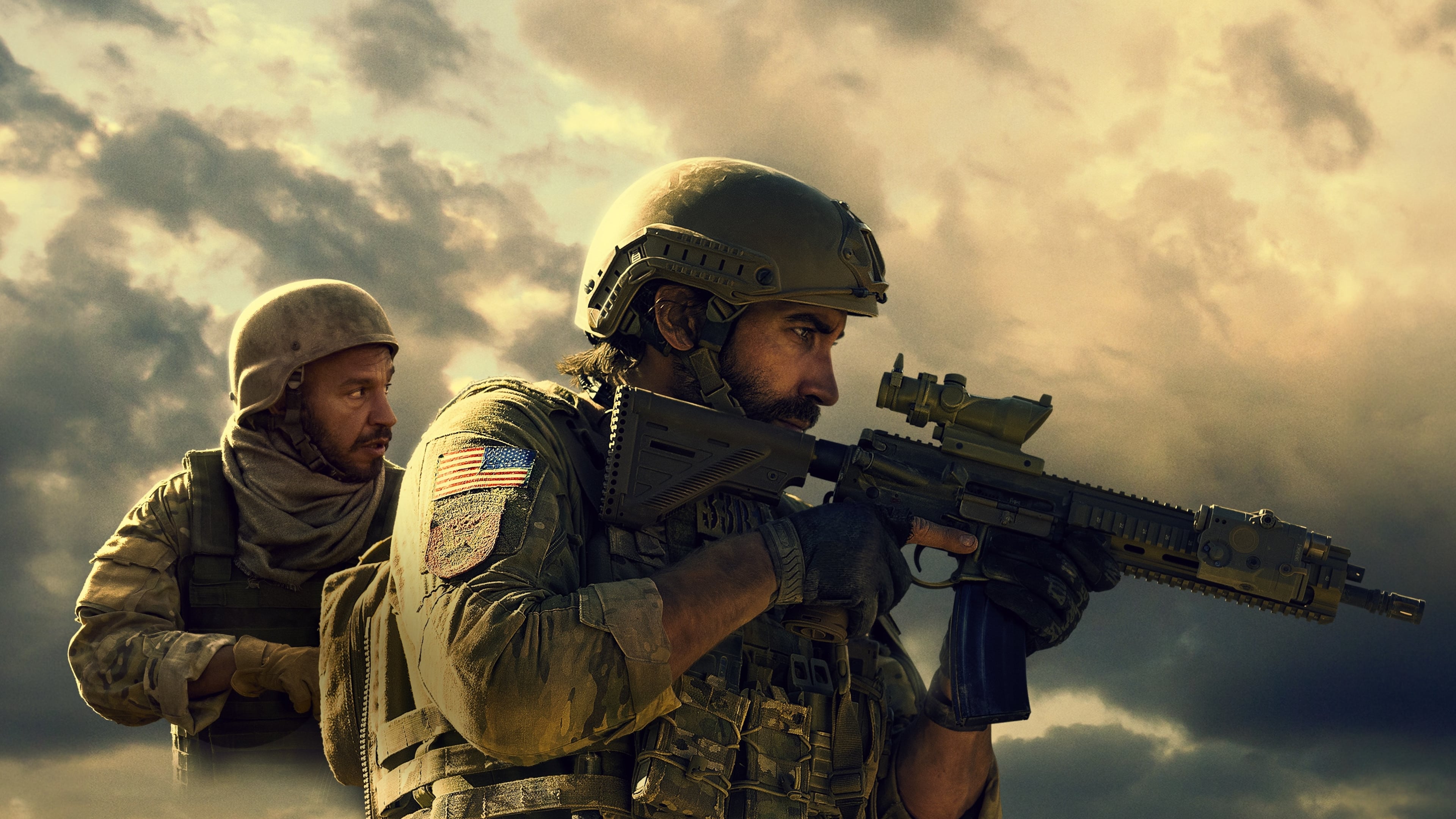
A promise that should never have been forgotten!

By now, you have probably realised that Guy Ritchie is one of my favourite directors, judging by how many of his titles I have included on playview.eu. The Covenant had been on my radar for quite some time. I just hadn't found the right moment to watch it. Until Saturday night, when I finally decided to sit down and give it a go.
The film stars Jake Gyllenhaal, whom I have previously enjoyed in Nightcrawler and Prisoners. Two films I absolutely need to add to our collection here. Alongside him is Dar Salim, whom I first came across through The Terminal List, for which I write episode-by-episode reviews here on Playview, covering both the first and second seasons.
In fact, I had been thinking for quite some time about looking a little deeper into Salim's career and discovering which major production helped introduce him to international audiences. His journey is particularly interesting. He was born in Baghdad, Iraq, and his family left the country when he was still young, eventually settling in Denmark as refugees. Before pursuing acting, he served in the Royal Danish Guard and trained as a pilot, even working in commercial aviation for a while. His first leading role in a feature film came with the Danish production Gå med fred Jamil in 2008, followed by notable appearances in productions such as Game of Thrones and Exodus: Gods and Kings. The Covenant became his first major leading opportunity in Hollywood. And I can confidently say that he made the most of it.
The story takes us to Afghanistan during the war, where American Sergeant John Kinley (Jake Gyllenhaal) serves in a military unit tasked with locating Taliban bomb-making facilities. For their missions, they work alongside local interpreters, people who understand the language, the culture and, most importantly, the terrain in which they operate.
When Ahmed (Dar Salim), an Afghan interpreter with a complicated past and a rather distinctive approach to situations, joins Kinley's team, their working relationship doesn't exactly get off to the best start. Gradually, however, the two men develop a bond of trust, one that will be tested in the harshest possible way when a military mission turns into a nightmare.
From that point on, the film becomes much more than another war thriller. At its heart is the relationship between two men who find themselves on the same side of a conflict, but who don't necessarily share the same background, choices or chances of survival.
One thing worth clarifying is that The Covenant is not based on one specific true story. Its characters and events are fictional, but the story draws inspiration from real-life situations and testimonies of people who experienced the war in Afghanistan.
And to better understand the environment in which the film takes place, it's worth taking a little trip back in time.
Following the terrorist attacks of September 11, 2001, the United States launched military operations in Afghanistan, with the primary objectives of dismantling Al-Qaeda and overthrowing the Taliban regime, which had provided the terrorist organisation with a safe haven. In December of that same year, the International Security Assistance Force (ISAF) was established under a United Nations mandate, with NATO taking command in August 2003.
What initially appeared to be a military operation with clearly defined objectives evolved into a war that lasted almost two decades. The Americans and their allies attempted to establish a stable Afghan state, train local security forces and limit the influence of the Taliban. Despite enormous military and financial investments, the situation remained extremely complicated.
In 2014, the ISAF mission came to an end, and on January 1, 2015, NATO launched its new Resolute Support mission, primarily focused on training and supporting Afghan security forces. In February 2020, the United States signed an agreement with the Taliban regarding the withdrawal of international troops. In April 2021, the final withdrawal process was announced, and it was completed over the following months.
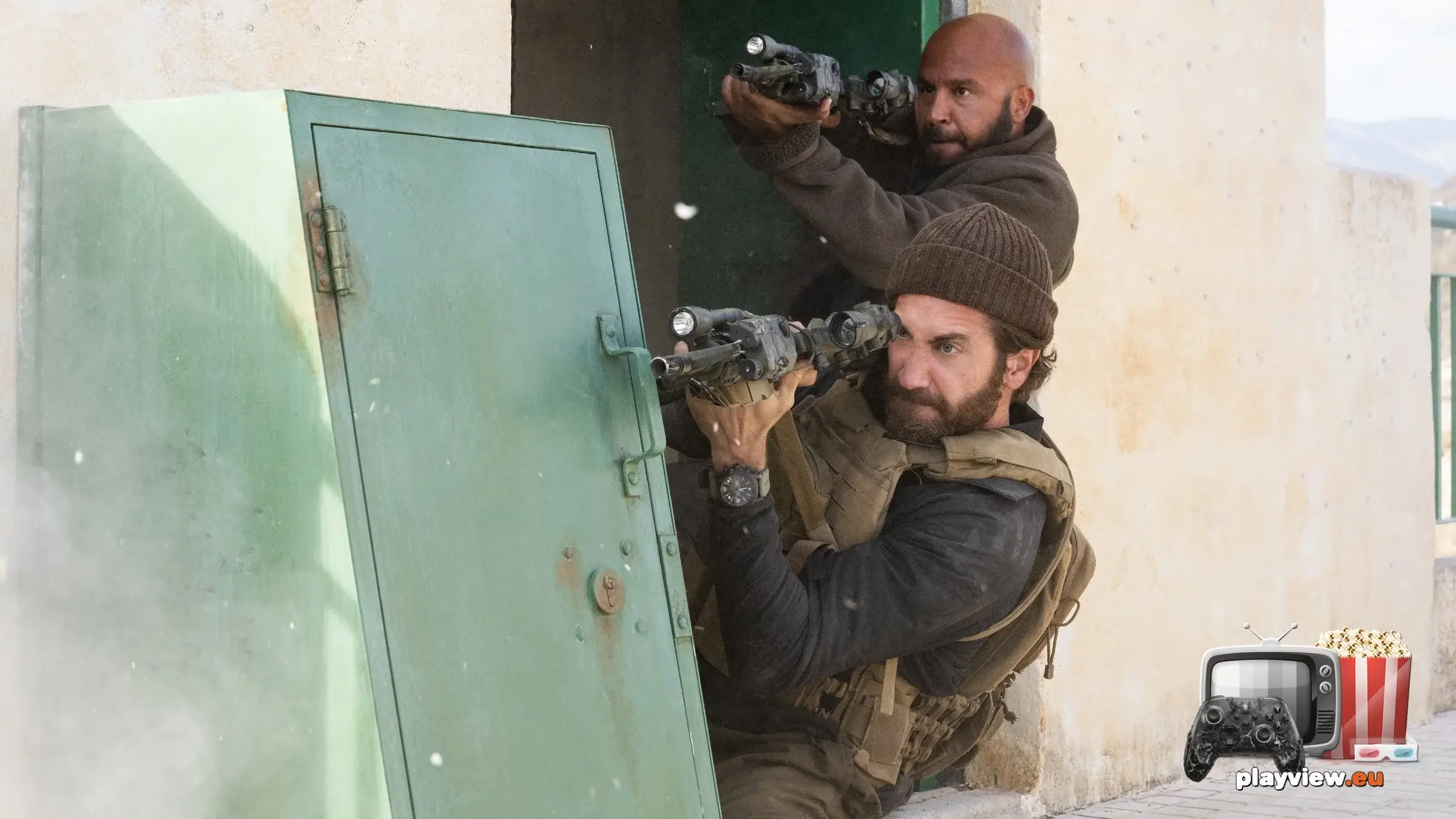
And then came the collapse.
In August 2021, the Taliban captured Kabul, the Afghan government collapsed, and thousands of people attempted to flee the country. Images from Kabul Airport, showing desperate crowds trying to board aircraft, went around the world. More than 120,000 people were evacuated during the operation.
Among those who found themselves in an especially difficult position were the Afghans who had worked alongside American and allied forces. Interpreters, drivers, informants and other local collaborators had spent years exposing themselves to the risk of retaliation. For the Taliban, cooperating with foreign forces could mean death!
There is one particular detail that personally made me appreciate the subject of this film even more. In 2009, the US Congress passed the Afghan Allies Protection Act, establishing the Special Immigrant Visa (SIV) programme. Its purpose was to offer permanent resettlement in the United States to Afghans who had provided significant services to the American government and faced serious threats because of that cooperation.
It sounds simple in theory. In practice, however, the process proved extremely difficult.
According to an official report by the Office of Inspector General of the US Department of State, between 2009 and 2021, a total of 59,977 complete applications had been submitted. Of those, only 22,085 had been approved and issued, while 28,821 had been denied and another 9,071 remained pending. And these figures refer only to the principal applicants, not their family members.
Now imagine being someone who has worked with the American military, put your family at risk and spent years waiting for a visa that could save your life. Watching the people you worked alongside leave the country while you remain behind, with your family still exposed to danger.
This is the real weight that The Covenant carries. You don't need to have experienced a war to understand just how tragic this reality is.
Returning to the film, Ritchie puts aside, at least for a while, his familiar fast-paced cinematic style, full of witty dialogue, and presents us with a more serious and emotional side of his filmmaking. Of course, the action is still there. The combat sequences are intense, the sense of danger is constant, and the direction makes you feel immersed in the environment of the mission.
Interestingly, Ritchie himself had explained that he didn't simply want to make another film filled with spectacular explosions and gunfire. He wanted the action to have an emotional and narrative purpose. In an interview with TIME, he explained that he was more interested in the bond between two people and what they are willing to do to honour a promise. He didn't want to take an explicit political position, but rather explore the ideas of loyalty and personal responsibility.
And that goes a long way towards explaining why this film feels so different from most of his previous work.
There is also an interesting behind-the-scenes story about how he worked with the two leads. According to an interview with GamesRadar+, Gyllenhaal revealed that Ritchie started with a screenplay of approximately 60 pages and left plenty of room for the actors to discover the characters' dynamic together. He didn't want them to rely exclusively on dialogue. Gradually, communication between the two leading actors began to take place through looks, movements and subtle expressions. Gyllenhaal mentioned that they reached a point where they could film scenes containing six to eight lines of dialogue through the actors' eye contact alone, without having to say almost anything.
Even more interestingly, a small line about the dogs in the area came from Gyllenhaal improvising during filming. Ritchie liked it so much that he decided to keep it and incorporate it into the film. It's one of those little details that show how differently a production can evolve when a director gives his actors room to contribute.
And since we're talking about Dar Salim, he has explained that Ahmed is not simply a translator. There is an important distinction between the two roles. A translator transfers words from one language to another. An interpreter, however, needs to understand the environment, people's intentions, cultural differences and recognise when something isn't quite right. During a military mission, he might be the person who realises that a conversation isn't innocent or that an area could be dangerous. In other words, he doesn't simply relay information. He might actually be keeping the people around him alive.
Salim also revealed that one of the more emotional moments involving his character wasn't originally in the screenplay. It emerged spontaneously during filming, when they decided to allow Ahmed to show, for a brief moment, that the weight of everything happening around him was becoming too much. He didn't need to cry or say very much. A small, human moment was enough.
And this is where I want to spend a little time on his performance. Ahmed is a character who doesn't constantly need to explain who he is or what he is thinking. Much of that comes through his expressions and movements. Gyllenhaal, on the other hand, delivers a rather restrained performance that fits his character perfectly. The two work exceptionally well together, without either one trying to overshadow the other.
There are also a few more interesting details about the production. Since filming in Afghanistan wasn't feasible, the production chose Spain, particularly the Alicante region, to recreate the Afghan landscape. Filming began in February 2022, with the area's natural terrain providing mountains, rugged routes and dry landscapes that could convincingly stand in for Afghanistan.
Another interesting decision came after the tragic accident on the set of Rust, in which cinematographer Halyna Hutchins lost her life. Ritchie decided not to use real firearms in his productions. As a result, The Covenant used Airsoft guns and replicas, providing the necessary appearance and functionality without having actual firearms on set. A decision that demonstrates just how seriously the issue of safety was taken.
As for the critics, the film's reception was generally positive, although there were some reservations. On Rotten Tomatoes, it holds an 82% score from critics and a 98% audience score, while on Metacritic it sits at 63/100, based on 28 professional reviews.
Rotten Tomatoes provides a fairly accurate summary of the overall reaction, describing it as a well-acted war thriller with more emotional depth than one might expect and a level of directorial restraint rarely seen in Ritchie's previous work.
Empire awarded it 4/5, highlighting Gyllenhaal's energy and, above all, the opportunity given to Dar Salim to take on a genuinely significant leading role. Variety also approached the film particularly positively, suggesting that through the story of these two men, Ritchie manages to offer a kind of cinematic closure to a war that never achieved its intended goals. Meanwhile, the Chicago Sun-Times praised the director's change of style and his ability to tell such a serious story without relying on his usual cinematic tricks.
There were, however, some more critical voices. RogerEbert.com acknowledged the strength of the relationship between the two leads but criticised the excessive dramatization and the development of the final act, arguing that the film moves away from the realism it had initially established. Similarly, Slant Magazine felt that the story was presented through an overly American-centric perspective, while other reviews pointed out that the film doesn't explore the political and historical causes of the war as deeply as it could have.
And I think this is where the film offers the most room for meaningful discussion. The Covenant is not a comprehensive historical portrayal of the war in Afghanistan. It doesn't delve deeply into the political decisions, military failures, the complexity of Afghan society or the responsibilities of all sides involved. Instead, it chooses to tell a more personal story, using the war as the backdrop against which trust and loyalty are put to the ultimate test.
However, since we're talking about Guy Ritchie, there is one more thing I can't ignore. Those of you who have watched enough of his films know that he has no particular problem with killing off characters, even when we consider them important to the story. So, as the film progressed, I won't hide the fact that I was rather anxious to find out whether everyone would eventually make it out alive. I won't say anything more, because I don't want to spoil the experience.
My advice before sitting down to watch it is now a familiar one: Avoid the trailer! Unfortunately, movie trailers nowadays have reached the point where they reveal almost the entire film. And I'm saying this as someone who has collected trailers and other related videos here on Playview. Personally, I rarely watch them when it comes to films I genuinely want to see.
The Covenant is a film worth your time. Not only because of its action, but primarily because of the story it chooses to tell and the real human tragedy behind it. A story about trust, loyalty and promises that should never be forgotten, even after a war has ended.
And perhaps that's what stays with you most when the credits roll. It isn't just about who fought alongside you, but also about who remembered their promise when everything was over.


