
A contender for Mass Effect's spot!

In a year when we received the very bad news about BioWare and EA shutting down the company (EA, the destroyer of other companies, in my opinion), it also felt like the end—though whether it is final remains to be seen—of any chance of seeing Mass Effect 4. (If you’re a fan of the series, check out a unique feature here in our Hubs: Mass Effect: A Galactic Legacy)
While we were dealing with that disappointing news, it helps a little that in 2027 we’re expecting not one, but two new space-exploration games, each aspiring to become Mass Effect’s spiritual successor! One is The Expanse: Osiris Reborn, which I’ll examine below to see how closely it is connected to the series itself. The other is Exodus, which is already on Playview, where you can find more information here: Exodus. Exodus has several former BioWare veterans on its team, and both games seem capable of filling that gap—a gap that, in my opinion, Starfield never managed to fill.
So, let’s enter the world of The Expanse and see what awaits us in 2027.
A New Story in The Expanse Universe
The Expanse: Osiris Reborn is not a video game adaptation of the television series, nor an attempt to relive the adventures of James Holden and his crew. It is an entirely new story, with its own protagonists, set in the same universe and drawing on the world created by James S. A. Corey, the pen name of the writing duo Daniel Abraham and Ty Franck.
Our story begins in the 24th century, on the asteroid Eros, where humanity has expanded across the solar system but has not left its old habits behind. Earth, Mars, and the inhabitants of the Belt are locked in constant political and social conflict, with trust among the rarest commodities.
Our character is a mercenary working for Pinkwater Security, who is on Eros for a short break with his twin brother, J. But when a catastrophic crisis erupts at the station, the rest period turns into a fight for survival. The quarantine and escalating crisis will lead the protagonist into an adventure that brings him face to face with a conspiracy far bigger than himself.
The story is not a parallel version of the events in the series. It is a standalone adventure, with its own cast of characters and choices. However, it takes place within The Expanse universe, during a period when the solar system’s political balance is particularly fragile and protomolecule technology (more on that below) has already begun to change everything humanity knows.
Owlcat Games has confirmed that we will encounter familiar locations and faces, while also exploring areas and aspects of the universe that have not been developed in the same way in the series. So, we don’t need to know Holden’s story in advance or have read the books to understand what is happening.
Personally, I haven’t watched The Expanse yet, which makes Osiris Reborn even more interesting to me. I don’t have an emotional connection to the series’ characters, nor do I know the details of its story. But that could work in the game’s favor, as I’ll be able to approach it as a new sci-fi adventure without having to compare every moment with something I’ve already seen.
On the other hand, fans of the series have an additional reason to look forward to the game. They’ll be able to recognize locations, events, and references, while also seeing a side of the universe that hasn’t been explored in this way before.
So, What Was The Expanse?
The Expanse began as a series of science-fiction novels by James S. A. Corey, the pen name of Daniel Abraham and Ty Franck. It was later adapted for television, first by Syfy and then by Amazon Prime Video, gaining a particularly devoted audience.
The series stood out because it didn’t treat space as a simple backdrop for spectacular space battles. Instead, it presented a humanity that had conquered the solar system but still carried the same political conflicts, social inequalities, and personal ambitions we know today.
Earth, Mars, and the Belt are not simply different regions of space. They are societies with different interests, different needs, and deep-rooted divisions. The inhabitants of the Belt, the Belters, have grown up in conditions that have shaped even their bodies, while their dependence on the planets for essential resources creates a constant imbalance of power.
At the center of this political tension is protomolecule technology, an alien element that gradually changes everything we know about the universe. The series thus combines political science fiction with mystery and exploration, while never abandoning the sense that humans remain small and vulnerable in the face of space.
That’s also what makes me look forward to the game. The Expanse isn’t another universe where the protagonist saves the galaxy with a superweapon. It’s a world where choices, alliances, and consequences carry real weight.
Mass Effect, but with The Expanse’s Hard Edge
We can’t talk about Osiris Reborn without mentioning Mass Effect. Owlcat itself has acknowledged that BioWare’s series was an inspiration for the game, while its early presentations have led many to describe it as a potential spiritual successor.
The similarities are obvious: third-person perspective, a squad of companions, dialogue, choices, relationships between characters, and cover-based combat. The main difference lies in the world and the way it affects gameplay.
In Mass Effect, we travel across a galaxy full of different alien species, advanced civilizations, and technologies far beyond anything humanity has today. In The Expanse, by contrast, we remain within our own solar system. Humans have not become superheroes, weapons have no magical properties, and space remains a hostile place where one mistake can prove fatal.
This is reflected in the combat, too. Owlcat describes encounters as dangerous, requiring players to make use of cover, equipment, and their team’s abilities. Companions are not simply characters who follow the protagonist. They have their own opinions, take part in missions, and can influence both combat and the development of the story.
There will also be personal quests and relationships with companions, while our choices will affect their paths. It’s an element that strongly recalls BioWare’s philosophy, but Owlcat has its own experience creating RPGs built around choices and consequences, through Pathfinder and Warhammer 40,000: Rogue Trader. (Both are games I love, especially Pathfinder. I haven’t spent as much time with Rogue Trader as I would have liked, but I’ll add both to our database in the future.)
The key difference is that Osiris Reborn is not trying to recreate Mass Effect. It wants to use a familiar structure to tell a story that fits its own universe. And if it manages to combine an emotional connection with the characters with the tension and realism of The Expanse, it could offer something truly special.
Gameplay: Choices, Companions, and Zero-Gravity Combat
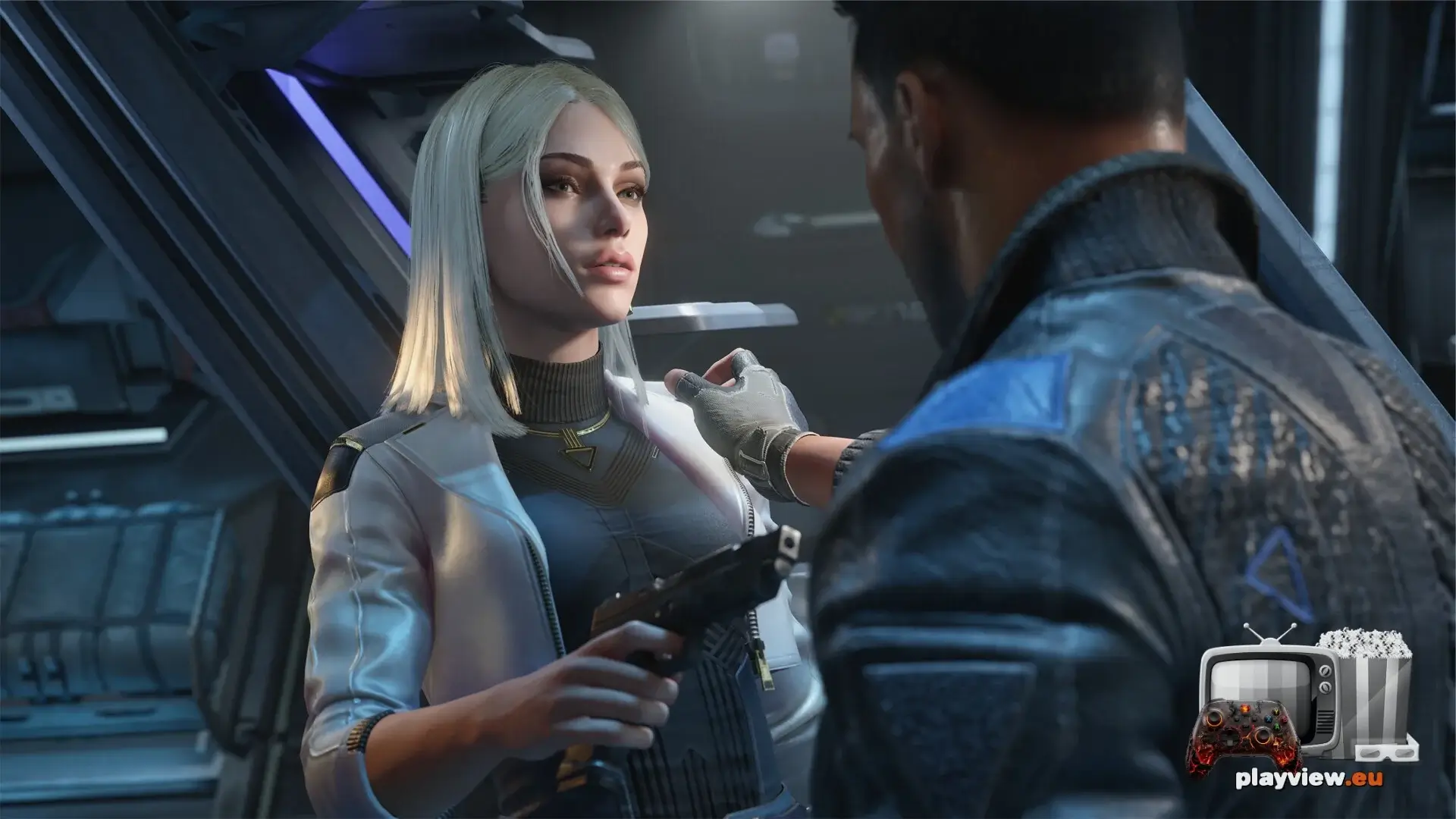
Osiris Reborn is a third-person action RPG focused on storytelling, player choices, and cooperation with companions. Its structure will be semi-open: there will be main missions that move the story forward, as well as larger areas where we can explore, talk to characters, and take on side quests.
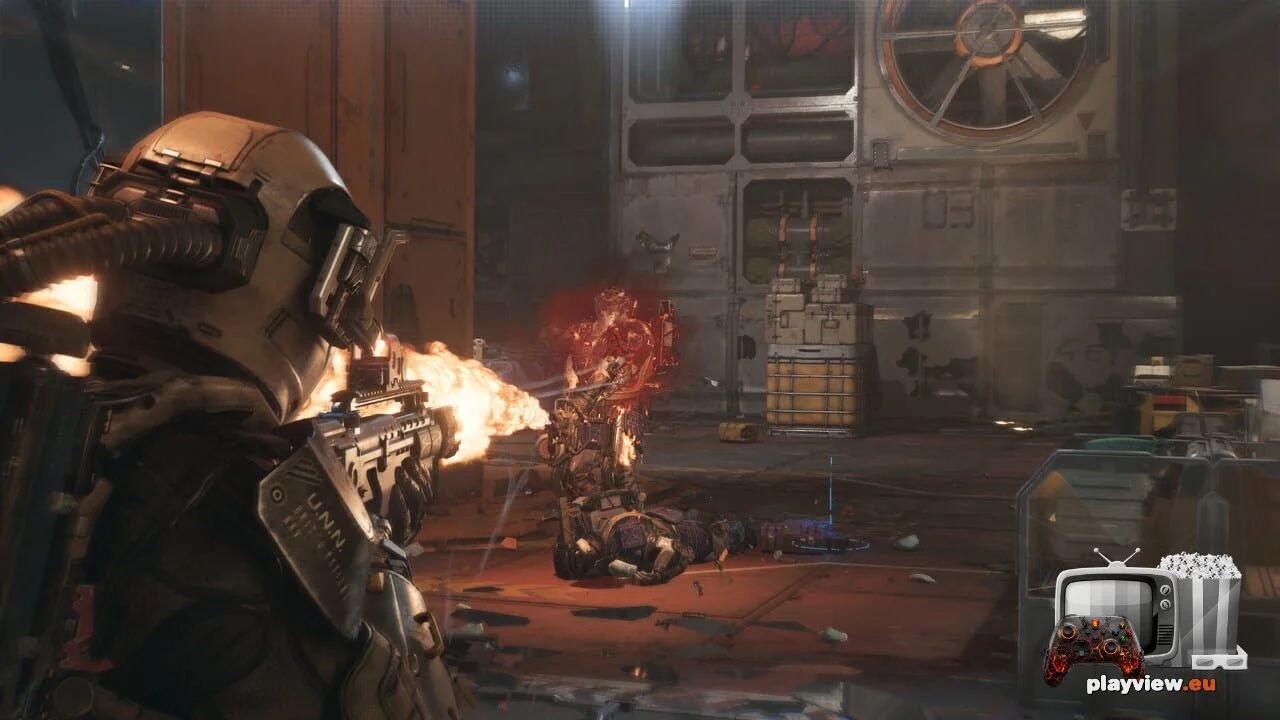
The combat system is based on cover, movement, and the use of gadgets. Companions can attack specific enemies, use their own abilities, and influence the battlefield. Their positioning will matter, while the command system will allow us to coordinate the team and adapt our strategy.
One of the most interesting elements is that we won’t be locked into a specific character class. Gadgets and equipment will allow for different approaches, from drones and turrets to tactical scanners and more aggressive tools. We’ll be able to combine our equipment according to the playstyle we prefer.
Even more interesting is the approach to zero gravity. In certain missions, we’ll move through environments without gravity, using magnetic boots to walk on walls and other surfaces. Combat under these conditions requires a different way of thinking, since movement, cover, and our position in the environment don’t work as they would in a conventional shooter.
The team has also discussed using real scientific data to convey the feeling of life in space. This is where the developer diaries are worth a closer look. They are not simply short trailers with impressive footage; they present specific decisions made by the development team, including through articles on the company’s website.
Developer Diaries: What Owlcat Has Revealed So Far
Owlcat has published several developer diaries for Osiris Reborn, each focusing on a different part of the experience. They’re worth checking out because they give us a more concrete picture of what the team is trying to achieve.
Life in Space — November 20, 2025
The first diary that stands out to me is “Life in Space,” in which the team discusses how it is trying to portray life and work in space. Leroy Chiao, a former NASA astronaut and commander of the International Space Station, took part in the process, helping the team understand the real conditions people face in space.
His involvement isn’t just about scientific accuracy. The team also had to find ways to translate real-world difficulties into gameplay that remains fun. For example, the need to remain tethered to a spacecraft whenever you work outside it may be realistic, but it could make the experience overly restrictive.
The diary presents the work done around spacewalking, weapons, and the conditions of space, with the aim of combining a scientific foundation with cinematic action. It’s one of the most interesting aspects of the game’s development, because it shows that the team doesn’t simply want to put a character in a spacesuit in a zero-gravity environment.
What Are the Early Impressions Saying?

Beta Mechanics Overview — April 22, 2026
This diary presents the beta’s core mechanics through Leonid Rastorguev and Grigory Ponomarev, Game Design Director and Lead Game Designer, respectively.
The presentation covers combat, character progression, dialogue, and cinematic scenes. The beta includes a complete mission from the early stages of the game, offering a first look at how the different mechanics fit together.
What’s particularly interesting is that the team isn’t simply presenting an isolated combat encounter. It wants to show how exploration, combat, character progression, and storytelling come together to form the experience. For a game that wants to stand alongside titles such as Mass Effect, this combination may be more important than any impressive trailer.

Introducing Origins — More Than Just a Background — June 24, 2026
The Origins diary focuses on our character’s background and how it shapes their identity. We’ll be able to choose whether our protagonist comes from Earth, Mars, or the Belt, and this is not simply a choice of appearance or a typical background.
The character’s origins affect how they perceive the world, their relationships with others, and the choices available to them. In a universe where political and social differences between people matter so much, this choice could add greater depth to the role we play.
It’s also a nice way to bring us into the world of The Expanse without requiring us to have watched the series. We don’t begin as a neutral hero who simply discovers the universe. We already have a place within it.
Weapons, Gadgets, and Player Freedom — July 31, 2026
Here, the team explains how equipment, rather than a predefined class, will determine the way we fight. Gadgets and weapons will allow for different approaches, while players will be able to adjust their equipment according to the needs of each mission.
This philosophy is interesting because it allows players to experiment and find their own combat style. Instead of choosing a class at the beginning and following a specific path, we’ll be able to change our tools and adapt.
The Choices You Make — and the Ones That Make You — August 18, 2026
This diary focuses on choices and their consequences. According to the team, a decision can change the course of a station, affect a companion’s future, or reveal what kind of leader our character has become.
This may be the most important element for those waiting for an RPG with meaningful choices. It’s not enough to have different dialogue options. The goal is for decisions to have consequences that can be felt in the story and in our relationships with the people who accompany us.
Culture of the Belt — October 14, 2026
The most recent diary worth highlighting is dedicated to the culture of the Belters and their language, Lang Belta or Belter Creole.
The language was created for the television series by linguist Nick Farmer and is a mixture of linguistic influences from different parts of the world. Owlcat has collaborated again with Farmer, as well as choreographer Roberto Campanella, to portray not only the language but also the Belters’ gestures.
These gestures are particularly important because they were originally used to make communication easier while wearing bulky spacesuits and helmets. In the game, however, they have become part of the Belters’ cultural identity.
It’s a detail that shows how seriously the team is approaching the universe it has been entrusted with bringing to gaming. It’s not enough to design a station with spacesuits and fill it with NPCs. The team wants the people who live there to have their own culture, language, and way of communicating.

The game’s early presentations hWave generated plenty of interest, along with some understandable reservations. Journalists who have tried early versions have described a game that has already managed to capture the atmosphere of The Expanse, with particularly strong moments of exploration and combat.
The sense of space, the locations, and the intensity of the encounters have received positive comments. Zero gravity and scenes in which the player is exposed to the vacuum seem to be among the game’s most impressive elements.
There are, however, areas that still need work. Some presentations have pointed out that the cover system and movement during combat are not yet as smooth as they should be, while enemy AI and mission flow need further improvement.
Owlcat has stated that it has taken feedback from the tests into account and has already made changes to movement, combat, and AI. The game is still in development, so these early impressions are not a final verdict.
Osiris Reborn or Exodus?
In 2027, Osiris Reborn won’t be the only game competing for our attention. Exodus, from Archetype Entertainment, is another major sci-fi RPG that has already sparked discussion, especially because its team includes several former BioWare developers.
Both games share Mass Effect as a point of reference, but they seem set to offer quite different experiences.
Osiris Reborn takes place in a more grounded setting. Its story unfolds within our solar system, amid political conflicts, human relationships, and technology that isn’t so far removed from today’s reality. Its action is built around teamwork, choices, and consequences, while the atmosphere of The Expanse adds a distinctive harshness.
Exodus, on the other hand, takes us to a much more distant future, with alien civilizations, advanced technology, and a journey shaped by relativity and time dilation. Its central idea is that the protagonist can travel vast distances, but the people and worlds they leave behind continue to evolve.
Exodus seems to place greater emphasis on exploration and the consequences of time, while Osiris Reborn invests more in the intensity of the action and the creation of a personal story within an already familiar universe.
It’s too early to say which of the two will be better. The important thing is that there doesn’t need to be a winner. If both manage to deliver compelling characters, meaningful choices, and a world we want to explore, then we’ll have two very different but equally interesting sci-fi experiences.
And that’s something we’ve been missing from Starfield, at least as I had imagined it. I’m not simply looking for a huge map filled with planets and missions. I want a world that makes me care about its people, asks me to make difficult decisions, and gives me the feeling that my presence matters.
2027 Could Be the Year of the Sci-Fi RPG
The Expanse: Osiris Reborn has a difficult task ahead. It must prove that it can bring one of modern science fiction’s most beloved universes into a video game without relying exclusively on the nostalgia of the series’ fans.
At the same time, it must prove that Owlcat can make the big leap from its traditional isometric RPGs to a more cinematic third-person experience without losing the depth that defines its games.
The early impressions are encouraging. The atmosphere, the approach to combat, and the emphasis on companions suggest that the game has a clear direction. What remains to be seen is whether the story and choices will have the depth we expect from a game like this.
Personally, I haven’t watched the series yet, but that doesn’t stop me from looking forward to Osiris Reborn. If it manages to make me care about its characters and genuinely interested in the fate of my crew, then it will have achieved something very important.
So, 2027 may bring us not one but two major sci-fi RPGs that will try to fill the gap left by Mass Effect. And if Osiris Reborn manages to combine the atmosphere of The Expanse with the storytelling and choices we loved in BioWare’s games, then we may have one of the most interesting space adventures of the coming years ahead of us.


