
From revenge to intelligence warfare | S02E01–E05

The first season of The Terminal List was thoroughly enjoyable. Let me briefly recap its story: James Reece, an elite Navy SEAL, returns from a mission in Syria in which almost his entire team is wiped out in an ambush. Things get even worse when he discovers that his men had been experiencing suspicious symptoms, and shortly afterwards, he loses his wife, Lauren, and daughter, Lucy, in a brutal attack. His investigation leads him to uncover a conspiracy involving pharmaceutical companies, military officials, and people within the US government. With the help of journalist Katie Buranek and the man he considers a brother, Ben Edwards, Reece launches a bloody campaign of revenge, recording the names of those responsible on a list from which nobody is going to escape.
In the end, however, the greatest betrayal comes from the person he least expects. Ben turns out to be part of the conspiracy, forcing Reece to kill him. Having completed his list, he leaves his past behind and sets sail for Africa, uncertain whether the brain tumour he is suffering from will allow him to live much longer.
Read my full review of the first season here.
The second season begins six months later, with Reece still at sea aboard Ben’s sailboat. The man who lost everything and exacted his revenge now faces perhaps his most difficult question: what do you do when the purpose that kept you alive has been fulfilled? Reece no longer has his list. What he does have are his guilt, his memories, and an illness that continues to threaten his life.
His destination is Mozambique, home to the Hastings Hunting Reserve, a wildlife sanctuary associated with former Navy SEAL Raife Hastings. There, Reece tries to find a new sense of balance, away from missions and people who want to use him. There is something almost ironic about seeing a former soldier in the African wilderness. A man who has spent his life hunting and killing is now searching for a reason to protect something living.
Naturally, the peace does not last long.
From Mozambique to an international conspiracy
The second season takes the series in a noticeably different direction. The first had a clear emotional core: the loss of a family and one man's determination to punish those responsible. Now, the story expands onto an international stage, involving the resurgence of the Al-Qaeda threat, weapons shipments ending up in the hands of terrorists, and a conspiracy that appears to reach the highest levels of political power.
Meanwhile, Raife Hastings discovers that weapons shipments are being diverted to terrorist organisations. His investigation leads him to Katie Buranek, who is still dealing with the consequences of the journalistic revelations she made during the first season. Publicity has not given her the credibility or protection she might have expected. Instead, she has become someone several powerful people would prefer to keep away from sensitive information.
I find it interesting that the writers have chosen not to confine Katie to the role of the journalist who helps the protagonist. She now has her own mission, her own sources, and an investigation that could prove just as dangerous as Reece's military operations. Journalism becomes a second battlefield, where information, leaks, and credibility carry as much weight as weapons.
Here, the series returns to one of its familiar mechanisms: nobody is entirely safe, and nobody has the complete picture. The difference this time is that Reece cannot simply take a name, add it to his list, and start hunting. First, he must understand who is really behind everything that is happening.
Reece returns to action
When the CIA tracks Reece down, it does not simply try to bring him to justice. Instead, it offers him a deal. The agency promises to help clear his name and give him the opportunity to address his brain tumour through surgery, provided he agrees to cooperate.
This offer may be the most important development of the new season for Reece as a character. For the first time since completing his revenge, he is faced with the possibility of a future that does not have to end prematurely. He could accept the help, deal with his illness, and try to live with everything he has done.
Personally, I find it difficult to trust this offer. The CIA is not a charity, and Reece remains an exceptionally dangerous man whose skills and experience could prove invaluable in an operation. The promise of a possible cure feels like the perfect bait to persuade him to accept a mission he might otherwise refuse.
Perhaps, of course, the agency genuinely wants to help him. Based on what we have seen through the fifth episode, however, my suspicion outweighs my optimism. In the world of The Terminal List, every deal comes at a price, and every piece of information can be used as a means of manipulation.
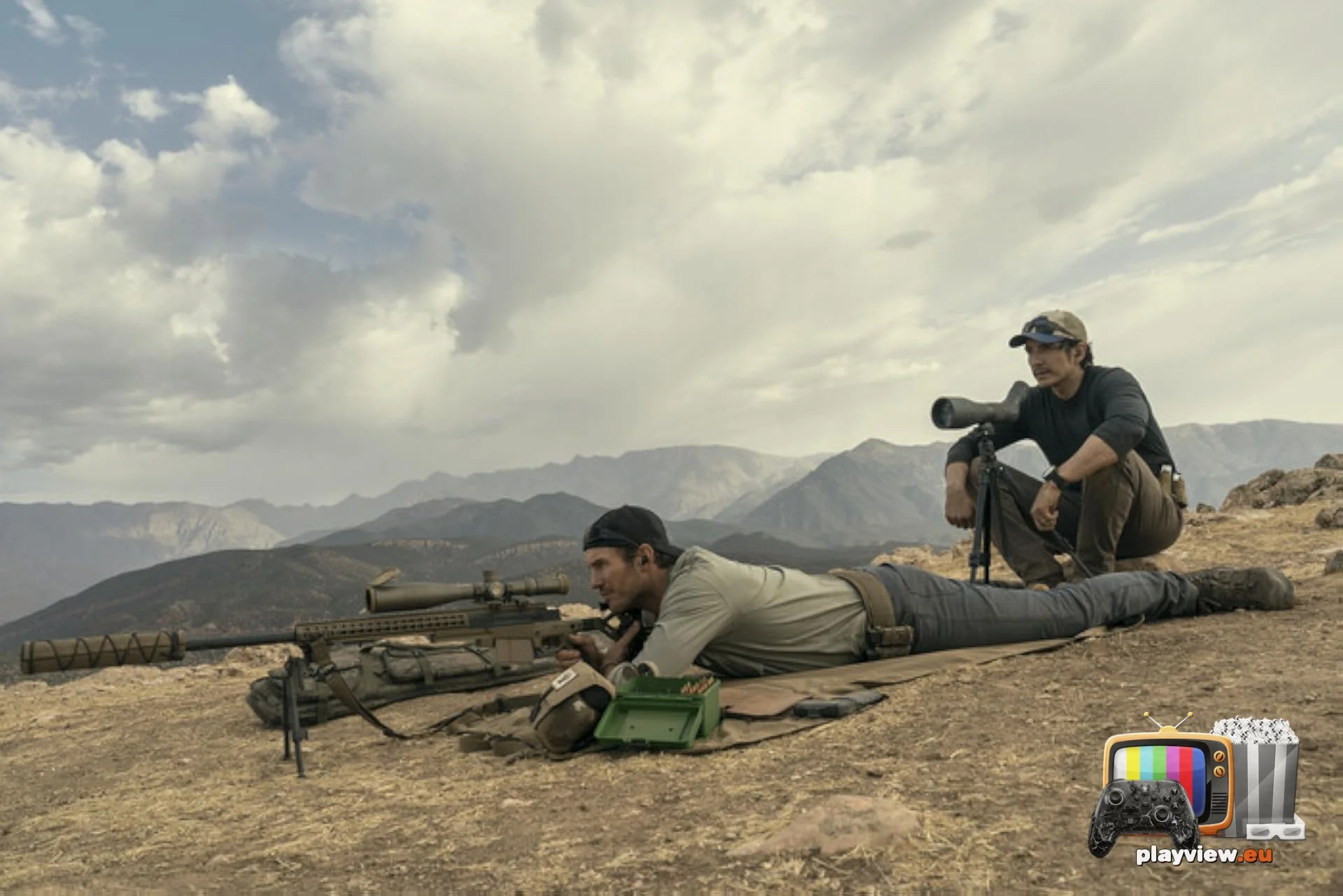
Reece travels with Freddy Strain to a secret facility in Morocco, where they prepare for a mission targeting Mohammed “Mo” Farooq, a former ally from their operations in Iraq who is believed to have joined Al-Qaeda. For Reece, the mission becomes personal. He is not facing another anonymous target, but a man with whom he has shared real combat experiences.
And this is one of the season's most interesting ideas. What happens when someone you knew as a fellow soldier ends up on the opposite side? Is he truly a traitor? Has he changed, or has your perception of him changed? And how easy is it to carry out a mission when your personal history conflicts with the orders you receive?
Reece knows all too well that military reality is not always as straightforward as official reports make it seem. His previous experiences have taught him that those giving the orders may have completely different objectives from the people risking their lives in the field.
The trap of trust
As the next episodes unfold, the operation becomes increasingly complicated, and suspicions of leaks within the CIA itself begin to look increasingly credible. Reece and Freddy are forced to take matters into their own hands as their trust in the agency deteriorates. The action moves to Beirut, where the two former SEALs try to find answers about Mo, while Katie continues investigating the suspicious weapons shipments.
Things take an even darker turn when Stewart McGovern, an important contact in Katie's efforts to uncover the truth, appears to have been murdered. The journalist finds herself facing a familiar problem once again: she knows something major is happening, but the people who could confirm her information are either in danger or disappearing.
Her investigation begins to connect with the Kestrel operation and the possible involvement of people with significant political influence. The question is not simply who is trafficking the weapons, but who benefits from their reaching their intended destinations. An operation on this scale could hardly function without access to intelligence, protection, and people who know how to make evidence disappear.
In the fifth episode, titled Frogman Sh$t, Reece, Freddy, and the Ground Branch team spring into action to reach their next Al-Qaeda target and prevent another attack on the West. Meanwhile, Raife and Katie move closer to uncovering the Kestrel conspiracy.
The important thing is that the series no longer treats Reece's mission as a straightforward operation to eliminate a terrorist network. Every success raises new questions, every piece of information could be misleading, and the distinction between allies and enemies becomes increasingly difficult to establish.
By the end of the fifth episode, the story has opened enough fronts to create genuine anticipation for what comes next. The terrorist threat, Katie's investigation, the suspicions surrounding the CIA, and Reece's medical condition all run in parallel, without the connections between them having been fully revealed.
Raife Hastings: a very welcome addition
If there is one character who particularly stands out in these first five episodes, it is Raife Hastings, played by Tom Hopper.
Raife is not simply another military man who returns to help the protagonist. He has his own personality, contacts, and investigation. His involvement in uncovering suspicious weapons shipments creates a second storyline that complements Reece's mission.
Hopper has the physical presence the role demands, but what I like most is that Raife does not feel like a character who exists merely to follow someone else's orders. He takes initiative and shows determination, while his collaboration with Katie allows the series to combine its military thriller elements with political intrigue and investigative journalism.
We have also seen Hopper in The Terminal List: Dark Wolf, which I strongly recommend watching if you want a broader perspective on the world of the series. He was excellent there as well. I will add my review to Playview soon.
His presence is also one of the reasons the second season seems more willing to invest in parallel storylines. The series does not need Reece to appear in every scene to maintain our interest. That is a positive development, particularly as the story expands geographically and politically.
Africa as a setting and the power of cinematography
One of the things I am enjoying most about the new season is its cinematography and the way it makes use of the African landscape. The shots in Mozambique create an entirely different atmosphere from the enclosed facilities, military bases, and urban environments that dominated the first season.
The vast landscapes, wildlife, and sense of isolation provide a beautiful visual counterpoint to the violence that follows Reece. There is an interesting contrast between the tranquillity of the reserve and the inner world of a man who has never truly managed to escape the war.
Production was not limited to a single African setting, either. According to author and executive producer Jack Carr, filming for the second season took place in South Africa, Canada, and Morocco. This helps explain why the series has such varied visual textures, moving from Africa's natural environments to urban and military operations.
The cinematography works particularly well when it allows the landscape to breathe instead of rushing straight into the next action sequence. It gives the story a sense of scale and makes the transition from a personal revenge story to an international espionage thriller feel visually natural.

What do critics think of the second season?
The return of The Terminal List has prompted an interesting response. The first season received quite a few negative reviews from professional critics, despite its strong audience reception. The second season appears to have improved its standing, although it has not convinced everyone.
On Rotten Tomatoes, the second season has been tracking a higher approval rating than the first in its early reviews, with the figures changing as more reviews are added. The overall picture is mixed: several critics acknowledge improvements in the action, espionage elements, and Chris Pratt's performance, while others feel the writing still relies on familiar formulas.
One of the main criticisms concerns the conventional nature of the storytelling. Some reviewers argue that the series aims to become a major international thriller but does not always manage to avoid predictable twists and familiar genre tropes. Other assessments are more positive, suggesting that the second season makes better use of the elements that have made the show appealing to its audience.
Personally, I understand both sides. The Terminal List is not trying to become a complex political drama that exhaustively examines every character's motives. It wants to be a hard-hitting military thriller featuring fast-paced operations, betrayals, pursuits, and characters forced to make decisions under extreme pressure. The question is whether the international conspiracy has enough depth to justify the larger scope of the story.
Through the fifth episode, the action clearly takes centre stage. The mystery, however, has enough interesting elements to make me curious about where the story will go next.
All episodes at once: perfect for binge-watching, not necessarily for the series
The second season premiered on Prime Video on October 21, 2026, with all eight episodes available from day one. This is an approach we often see on the platform, although it is not a universal rule for every Amazon series. The Terminal List: Dark Wolf, for example, followed a different release schedule.
I completely understand why the platform chooses this method. For viewers who want to spend a weekend watching an entire season, it is excellent. They do not have to wait a week to find out what happens next and can follow the story at their own pace.
Personally, though, I am not a big fan of this practice. I would prefer two episodes to be released during the first week, followed by one episode every week. That would give us time to discuss the twists, analyse theories, and let the events sink in.
When an entire season appears at once, there is a risk that it becomes a large package of content that is consumed quickly and forgotten just as quickly. Viewers move on to the next episode before they have had time to process what they have seen, while the discussion surrounding the series loses the longevity it could otherwise have enjoyed.
This is particularly relevant to The Terminal List, where revelations and betrayals are an important part of the experience. I would like more time between episodes to wonder who is telling the truth and who is using Reece for their own purposes. Binge-watching has its appeal, but it is not always the best way to build a series' momentum.
Reece's return has a purpose
Five episodes into its return, the second season of The Terminal List has achieved its primary objective: it has brought us back into James Reece's world and introduced a new threat that extends far beyond personal revenge.
The action is intense, the cinematography is excellent in several scenes, and the addition of Raife Hastings brings greater depth to the parallel storylines. Chris Pratt remains effective as a man who has lost almost everything and continues to operate like a soldier, even when he no longer has a clear reason to fight.
What interests me most is his medical condition. The possibility of surgery could radically change his future, provided it is not simply another tool in the hands of those who want to control him. Reece has already paid a heavy price for trusting people he considered his own. It would be a shame to see him repeat the same mistake simply because someone is now offering him something he desperately needs.
The second season has largely moved away from the first season's self-contained revenge story and opened up a much bigger game. This could work in its favour, provided the conspiracies develop real substance and the characters do not get lost amid the constant operations.
By the end of the fifth episode, though, I am having a good time. The Terminal List delivers the intensity I expect from a military thriller, features some striking imagery, and leaves enough questions unanswered to make me want to continue watching.
And that is where Reece's greatest challenge lies: having completed his list, he must now find a reason to keep living. Whether he can escape his past is a different battle altogether, perhaps the most difficult one he has ever faced.


