MY VIEW · UPDATE
Everyone against everyone in the first season and what I expect in the 2nd
Last Samurai Standing · 03/10/2026
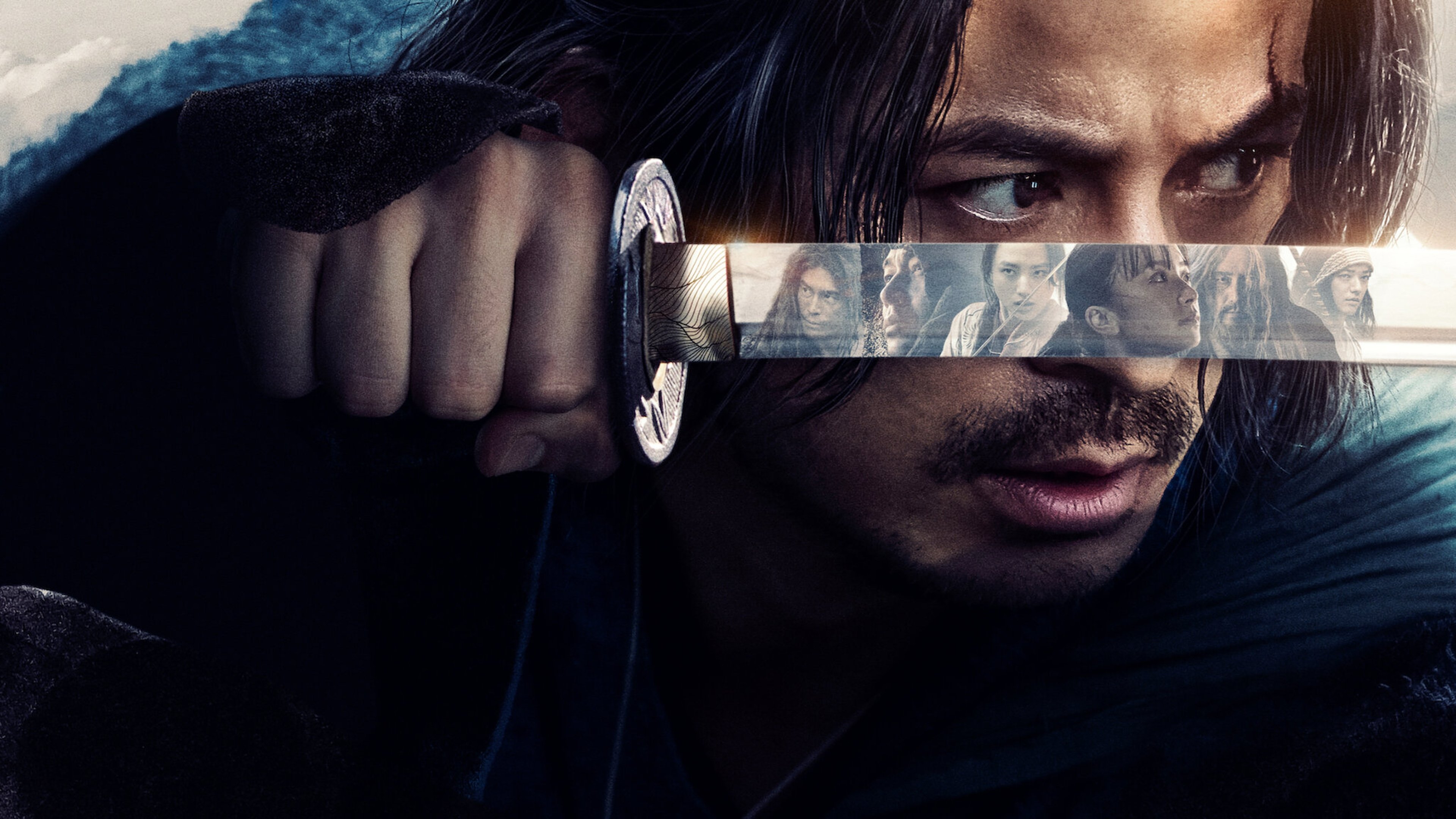
Overall, I enjoyed the first season and, more importantly, I was glad that the series did not try to artificially close its story simply to give us a winner. I want to see what happens to Shujiro, what is really hiding behind Kodoku and how far the story will go once the people who have depended on one another up to this point begin to disappear one by one.
Last Samurai Standing — Season 1 Recap & My View
As I wrote recently in my analysis of Shōgun, I have always loved Japan and, in particular, the history of the Samurai, so a series that returns to that period of Japanese history had plenty of reasons to catch my attention from the very beginning. If you read my About Lancelot and my personal story, you will see that when I was working in the Gaming Industry, I travelled to Japan for the Tokyo Game Show in 2008, where I stayed for almost two weeks. I brought back many memories from Japan, but also an authentic Daishō set, consisting of a Katana and a Wakizashi. My love for the Samurai had actually started many years earlier, as my World of Warcraft Guild was called Samurai, something you can also see at www.mysamurai.eu for more information.
Last Samurai Standing therefore had a natural advantage with me from the start, mainly because it does not place its story in the Japan of the Samurai that we usually see, but in a period when their entire world has already begun to collapse. The series takes place in 1878, ten years after the beginning of the Meiji Restoration, when Japan was trying at remarkable speed to leave its feudal past behind and transform itself into a modern state. The Samurai, who for centuries had been a privileged warrior class, had lost their position in society, their income and much of their identity, while even the sword that had been such an important symbol of their social status was becoming a relic of an era that was coming to an end.
The historical circumstances are very real and important for understanding the characters. In 1876, the Meiji government issued the Haitōrei Edict, which prohibited former Samurai from publicly carrying swords, with specific exceptions for military personnel and police officers. For someone who had grown up with the Katana as an inseparable part of his social identity, this was not simply a change in the law. It was effectively the official announcement that the world he belonged to was over.
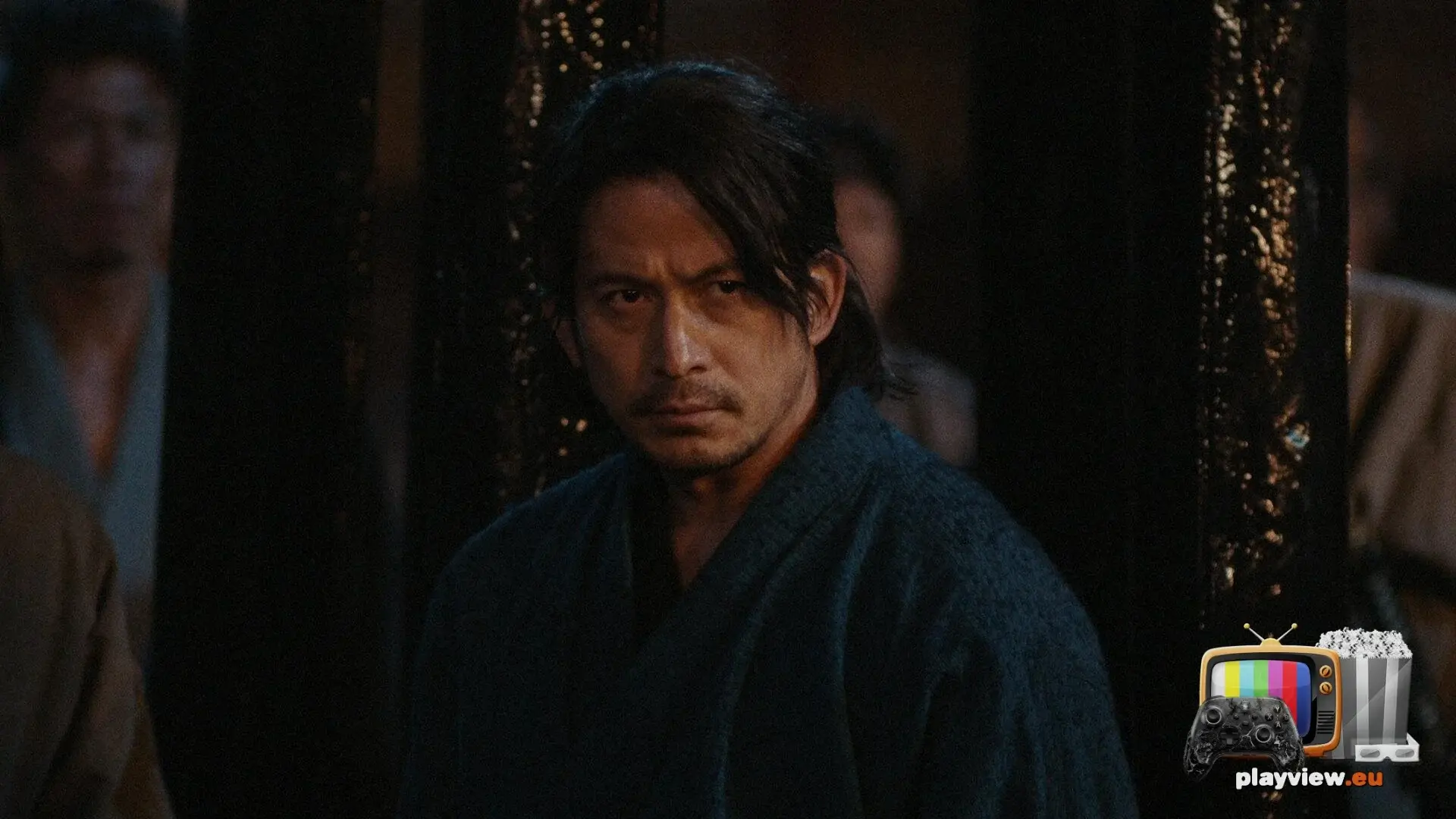
It is within this environment that we meet Shujiro Saga, a former Samurai who is facing a completely new reality and trying to survive in a society where there is increasingly no place for people like him. And then comes Kodoku, a deadly game that brings together 292 Samurai in Kyoto and offers them an enormous prize of 100 billion yen.
The idea is simple and extremely violent. The participants start at Tenryū-ji and must make their way to Tokyo, passing through specific points along the route and collecting wooden tags from the other players. To take someone else's tag, of course, you first have to kill them. As the number of participants decreases, the journey becomes increasingly difficult, and the people who initially look like potential allies gradually become potential enemies.
The series is based on Ikusagami, the novel by Shogo Imamura, which was published in 2022 and won the prestigious Naoki Prize, before later being adapted into manga. Kodoku itself is, of course, fictional and is not a real historical event, but the series uses real historical circumstances and figures as the foundation for its own story.
From Battle Royale to Squid Game
If you have watched enough series and films, it is impossible not to think of Squid Game. There is the huge cash prize, a group of people entering a game with specific rules, alliances being formed, betrayals taking place and, of course, the knowledge that not everyone can survive until the end. There is a very specific pattern here that you start recognising almost immediately once you have watched two or three productions of this kind.
The real connection, however, goes even further back to Battle Royale. Kinji Fukasaku's 2000 Japanese film, based on Koushun Takami's novel, placed a group of students on an isolated island and forced them to kill one another until only one remained alive. The idea subsequently became an entire subgenre, with The Hunger Games, Alice in Borderland, As the Gods Will and several other productions using different versions of the same basic concept.
That same logic naturally found its way into video games, where Battle Royale eventually became a genre of its own. The basic recipe is more or less the same: you enter a large map alongside a large number of other players, start with little or no equipment, search for weapons and supplies, confront the other players and try to remain the last one standing. The setting can change completely, from modern soldiers and science fiction to fantasy worlds, knights or even cartoon-style battles, but the core remains the same: enter, survive, defeat the others and be the last one standing.
Among the best-known examples is, of course, Fortnite, which turned the genre into a global phenomenon, along with PUBG: Battlegrounds, Call of Duty: Warzone and Apex Legends. Even major multiplayer franchises such as Battlefield have experimented with the Battle Royale concept in different forms. It is essentially the same idea we see in Last Samurai Standing, except that instead of 292 Samurai armed with Katana, you have dozens or hundreds of players inside a digital arena, using different weapons and operating under different rules depending on the game.
And this is where one of the most interesting connections between the series and gaming appears. Watching the characters in Last Samurai Standing search for their opponents, form temporary alliances, collect the items they need to continue, calculate who they can take on and who they should avoid, makes it difficult not to think of a giant Battle Royale match set in Japan in 1878, except that there is no respawn here and the Game Over is permanent.
The difference is that in Last Samurai Standing, Battle Royale is not simply a game mechanic. It is the entire story, while at the same time becoming a way for the series to talk about people trying to survive in a world that has already changed and no longer has a place for them.
And, of course, if we want to go even further back, this idea did not begin with Battle Royale or video games either. Its roots go back thousands of years to the battles and spectacles of the ancient world, with the Colosseum of Rome being perhaps the most recognisable example. From AD 80, when it was inaugurated under Emperor Titus, and throughout the following centuries, tens of thousands of spectators gathered to watch gladiatorial combat, battles with wild animals and public spectacles in which life and death were transformed into entertainment.
Obviously, we cannot describe the fights in the Colosseum as “Battle Royale” in the modern sense of the term, since the rules, circumstances and purposes were completely different. The underlying idea, however, has an intriguing resemblance: people enter an arena, a crowd watches, the fight continues until someone prevails and survival becomes part of the spectacle. From the gladiators of Rome, then, to the students of Battle Royale, from there to the players of Fortnite and Call of Duty: Warzone, and finally to the Samurai of Last Samurai Standing, the weapons, rules, technology and setting have changed, but the basic human idea remains remarkably familiar: put people in an arena, give them a reason to fight and let the audience wait to see who is still standing at the end.
Last Samurai Standing therefore takes a familiar mechanism and places it in a very different environment. We do not have a closed island or an artificial arena, but an entire journey from Kyoto to Tokyo, with Japan itself during the Meiji period becoming the battlefield. That is one of the elements that makes the series stand out, because the Battle Royale concept works simultaneously as an action mechanism and as a way of showing a society that is itself going through a massive transition.
The Japan Leaving the Samurai Behind
The historical setting is perhaps more interesting than it initially appears. The series takes place in a Japan trying to modernise at remarkable speed following the fall of the Tokugawa Shogunate. The Boshin War is over, power has shifted to the Emperor and the new Meiji government is attempting to create a centralised state, a modern army and an entirely new social model.
The Samurai, however, did not disappear overnight. Many found themselves without income, without a social role and without a clear future. This dissatisfaction led to real rebellions, the most famous being the Satsuma Rebellion of 1877 under Saigō Takamori. The rebellion was crushed by the Imperial Army and became one of the last major armed conflicts involving the old Samurai order.
A year later, in 1878, exactly when the series takes place, Japan is still going through this period of upheaval. And this is where Last Samurai Standing does something interesting: it uses the fictional story of Kodoku to tell the story of people who, in real history, genuinely existed and were watching the world they belonged to disappear in front of them.
⚠️ SPOILERS — What Happens at the End of Season 1
The first season does not end with a final winner, which is important because Kodoku remains unfinished. Shujiro Saga manages to survive the successive battles and eventually faces Bukotsu, one of his most dangerous opponents. Their confrontation ends with Bukotsu's death and becomes one of the most important battles of the season, but Shujiro has still not reached the end of the journey.
At the same time, the series begins revealing that there is a much larger plan behind Kodoku. Toshiyoshi Kawaji is not simply organising a deadly game to entertain wealthy spectators. Kodoku is connected to the political situation of the new Japan and to the attempt to control the remnants of the old Samurai order.
Even more interestingly, the series uses real historical events. Kawaji was a real historical figure and is connected in the series to the assassination of Toshimichi Ōkubo, who was indeed assassinated in 1878 by former Samurai. Real history and fiction therefore begin to intertwine more and more, suggesting that Kodoku is part of a much larger political conflict.
And, of course, the most important thing: there is no winner. The survivors continue, the game is not over and the relationships between the characters have reached a point where the alliances created for survival can very easily turn into conflicts. The first season ends more like the first major chapter of a larger story than a complete story in itself.
Did the Series Do Well?
From Netflix's perspective, the numbers indicate that Last Samurai Standing found a sizeable audience. During its first week it recorded approximately 6.2 million views, while in its second week it climbed to the top of Netflix's global Top 10 for non-English-language series, reaching 7.2 million views and approximately 37.2 million hours watched.
The series also entered the Top 10 in 88 countries, while in Japan it remained at number one for four consecutive weeks. In other words, this was not simply a production that found a small audience among people already interested in Japanese history and Samurai culture. Netflix managed to take it beyond Japan and find an international audience, which is particularly significant for a production with such a specific historical and cultural setting.
The critical response was also fairly positive. The series sits at 78/100 on Metacritic from the available professional reviews, while Rotten Tomatoes lists a 100% Tomatometer from its recorded critics and an 86% Popcornmeter from audiences. Numbers obviously do not determine whether a series is worth watching on their own, but they do show that Last Samurai Standing found a positive response from both critics and viewers.
What Do We Know About Season 2?
There is now official confirmation here: Netflix has renewed Last Samurai Standing for a second season. The renewal was announced in December 2025, with director and creator Michihito Fujii and Junichi Okada returning for the continuation.
What we still do not have is an official release date. Netflix has not announced a specific release date, and reports placing Season 2 sometime in 2027 remain estimates rather than official information.
Story-wise, however, there is plenty of material to continue with. Kodoku is still underway, the real purpose behind the game has begun to emerge and the characters have reached a point where survival no longer depends simply on who is the best warrior. Alliances, betrayals and the political side of the story are likely to become even more important.
My View
As you can probably imagine, when you combine a Katana with a series about Samurai, there is going to be blood and severed limbs all over the screen, so Last Samurai Standing wastes very little time explaining what is coming. It is a series built around a very simple and very violent recipe: start the game, kill each other, collect the tags and try to be the one who reaches the finish line. Every man for himself, except that here, in order to save yourself, you quite literally have to finish someone else.
The performances are good, the characters are interesting and the fights are undoubtedly one of the production's biggest strengths. Junichi Okada's involvement, not only as the lead actor and producer but also through his active role in the choreography of the action sequences, is clearly visible in the final result. The confrontations have different rhythms and approaches, rather than simply becoming a repetitive sequence of “two guys with Katana hit each other until one falls.”
At the same time, the more productions such as Battle Royale, Squid Game, Alice in Borderland or The Hunger Games you have watched, the easier it becomes to recognise the pattern. You know there will be alliances, you know someone will betray someone, you know a character who initially appears secondary may suddenly become important and you know that people who are fighting together today may find themselves facing each other with a Katana tomorrow. Last Samurai Standing does not reinvent the wheel, but it manages to put enough Japanese historical weight and enough good action on that wheel to make it work.
Overall, I enjoyed the first season and, more importantly, I was glad that the series did not try to artificially close its story simply to give us a winner. I want to see what happens to Shujiro, what is really hiding behind Kodoku and how far the story will go once the people who have depended on one another up to this point begin to disappear one by one.
Because don't expect, my friend — or my friend who happens to be reading this analysis — that at the end they are all going to look at each other and say, “Okay, you guys have been friends through all of this, so you win and walk away together.” That's not how this game works. The fewer players remain, the harder that scenario becomes. And that is where the real interest of Season 2 lies: when only a few are left, you will no longer have to fear only the unknown opponent standing in front of you with a Katana.
You may have to face the person who was fighting beside you until yesterday.
And for a Samurai trying to survive in a world that has already decided to leave him behind, that may be the hardest battle of all.


