
S02 - The darkness now has a name

If season one was mostly about introducing the characters, realms, and emerging threats, season two had a clear protagonist: Sauron. Following the reveal of his true identity as Halbrand, the Dark Lord no longer had any reason to stay in the shadows. His grand scheme began to unfold, aiming to gain control over the peoples of Middle-earth through the Rings of Power.
Almost two years after its first season, The Lord of the Rings: The Rings of Power returned on August 29, 2024, as Amazon pushed forward with one of the biggest and most expensive television endeavors in history. The second season wrapped up on October 3, 2024, essentially marking the next major chapter in the story of Middle-earth's Second Age.
=q
And this time around, the show didn't just tease a major conflict. It delivered the fall of an entire kingdom, the ruin of one of the Second Age's key figures, and a much fuller picture of how Sauron gradually transforms into the Dark Lord.
Annatar: The Lord of Gifts
Season two kicks off with Sauron looking for a way back to power. Having had his true identity exposed to Galadriel, he abandons his Halbrand form and presents himself to Celebrimbor as Annatar—a mysterious and deeply charismatic Lord of Gifts.
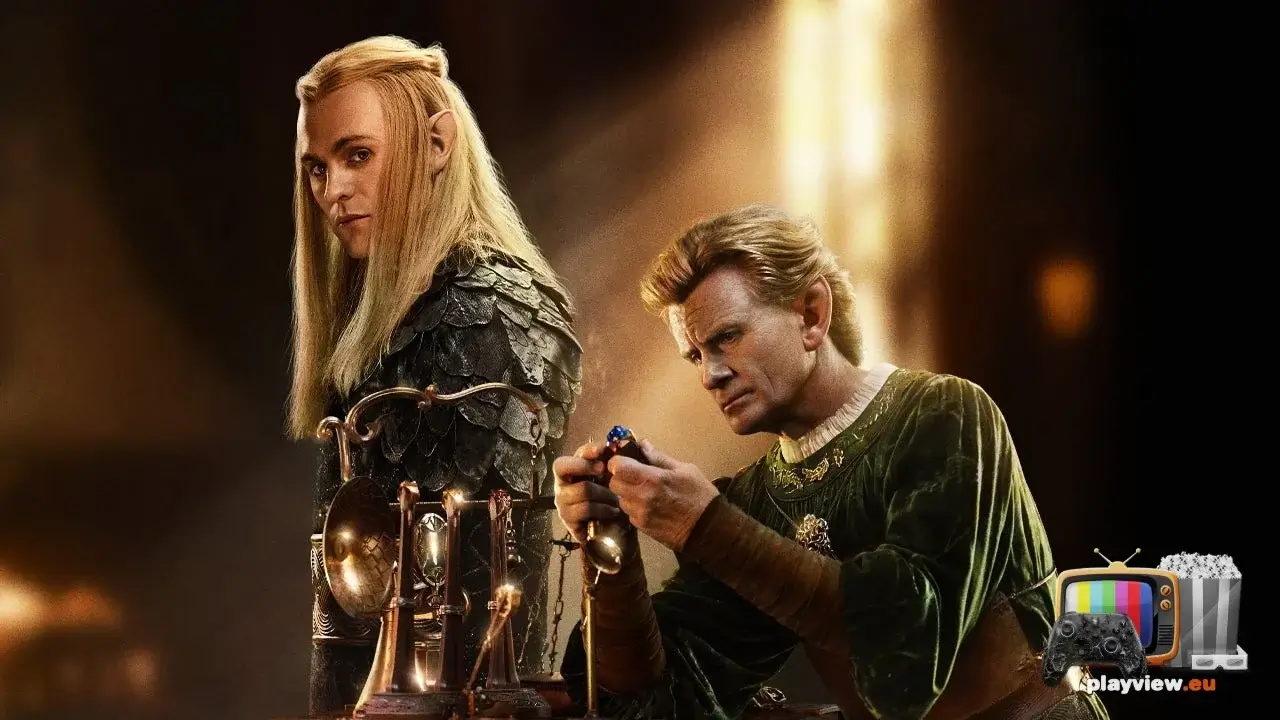
Celebrimbor is one of the most prominent Elven smiths and the mastermind behind the creation of the Rings. Sauron exploits his ambition, his desire to forge a legendary legacy, and his desperate need to save Middle-earth from its gradual decay, persuading him to press on with his work.
The result is the creation of the Seven Rings for the Dwarf-lords and the Nine for mortal Men. The Three Elven Rings, forged by Celebrimbor at the end of season one, are now right at the center of a far bigger story.
For me, the relationship between Annatar and Celebrimbor is the beating heart of the second season. It's not simply a story of deception, but of exploiting human—or rather, Elven—ambition. Sauron doesn't need to assert himself through sheer force right off the bat. He manages to make others believe that their choices are their own, when in reality they are serving his grand design.
An interesting detail from Tolkien's lore: Charles Edwards, who plays Celebrimbor, revealed that to prepare for the role, he also read Unfinished Tales. There, he picked up on a lesser-known description of the character, according to which Celebrimbor harbored a secret jealousy of the fame and skills of his grandfather, Fëanor. This detail helped the actor better grasp the character's pride and ambition, elements that the show taps into in his dynamic with Annatar.
Eregion and the Fall of Celebrimbor
Sauron's bid to gain control of the Rings ultimately leads to the siege of Eregion, one of the most vital Elven realms. Celebrimbor gradually starts to sense that something isn't right, but by the time he realizes Annatar’s true identity and intentions, it's already far too late.
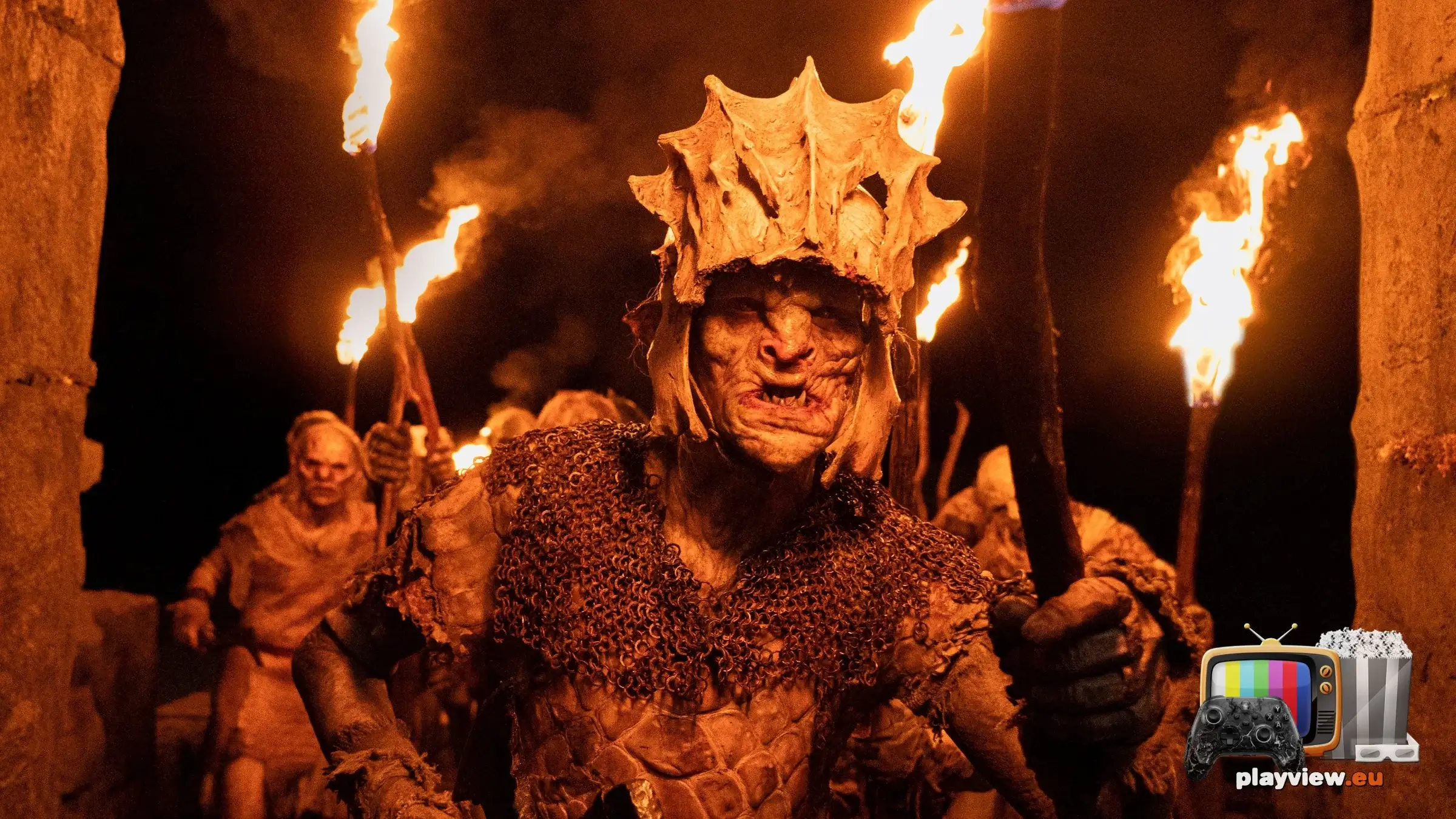
The siege escalates into one of the largest military conflicts we've seen on the show so far. Adar, having rallied the Orc forces, launches an assault on the city, while Sauron continues manipulating events from behind the scenes until he takes full control himself.
Celebrimbor's tragic arc culminates when Sauron tortures and ultimately slays him. The legendary Elven craftsman, who set out to forge something that would save Middle-earth, ends up becoming the ultimate victim of his own ambition. The fall of Eregion stands as one of the pivotal events of the Second Age, permanently shifting the balance of power between the realms.
And herein lies one of season two’s greatest achievements. Celebrimbor’s story isn't just another parallel story arc. It’s the tragic tale of a creator desperate to leave his mark on history, only to become the instrument of a far greater evil.
The Dwarves, the Balrog, and the Crisis of Númenor
Alongside the events in Eregion, the show continues to develop the storyline of the Dwarves in Khazad-dûm. Durin III is now in possession of one of the Seven Rings, and its hold over him grows increasingly dangerous. Greed and an obsession with wealth begin to cloud his judgment, sparking a deep rift with his son, Durin IV.
Disa tries to protect the kingdom, as the situation beneath the mountains grows ever more dire. The reveal of the Balrog, set up back in season one, finally takes on genuine weight.
Durin III ultimately sacrifices himself in battle against the terrifying creature, trying to protect his son and his kingdom. Durin IV now steps up to take leadership, but the threat lurking beneath Khazad-dûm remains.
In Númenor, meanwhile, the political landscape devolves into a dangerous power struggle. Pharazôn exploits the turmoil and Míriel's weakening authority, claiming the throne and cementing his influence. The clash between the King's Men and those faithful to the old traditions grows increasingly tense, setting the stage for the island kingdom's tragic fate.
The Stranger and the Gandalf reveal
One of the biggest loose ends from Season 1 was the true identity of the Stranger. Season 2 continues his journey alongside Nori, this time toward the eastern region of Rhûn, where they face new threats and a mysterious Dark Wizard.
Gradually, the Stranger begins to unlock his true powers and gain a clearer understanding of his purpose in Middle-earth. The finale ultimately reveals that he is indeed Gandalf, confirming one of the biggest fan theories that had been brewing since the first season.
This reveal holds particular significance moving forward, as we now know the identity of the mysterious wizard and can watch his evolution toward the figure we know from the movies.
It's also worth noting that the land of Rhûn is depicted in such detail for the very first time in a film or TV adaptation of Tolkien. Filming made use of the striking landscapes of the Canary Islands, with volcanic rock and desert terrain giving this region a completely different aesthetic from Middle-earth's familiar vistas.
The Finale: Sauron Claims the Nine Rings
The finale brings together almost all of the season's major storylines. Galadriel finally comes face-to-face with Sauron in a showdown that carries far more emotional weight than a simple clash between two powerful characters.
Sauron tries to manipulate her, attempting to convince her that they can rule Middle-earth together. But she refuses to yield. Their battle is brutal, and Galadriel ends up falling off a cliff, surviving only thanks to Nenya, the Ring in her possession.
Sauron manages to claim the Nine Rings intended for Men, while Elrond and the remaining Elven survivors try to retreat from the destruction of Eregion.
At the same time, Adar pays the price for failing to keep control of the situation. Glûg leads an Orc mutiny against him, and their former leader meets a tragic end. The alliance he built to protect his children collapses, leaving Sauron to reclaim his grip over the forces of Darkness.
The finale also leaves things hanging in Khazad-dûm, with the Balrog now posing an immediate threat to the Dwarven realm. Durin IV is left to grapple with a legacy that is equal parts blessing and curse.
The second season wraps up with Sauron taking a massive step toward total dominion. The Rings have been forged, Eregion has fallen, and the peoples of Middle-earth are coming to realize they are staring down a war that won't be easily won.
How was the second season received?
Season two fared slightly better with professional critics than the first did, though audience reception was a very different story.
On Rotten Tomatoes, it racked up 85% from critics and 58% from viewers, while over on Metacritic it earned a 67/100 from critics and a 4.1/10 from users.
Positive reviews particularly highlighted the production's visual quality, its more focused narrative, and the performances of Charlie Vickers and Charles Edwards. Empire, for example, praised the impressive production values and the show's ability to blend spectacle with a story that now has greater substance.
On the other hand, criticisms centered on the pacing, the numerous parallel storylines, and certain narrative choices that continue to spark debate among Tolkien fans.
For me, the second season had one major advantage: it finally knew what story it wanted to tell. Sauron truly became the center of the narrative, and Charlie Vickers' performance gave the series a much more compelling antagonist. Celebrimbor's arc was also one of its strongest suits, showcasing just how dangerous ambition can be when it meets deception.
To be sure, there were moments where the narrative lost its cohesion, with certain side storylines feeling more like setup for future developments than essential parts of this specific season. That said, the series took a major step in the right direction. The Siege of Eregion and Celebrimbor's tragic arc in particular gave season two an identity that was lacking in much of the first.
A Few Interesting Production Details
Amazon didn't just scale up the battle sequences. The second season doubled down on physical sets and practical effects, striving to create a world that feels as real as possible.
One of the largest sets built was Khazad-dûm. According to the showrunners, the set occupied an entire massive soundstage, complete with corridors, bridges, walkways, halls, and the kingdom's impressive throne. It wasn't merely a striking backdrop, but a fully tangible space for the actors to move through and interact with.
Another intriguing example is the Barrow-wights, the creepy creatures the leads encounter in the fourth episode. To bring them to life, real contortionists—performers with extraordinary physical flexibility—were brought in, combining prosthetic makeup by Barrie and Sarah Gower with digital effects. The result was a blend of practical and digital techniques that makes it hard for viewers to tell what was actually built on set and what was generated on a computer.
This approach matters because it’s one of the key elements that give the show its cinematic feel. Technology is used to complement practical effects rather than simply replace them.
What do we know about Season 3?
Amazon has already confirmed Season 3, which premieres on November 11, 2026, exclusively on Prime Video. In fact, this time around the wait won't be quite as long, as roughly two years will have passed since the second season finale.
The story picks up five years after the fall of Eregion. Middle-earth is now fully at war, Sauron's armies have grown in strength, and the Dark Lord has established himself in Mordor at his new stronghold, Barad-dûr. His ultimate goal is now the creation of the One Ring—an artifact that will allow him to control all the remaining Rings and their wearers.
Season three will focus on the War of the Elves against Sauron, leaving Dwarves, Men, and Wizards facing a pivotal choice: will they manage to join forces, or will they let Sauron reign supreme?
The new additions to the cast are particularly exciting, bringing key characters from Tolkien's lore into the fold.
Jamie Campbell Bower, best known as Vecna in Stranger Things, takes on the role of Celeborn—Galadriel's husband—who has been absent from the narrative until now. His return is hugely significant for Galadriel's evolution and Elven family lore.
Eddie Marsan, known from Sherlock Holmes and Ray Donovan, will play Thráin, Durin IV's older brother. His presence is expected to bring a fresh dynamic to Khazad-dûm's already complicated family ties.
Zubin Varla, who appeared in Andor, will play Khamûl, an Easterling from the eastern regions of Middle-earth. This is a particularly major addition, as Khamûl is known from Tolkien's wider lore as one of the Nazgûl, the Ringwraiths who will serve Sauron.
Andrew Richardson takes on the role of Anárion, Elendil's youngest son and Isildur's brother. His presence is crucial to the unfolding story of Númenor and the future line tied to the founding of the kingdoms of Men in Middle-earth.
Among the new additions is also Adam Young as Marnûkh, a mysterious Orc who the production team has teased might have more to him than meets the eye.
And there is one more name worth a special mention: Simon Pegg, known from Star Trekand Mission: Impossible, will lend his voice to the Balrog. An intriguing choice for one of Middle-earth's most terrifying creatures.
Returning to the main cast are, of course, Morfydd Clark as Galadriel, Charlie Vickers as Sauron, Robert Aramayo as Elrond, Daniel Weyman as Gandalf, Benjamin Walker as Gil-galad, Owain Arthur as Durin IV, and Sophia Nomvete as Disa.
Season three will consist of eight episodes. The first four are set to drop on November 11, the following two on November 18, and the final two on November 25, 2026.
Middle-earth's next big battle
For me, the second season was a solid step forward. It didn't fix every problem the show has, nor did it manage to land all of its storylines with equal success. Still, it gave us a Sauron with real presence, a Celebrimbor who leaves a genuine mark on the narrative, and a Middle-earth that is starting to descend completely into darkness.
The big challenge for the third season is to tie all these storylines together into a single, powerful narrative. The forging of the One Ring, the return of Celeborn, Khamûl's development, and the impending clash of the peoples of Middle-earth provide fantastic material.
And perhaps that's the most compelling aspect of the whole endeavor. We already know where this story leads from the books and the movies. What we're eager to see is how we get there. Because before The Lord of the Rings, before the Fellowship, and before the great battle for Middle-earth, there was a war that defined the fate of the entire world.
Lets see a trailer of Season 3


