
S03E01–E02 | When Middle-earth Stops Being So Angelic

I have always thought of The Lord of the Rings as a much more angelic and noble world compared to, for example, Game of Thrones. The Elves certainly contribute to that impression. As a gamer who has spent countless hours playing RPGs, I have always associated Elves with something more noble in nature. Of course, there are also Dark Elves, but that's a whole different conversation, haha!
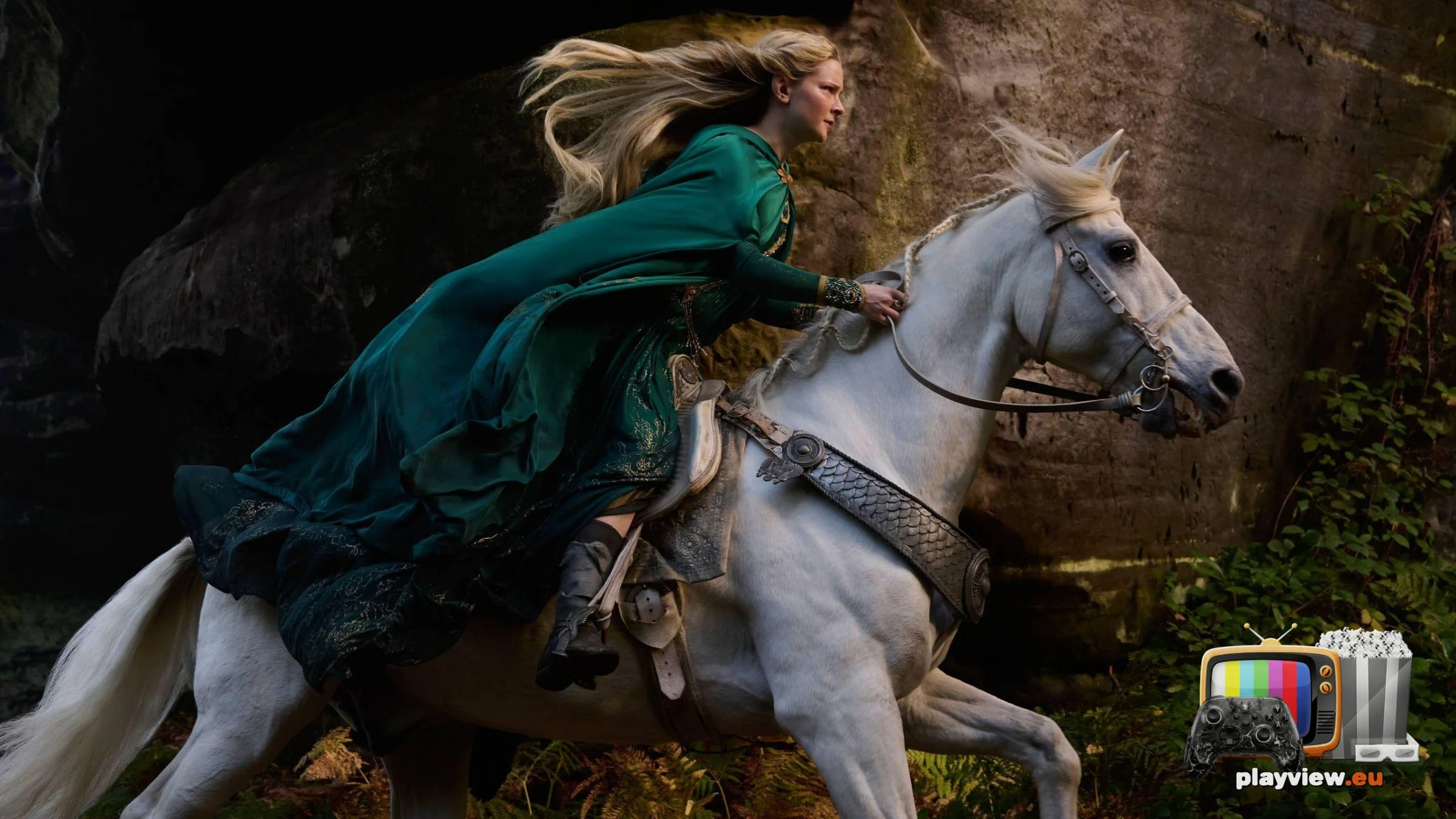
The first two episodes, however, are anything but calm and serene. The third season returns with plenty of action, impressive battle sequences, and a distinctly darker atmosphere. Galadriel is back on the front lines, essentially taking center stage as one of the Elves' most formidable warriors, while Arondir, the master archer who now has his own place in the story, stands by her side.
Sauron, on the other hand, picks up exactly where we left him at the end of the second season. He has now fully embraced his role as the Dark Lord, and he is not simply interested in winning a few battles. His ambitions are much greater: to create the One Ring, which will allow him to control all the others and, through them, the peoples of Middle-earth themselves.
Let's take a look at what happens in the first two episodes, what lies behind the story of the third season and how the great conflict is gradually taking shape. I'll return with my own thoughts at the end.
Where Does the Story Stand in Season 3?
Season 3 takes us five years beyond the events of the previous season. Eregion has been destroyed, Celebrimbor is dead and Sauron has firmly established his power in Mordor, with an ever-growing number of allies at his disposal.
The war between his forces and the Elves has reached a critical point. The latter are struggling to hold their ground, but the balance of power is far from being in their favour. Sauron is no longer relying solely on the Orcs. He is approaching different peoples, recruiting Men and looking for new ways to strengthen his army.
His strategy is clear: he doesn't simply want to conquer territory. He wants to build a force that nobody will be able to stand against.
Meanwhile, we have Númenor, which is now under the rule of Ar-Pharazôn. The kingdom has become a powerful empire, but an increasingly bitter conflict is growing within its borders between the King's Men and the Faithful. The latter remain loyal to the old traditions and their friendship with the Elves, while the former see this relationship as a threat to the supremacy of Men.
In Khazad-dûm, Durin IV is trying to maintain his authority, while the return of his brother Thrain creates new tensions. The Dwarves must also deal with the influence of the Rings of Power, which have now become an important part of Sauron's strategy.
And, of course, Gandalf remains part of the story. He is currently in Rhûn, where the threat posed by the Dark Wizard continues to play an important role in the wider conflict.
Season 3 is essentially trying to bring all these separate storylines together into a war that is gradually approaching its climax.
There is one important clarification worth making here, especially for those expecting a faithful adaptation of a particular book.
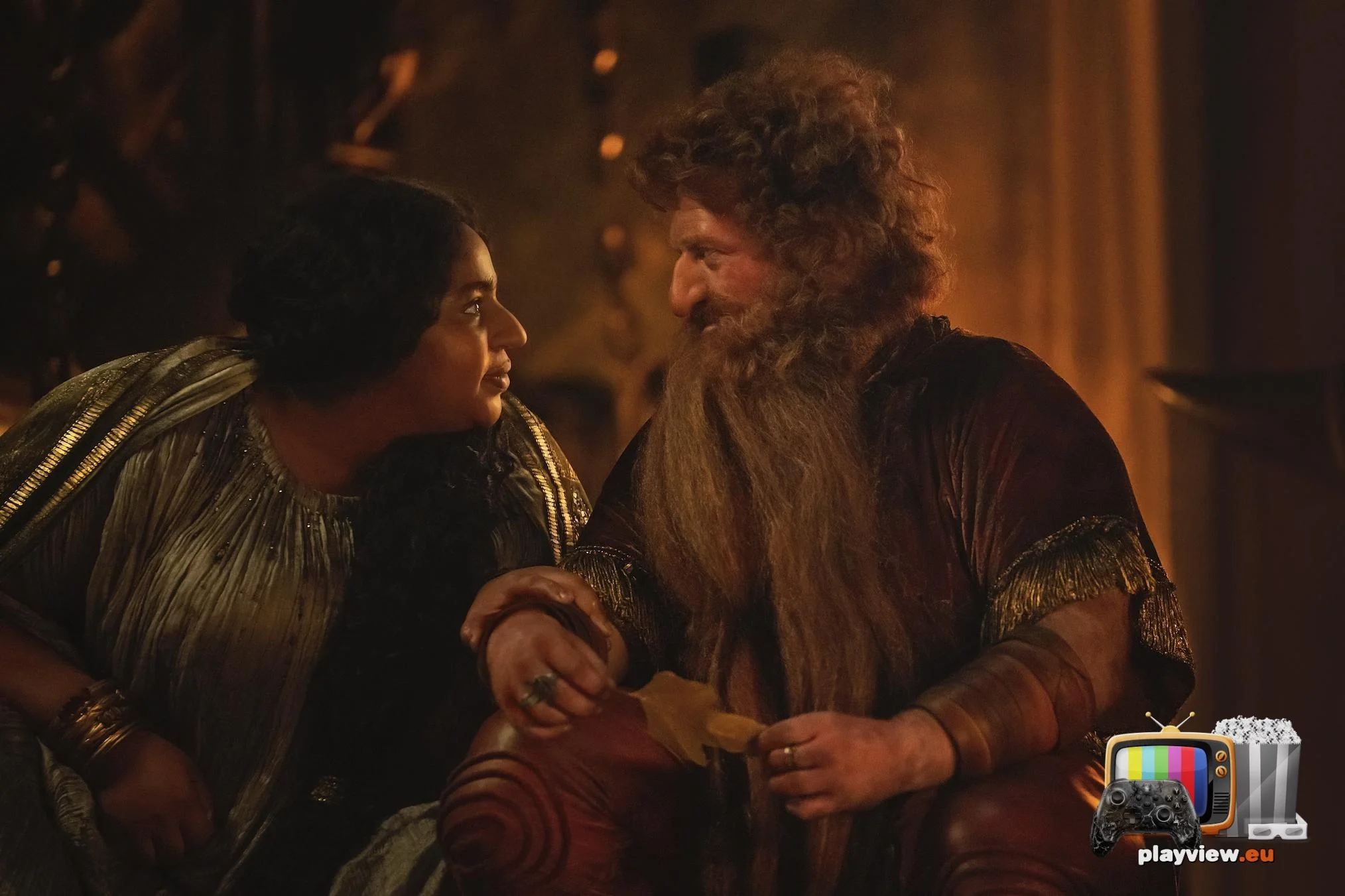
The Rings of Power is not based on a standalone novel like The Hobbit or The Lord of the Rings. Its story takes place during the Second Age of Middle-earth, thousands of years before the events we saw in Peter Jackson's films.
The main historical source for the series is the appendices of The Lord of the Rings, together with elements from Tolkien's wider body of work, such as The Silmarillion, which describes the great Ages, Sauron's rise, the creation of the Rings of Power and the history of Númenor.
There is, however, an important limitation: Amazon does not possess unlimited rights to Tolkien's entire body of work. The series has primarily relied on material covered by its rights to The Lord of the Rings and its appendices, meaning that several details have had to be developed creatively by the writers.
This is also why we see characters, encounters and events presented in a different chronological order or connected in ways that do not appear exactly like that in the books.
In short, we are looking at a television interpretation of the Second Age, rather than a word-for-word adaptation of Tolkien.
What Does Sauron Really Want with the Rings?
This is perhaps the most important point to understand everything we are watching.
In Tolkien's world, the known Rings of Power were created in the following numbers:
The Three Rings of the Elves.
The Seven Rings of the Dwarves.
The Nine Rings of Men.
And, of course, Sauron's One Ring.
The Three Elven Rings are Narya, Nenya and Vilya. Although they were created by Celebrimbor using the knowledge he gained from Sauron, they were not forged directly by the Dark Lord himself and were not corrupted by his influence in the same way as the others.
Sauron's real goal is to create the One Ring, using its power to control the other bearers of the Rings of Power.
Therefore, he is not simply trying to take the Three Rings from the Elves. He wants to complete his own weapon of domination.
In the first two episodes, we see that he is still trying to understand and reproduce Celebrimbor's knowledge. His failure to create a functional ring leads him to search for those who survived the destruction of Eregion and knew the secrets of the great Elven smith.
Among them is one last surviving smith, Maitalle, whom he is now searching for through the information provided by Marnûkh.
This is a very important detail, as it shows that even Sauron, despite all his power, does not have all the answers he needs.
S03E01 – Marnûkh
The first episode opens with the military situation in Middle-earth, immediately showing us that the series has shifted into a higher gear.
Galadriel and Arondir find themselves fighting against Sauron's forces. The Elves are trying to hold their positions, but the situation becomes increasingly difficult. The appearance of a Nazgûl makes things even more dangerous, as Galadriel finds herself facing an opponent who goes beyond the usual military forces of the Orcs.
The battle is one of the premiere's strongest elements. The direction focuses on the scale, speed and brutality of the conflict without losing the personal dimension of the characters.
At the same time, we get an important flashback to Galadriel's first meeting with Celeborn, her husband whom we had believed to be lost. The scene takes us back to a time before the current events and gives us a different picture of Galadriel, before loss and war came to define her personality.
In Mordor, Sauron continues his experiments with the rings. His obsession with creating the One Ring becomes increasingly apparent, while the memory of Celebrimbor continues to haunt his thoughts.
One of the most interesting moments is the recruitment of Khamûl, a Man who will acquire enormous significance in the history of Middle-earth. Sauron offers him a Ring of Power and turns him into one of the future Ringwraiths, the infamous Nazgûl.
Khamûl is particularly important to Tolkien fans, as he is the only one of the Nine Nazgûl, apart from the Witch-king, to be mentioned by a specific name in Tolkien's wider writings.
In Khazad-dûm, Thrain's return creates new problems for Durin IV. The relationship between the two brothers initially appears to be a family matter, but their disagreements over the Rings and their support for the Elves begin to raise suspicions.
Meanwhile, Marnûkh emerges as a particularly unexpected character. He is an Orc who begins to question Sauron and his true intentions. He does not want to see his entire race being used as disposable material in a never-ending war.
The episode concludes with Gandalf in Rhûn, making it increasingly clear that the threat facing Middle-earth is not limited to the western kingdoms.
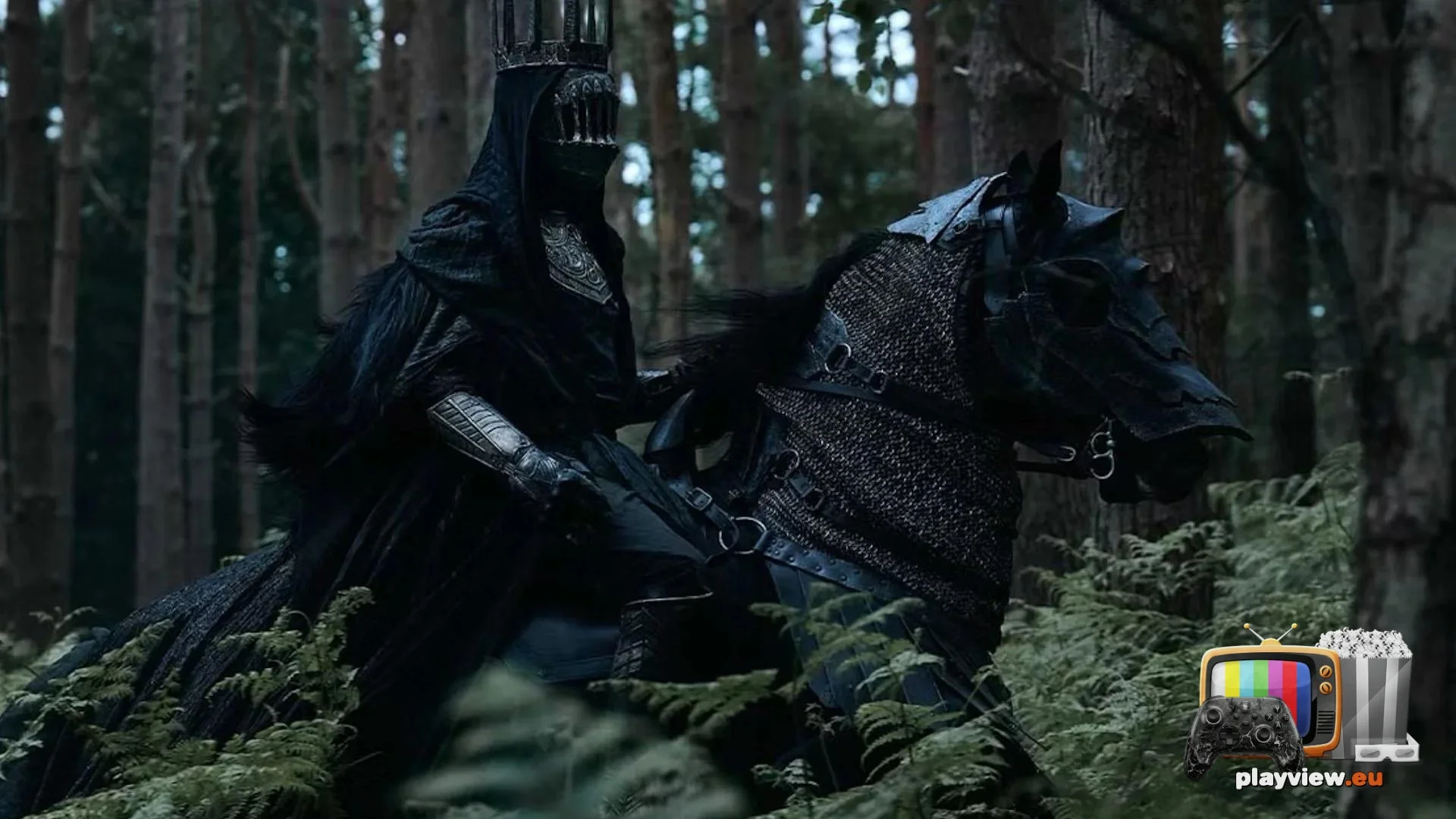
S03E02 – The Gift of Men
The second episode briefly moves away from the major battles and shifts its focus to Númenor, where the political situation is becoming increasingly dangerous.
Ar-Pharazôn is enjoying his power, presenting himself as the absolute ruler of an empire. However, the Faithful have not abandoned their struggle.
Isildur attempts to assassinate Pharazôn during a public parade, but his attempt fails and results in the death of an innocent woman. The situation becomes even more difficult for those who oppose the regime.
Eärien, Isildur's sister, is revealed to be a secret collaborator of the Faithful. She has managed to infiltrate Pharazôn's circle and pass information to the people resisting his rule.
In Mordor, Sauron continues to manipulate Theo. After recognising the mark on his hand, which originates from the famous sword associated with the creation of Mordor, he shows particular interest in Theo's ancestry.
Through a dark ritual, he reveals the name of Theo's father, Fäldred, and presents him with a completely different version of his family history. He claims that his father had connections to Mordor and that his mother killed him when she discovered his true identity.
Sauron is trying to distance Theo from everything he has believed until now and turn him into someone driven by power and revenge.
His offer is clear: one of the Nine Rings, with the promise that Theo could become a conqueror, a sorcerer or even a king.
In Khazad-dûm, the situation also becomes more complicated. Two Nazgûl appear before Durin IV, attempting to gain access to Marnûkh. Thrain intervenes and appears to defend his brother, but later it is revealed that he is secretly working with Sauron's emissaries.
His betrayal is intended to weaken Durin and pave the way for his overthrow.
At the same time, Marnûkh reveals a very important secret to Galadriel and Arondir: there is still one Elven smith who knows Celebrimbor's secrets. Her name is Maitalle, and she is being held prisoner in Gundabad.
The mission to free her now becomes extremely important, as she could hold the key to stopping Sauron's plans.
The Ending of the Two Episodes – SPOILERS
The most shocking event of the first two episodes does not take place on a battlefield, but in Númenor.
Eärien has managed to keep her true allegiance hidden, but her double life is exposed. Pharazôn and his men realise that she is working with the Faithful and attempt to force her to reveal everything she knows.
Eärien is now facing a tragic dilemma. If she gives in, she may betray the entire network of people trying to resist the regime. If she refuses, she knows that she will face torture and will probably be used against the people closest to her.
In the end, she chooses to take her own life, jumping from a balcony in front of Pharazôn's men.
Isildur arrives at the scene and finds his sister's body, unable to do anything to change what has happened.
It is an especially brutal scene, mainly because Eärien had managed to secure a very important role within the Faithful's resistance.
At the same time, Elrond's mission to seek help for the Elves and approach Númenor creates a bitter sense of a missed opportunity. The arrival of the mission could potentially have offered her one last chance of survival, had she managed to hold on a little longer. We do not know whether Elrond's help would have been enough to change her fate, but the timing makes her death even more tragic.
On the other fronts, Sauron continues to approach Theo, trying to turn him into one of the Men who will serve his dark power. Marnûkh, meanwhile, has now become a valuable ally to the Elves, while the revelation that Maitalle is still alive opens up a new path in the attempt to confront the One Ring.
The war has only just begun to take its true shape.
The Production Cost – A Television Blockbuster
The Rings of Power remains one of the most expensive productions in television history.
For the first season, estimates had been published suggesting a production cost of approximately $465 million, not including the total amount Amazon paid for the rights, which had been reported to be close to $250 million.
For the second season, reports had circulated suggesting a cost of approximately $568 million, although the actual accounting figures and the different categories of expenditure are not always directly comparable.
No official, confirmed budget has been made public for the third season. Therefore, any specific figure circulating online should be treated as an estimate rather than an established fact.
What we can say with confidence is that the production continues to invest in enormous sets, real-world locations, costumes, practical effects and digital post-production.
And the first two episodes demonstrate this quite well.
Trivia from the Filming and Production
1. The premiere's battle sequence took two weeks to film.
The major battle between the Elves and Sauron's forces was filmed at Tilsey Farm in Surrey, England. The production needed approximately two weeks to complete this particular sequence, with the participation of stunt performers, extras and real horses.
2. Five different horses were used for Galadriel's horse.
A total of 12 horses were used in the battle. What is particularly impressive is that Galadriel's horse was not actually a single animal. Five different horses were used for different requirements of the scene, including the one involved in the difficult stunt where the animal falls over the heroine.
3. Season 3 used 14 different filming locations.
Filming took place mainly on private estates and at Windsor Great Park, while locations in Wales and Dorset were also used. The production returned to real natural landscapes, aiming to reduce its reliance on environments created entirely through blue screens.
4. Rivendell was created using real plants and trees.
One of the most interesting aspects of the production concerns Rivendell. Its interior environment was built at Shepperton Studios, using real trees and plants that were watered regularly so they could continue growing within the set.
For the exterior landscape, the visual effects team carried out aerial scans of the Lauterbrunnen Valley in Switzerland, the area that had inspired Tolkien when he created Rivendell. This allowed the creators to combine a real physical set with a digital recreation of the Swiss valley.
5. Creating the One Ring was one of the most demanding scenes.
The creators revealed that the sequence in which Sauron creates the One Ring required approximately two weeks of filming and was one of the most technically demanding scenes in the entire series.
Charlie Vickers also revealed that, during one particular take, when he lifted the Ring, Bear McCreary's music happened to reach its climax at exactly the same moment. It was an unexpected bit of perfect timing that made the moment even more impressive for the people involved.
6. The production is trying to preserve the feeling of a real cinematic world.
Production designer Kristian Milsted has spoken about the effort to create environments that could function as real physical spaces for the actors. The use of real plants, natural locations and constructed sets helps prevent Middle-earth from looking like a world made entirely of digital backgrounds.
What Are the Critics Saying About Season 3?
The first impression from the reviews is clearly more positive compared to the reception the series received in its early years, although that does not mean its familiar weaknesses have disappeared.
On Rotten Tomatoes, the third season is sitting at approximately 81% among professional critics, based on 37 published reviews at the time of research. Audiences appear more reserved, with a score of approximately 68%.
What is repeated in most of the positive reviews is that the series finally seems to be finding a better balance between its different storylines.
Radio Times recognises that the third season is more focused and engaging, while Nerdist describes it as the best season so far, placing particular emphasis on its darker atmosphere and Charlie Vickers' performance.
Collider believes that the series is beginning to achieve greater narrative cohesion, while Decider highlights the action and Sauron's development.
On the other hand, there are still several reservations.
Slashfilm points out that there are still too many different locations and characters, making it difficult for the story to give everyone the time they need.
GamesRadar+ believes that the political intrigue and conspiracies in Númenor are not always among the series' strongest elements, while Inverse points out that the narrative still suffers from moments of slow pacing and an excessive reliance on lore.
The Guardian remains particularly critical, arguing that despite the visual luxury and changes in approach, the series still struggles to develop a truly compelling rhythm.
What Are the Main Complaints About the First Two Episodes?
Too many parallel storylines: Galadriel, Sauron, Theo, Númenor, the Dwarves and Rhûn all demand constant shifts in the narrative. This can become tiring for viewers who prefer a more focused story.
The politics of Númenor: The story of the King's Men and the Faithful continues to divide opinion. Some critics believe the political intrigue lacks the necessary intensity.
Too much reliance on Tolkien lore: The series tries to connect too many events and details, which may make things difficult for viewers who are not familiar with the world.
The pace of the narrative: Although the action has increased, some storylines are still developed in a way that does not leave enough room for the characters.
The connection to the films: Some critics believe that the closer the series gets to familiar elements from Peter Jackson's trilogy, the harder it becomes to avoid comparisons.
Nevertheless, there is one point on which even several of the more critical reviewers seem to agree: the visual quality, sets, costumes and Charlie Vickers' performance as Sauron continue to be among the production's greatest strengths.
The Best Start the Series Has Had So Far?
The first two of the four episodes released were pretty good. They had action, several opposing forces fighting against one another and, most importantly, a sense that things are finally getting serious in Middle-earth.
Galadriel remains the central figure on the military side of the story, with Arondir working very well alongside her. I like the fact that he is not simply another Elven archer, but a character who has developed his own identity throughout the previous seasons.
Sauron, on the other hand, is perhaps the series' greatest asset. Charlie Vickers continues to deliver an excellent performance, combining the coldness of a Dark Lord with the manipulative behaviour of someone who knows exactly how to exploit other people's weaknesses.
I also liked the development of Marnûkh, as he offers a different perspective on the Orcs' side of the story. They are not all simply soldiers waiting for orders from Sauron. There is now another dimension to what it means to be part of a war in which your own race is treated as disposable.
Unfortunately, though, the ending of the second episode involving Eärien left me with a rather bitter feeling. The mission that is expected to arrive in Númenor could potentially change things and give her a chance to survive. Of course, we do not know whether its presence would have been enough to change her tragic fate, but I would have liked her to hold on a little longer. These are the kinds of situations where a character still has more to offer the story, and you cannot help feeling that an interesting opportunity for what comes next may have been lost.
And now that the One Ring is beginning to take its true form, we have every reason to expect the next episodes to become even darker.
Middle-earth can no longer afford to remain so angelic. Sauron's war has well and truly begun.


