
S03E03-E04 - 2 episodes worthy of the show's reputation!

The third and fourth episodes were released alongside the first and second, and by the time I am writing these lines, episodes five and six have already arrived, which I will be covering over the next few days. The third episode, and especially the fourth, are exactly the kind of episodes you genuinely enjoy watching, showing what a Lord of the Rings series should mean in practice
Terrific battle sequences, great scenes, and tension mounting both for Sauron and his allies and for the rest who are trying to rally against him. Naturally, the key to everything will be... who else but... Gandalf with his little hat!
Let's take a look at some details about these episodes, and I'll return with my final thoughts afterwards.
S03E03 – The Secret Fire
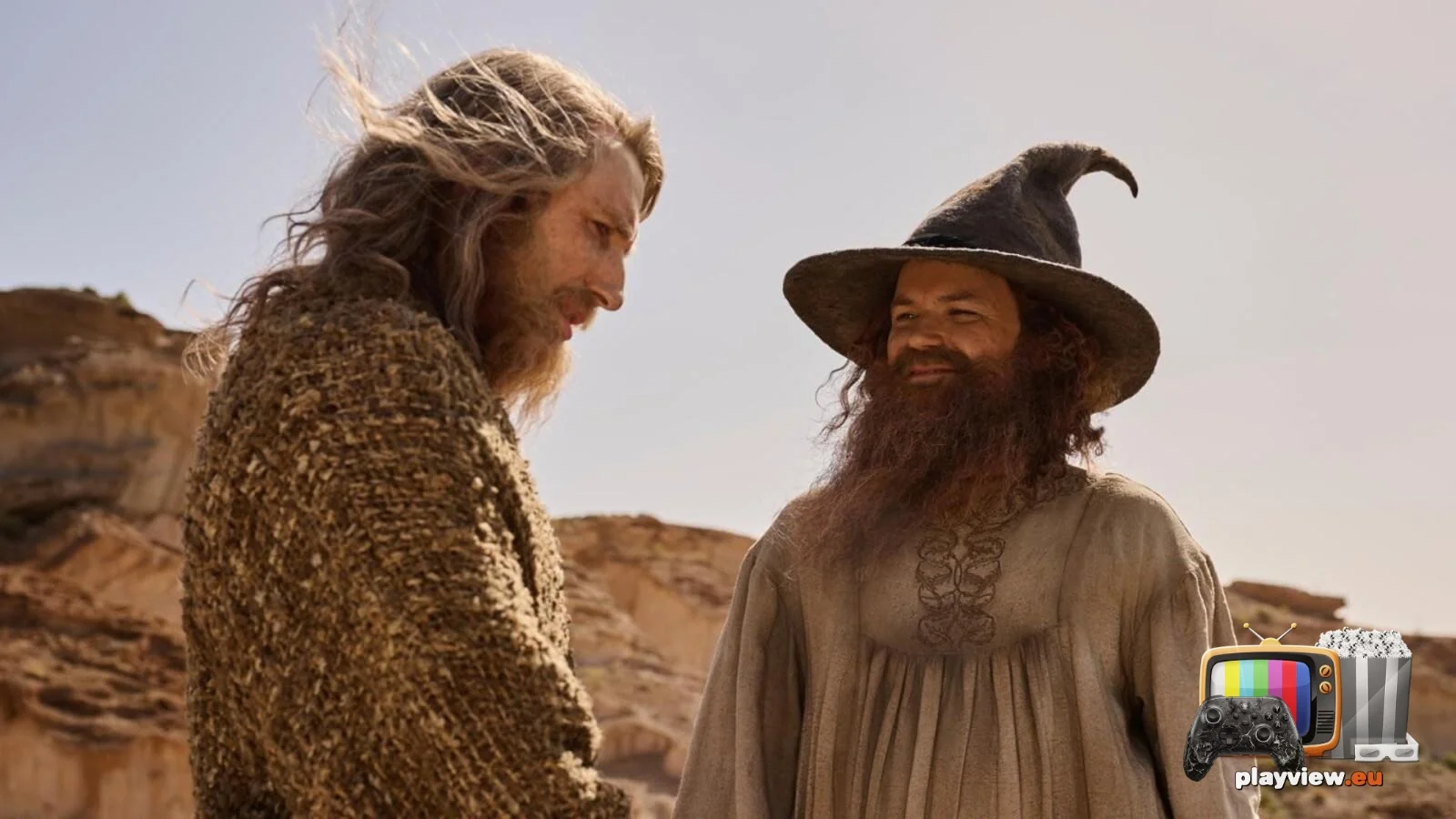
The third episode primarily follows Gandalf's efforts to prevent Rhûn from becoming yet another battlefield between Sauron's forces and those who continue to resist the spread of darkness. Tom Bombadil remains one of the most unusual and intriguing elements of the story, as Gandalf tries to obtain some concrete answers about his mission while Bombadil continues to communicate in his own mysterious way. Gandalf's patience is tested on several occasions, but their encounter carries far greater significance than a simple conversation between two peculiar characters. Through their interactions, it gradually becomes clear that Gandalf's mission is not merely about confronting another enemy, but about understanding the role he has been given in the salvation of Middle-earth.
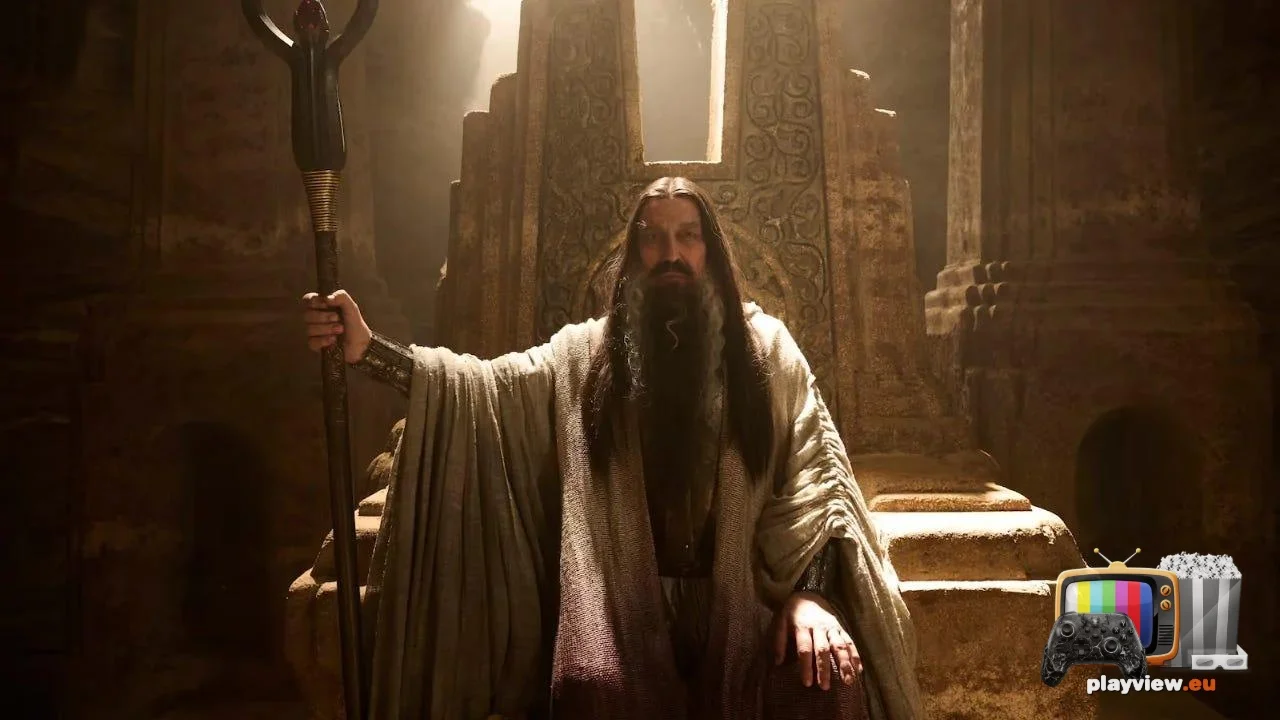
Meanwhile, the Dark Wizard continues his pursuit of greater power, and it is revealed that he wants to obtain one of Sauron's Rings in order to restore Rhûn to its former glory. To achieve this, he has developed a dangerous alliance with the forces of Mordor and Khamûl. Gandalf and Tom Bombadil secretly observe their meeting and realise that the situation is far more complicated than they initially believed. The biggest revelation, however, comes when Gandalf encounters the entity associated with the Secret Fire. There, he learns more about the five Istari, the Wizards sent to Middle-earth, and discovers that the Dark Wizard's name is Pallando. His story is particularly dark, as it is revealed that he murdered his companion, Alatar, in his pursuit of greater power, while his betrayal is connected to the destruction of a region that was once fertile. The most important message Gandalf receives is that he does not necessarily have to kill Pallando, but should instead try to bring him back into the light, so that they might eventually stand together against Sauron.
Gandalf's storyline concludes with a particularly symbolic image. Returning to Tom Bombadil's dwelling, he discovers that Bombadil has left, with a grey hat being carried away by the wind. Gandalf picks it up and wears it for the first time, marking another important step in his journey towards becoming the character we recognise from the film trilogy. It may seem like a simple scene, but it carries considerable emotional significance for anyone who has associated Gandalf with his familiar grey hat and staff.
In Númenor, Elendil is trying to identify the spy who has infiltrated the ranks of the Faithful. His son, Anárion, is now training a group of soldiers who remain loyal to the island's old values, while Pharazôn has considerably strengthened his grip on power. The trap set for Elendil proves successful for the King's Men, as Kemen manages to capture him. Anárion attempts to fight back and takes down several soldiers, but he cannot prevent his father from being taken away. The situation of the Faithful becomes even more difficult, as Pharazôn now has one of his most important opponents in his hands.
On the northern front, Galadriel, Arondir and Marnûkh continue their journey towards Gundabad, trying to evade the Orc forces and the Nazgnagôl pursuing them. Their journey is far from easy. Marnûkh knows the region well, as well as the military movements of his former allies, but Galadriel and Arondir still struggle to trust him completely. Arondir, in particular, remains burdened by the loss of Bronwyn and his guilt over Theo, leaving him in an extremely vulnerable emotional state. Galadriel understands how memories can become a trap when someone cannot move forward, and tries to help him leave behind the things that continue to torment him. At the same time, Sauron learns that Marnûkh had discovered a surviving Elf-smith from Eregion, Maitalle, and realises that he must head towards Gundabad to discover what she knows about the Rings.
S03E04 – Gundabad
The fourth episode is where the pace really picks up, turning Galadriel's mission into an extremely dangerous operation. Arriving at Gundabad does not mean that our heroes are any closer to finding the solution they are looking for. On the contrary, they soon discover that their attempt to locate and rescue Maitalle may have been doomed from the beginning. Marnûkh pretends to hand Galadriel and Arondir over to the Orcs, hoping to gain access to the fortress and create the right conditions for them to move forward. When Arondir manages to free himself, he discovers that the Elf-smith they were searching for is already dead, meaning their mission can no longer proceed as originally planned.
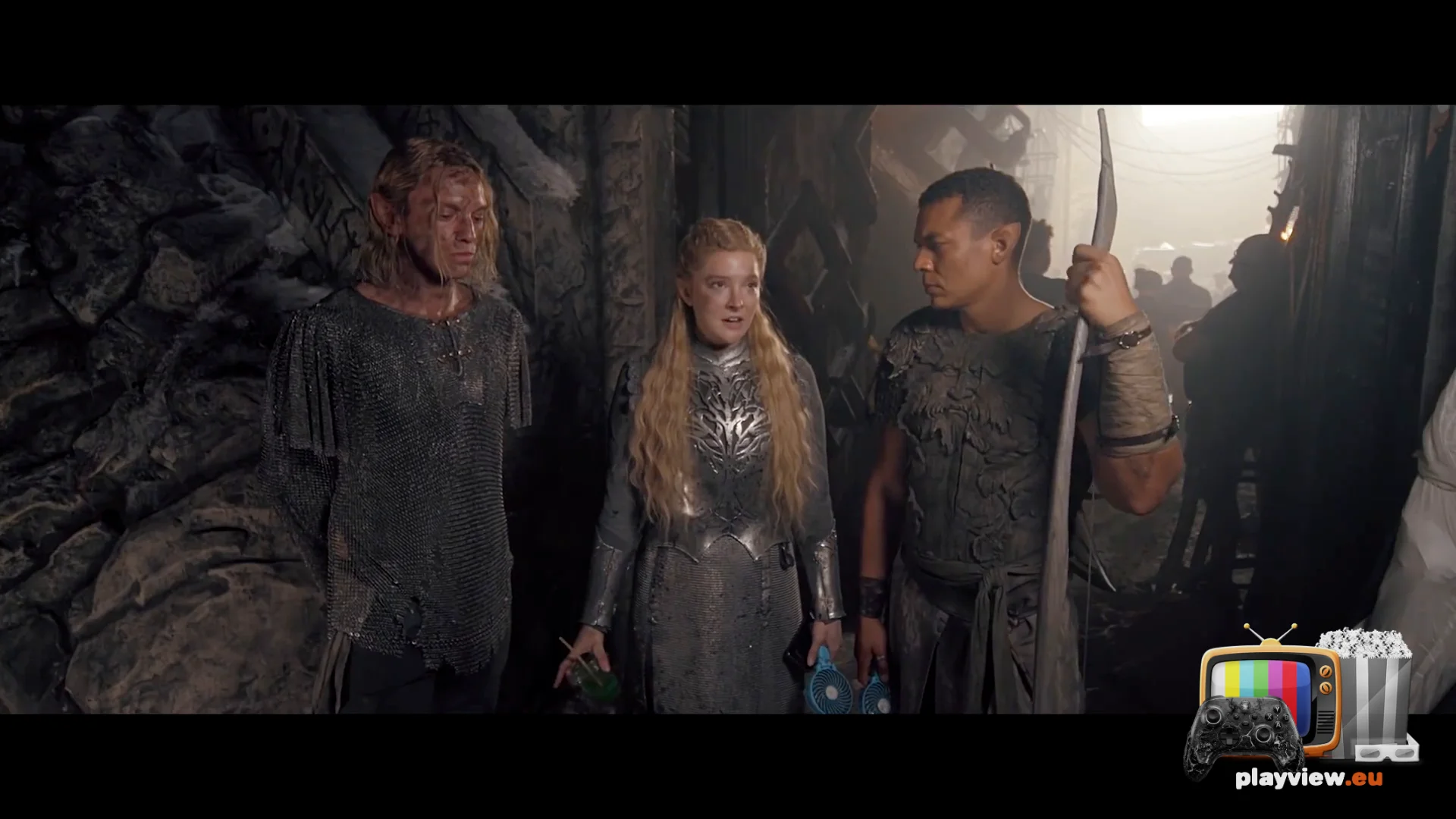
Amid this disappointment, however, comes one of the most important moments of the season. Galadriel meets Celeborn again, her husband, whom she had believed to be lost. His return is an event of enormous personal significance for her, as everything that has happened has forced her to continue her life without knowing whether she would ever see him again. Her reaction is spontaneous and filled with emotion, while Arondir initially has no idea who the stranger standing before them actually is. Celeborn's presence gives their mission a different dimension, as Galadriel is reunited with someone with whom she shares a very deep past. Unfortunately, their reunion does not last long, as the arrival of Sauron and the Nazgnagôl turns Gundabad into a battlefield.
Meanwhile, Sauron arrives at the fortress riding a particularly impressive creature, a Fell Beast, which the series presents as a creature descended from the Great Eagles and corrupted by Morgoth. The scene is one of the episode's most memorable moments, as Sauron demonstrates that even the monsters serving his forces must submit completely to his will. His arrival is accompanied by three Nazgnagôl, making the situation for Galadriel, Arondir and Celeborn extremely difficult. Marnûkh causes chaos inside the fortress, effectively organising an escape that quickly develops into a full-scale confrontation. The battles inside Gundabad, the presence of the Orcs and the appearance of the Nazgnagôl provide the kind of warfare and intensity we expect from a production of this scale.
In Khazad-dûm, the situation is equally critical, as Durin IV is now facing a challenge to his right to the throne. Thráin II takes advantage of the political turmoil and the Ring's influence to question their father's decision to name Durin as his successor. His ambition goes beyond simply claiming power, as he also wants to obtain all seven Rings of the Dwarves. At the same time, he attempts to use his past relationship with Disa to create a rift between her and Durin. Disa decides to reveal their former relationship to her husband, but the information Gamli brings him about a previous encounter between the two only fuels the tension further. Durin loses his composure, and the confrontation with his brother eventually leads to a duel. Thráin manages to defeat him without killing him and effectively takes control of Khazad-dûm. It is a defeat that affects not only Durin personally, but also his entire family and the future of the Dwarves.
In Númenor, Elendil's story takes a different turn. Kemen attempts to intimidate him while he is being transported as a prisoner, revealing personal details about his own background and his loyalty to Pharazôn. Elendil, however, refuses to abandon his efforts to make him question the authority he has chosen to serve. Anárion's intervention changes everything, as he organises his father's rescue, while also managing to capture Kemen and wound him in the hand. Elendil decides to keep him alive, recognising that his presence could become an important bargaining advantage against Pharazôn.
Another significant development concerns Elrond, who is tasked with taking an urgent mission to Gil-galad, with Númenor as its destination. The situation on the island has spiralled out of control, and the conflict between the Faithful and the King's Men threatens to affect the balance of power throughout Middle-earth. The possible intervention of the Elves could prove decisive, particularly now that Sauron continues to strengthen his forces and search for ways to expand his influence even further.
What Did the Critics Think?
The third season appears to have achieved something the series has been trying to accomplish from the beginning: greater narrative cohesion and a stronger focus on the conflict surrounding Sauron and the Rings. This does not mean that the problems that characterised previous seasons have disappeared, as the numerous parallel storylines still create different pacing across the narrative. Nevertheless, the early reviews have been largely positive, with several critics acknowledging that the series now seems more confident about the direction it wants to take.
Rotten Tomatoes recorded an 80% positive score for "The Secret Fire", with four positive and one negative review among the five reviews listed. "Gundabad" reached 100%, with five positive reviews. It is worth pointing out that these figures are based on a relatively small number of reviews for each episode and should not be confused with the overall rating of the season. Keith Phipps of Vulture awarded the third episode 3/5, acknowledging that the story manages to build tension and provide important information about the mythology, while also pointing out that the numerous references to the Wizards and their past betrayals can sometimes make the episode difficult to follow. For the fourth episode, however, he raised his score to 4/5, noting that by the middle of the season the series seems to have reached its strongest point so far.
Kshitij Rawat of TV Fanatic awarded both episodes 4/5, with particular praise for Charlie Vickers' performance. He considers Sauron one of the strongest elements of the production, precisely because his relationship with power is not limited to a simple desire to rule Middle-earth, but is connected to his obsession with reshaping it according to his own vision. Matt Schimkowitz of AV Club was more reserved, giving the third episode a C and the fourth a B-. Regarding the former, he pointed out similarities with scenes from Peter Jackson's films, while for the latter he recognised that the adventure in Gundabad and the escape from the fortress represent exactly the kind of action in which the series works best.
There were, of course, more critical voices as well. Sean T. Collins of Decider focused more on the series' attempt to experiment with its mythology and tone, while Sarah Novack of Tell-Tale TV acknowledged the episodes' strong moments but pointed out that the Númenor storyline continues to be one of the weaker aspects of the season. On a broader level, Radio Times reviewed the third season positively, considering it more focused and engaging, while Nerdist described it as the best season so far. On the other hand, RogerEbert.com acknowledged the impressive visuals and the production's ambition, but argued that the numerous storylines and different locations still make it difficult to achieve overall cohesion. The Guardian was even more critical, awarding three stars and suggesting that the series may be trying to fix its problems rather late in the day.
Trivia – Real Facts Behind the Two Episodes
The Secret Fire is something far more important han a simple magical force.
In Tolkien's mythology, the Flame Imperishable, also known as the Secret Fire, is connected to Ilúvatar and the creative power that gives things their actual existence. The reference in the series is not an invention by the screenwriters, as the term already exists within Tolkien's universe. What is a creative decision made for the television adaptation is the way Gandalf's communication with this power is presented, along with the specific revelation about his mission.
Pallando and Alatar originate from the mythology of the Blue Wizards. These two Wizards belong to the Istari and are associated with the mission to the East of Middle-earth. Their fate is not presented consistently across all of Tolkien's later notes, as the author explored different versions of what happened to the two Wizards. The series chooses a very specific and dark interpretation, portraying Pallando as a traitor who murdered Alatar. It is important to distinguish the names and their literary origins from the story created specifically for the television adaptation.
Gandalf's grey hat is a deliberate reference to the appearance we know from the films.
In the third episode, the moment Gandalf finds and puts on the hat represents a visual step towards the character we came to know through Ian McKellen. The reference is not merely aesthetic, as it is also connected to the completion of his identity as Gandalf the Grey. The series chooses to turn a recognisable element of his appearance into part of his personal journey.
Tom Bombadil mentions the Withywindle, a place connected to the Hobbits' first adventure.
When Bombadil explains that he must leave for the Withywindle River, the reference is particularly interesting for those familiar with The Fellowship of the Ring. In the book, Tom Bombadil encounters Frodo, Sam, Merry and Pippin in the Old Forest, near this very river. It is a small connection between the series and the beginning of the One Ring adventure, even though the events take place in entirely different periods of Middle-earth's history.
Gundabad holds enormous significance in the history of the Dwarves.
It is not simply a random Orc stronghold. According to Tolkien's mythology, Mount Gundabad is connected to the awakening of Durin the Deathless, the eldest of the Seven Fathers of the Dwarves. For the Longbeards, it is a place of great historical and symbolic importance, long before it acquired the dark reputation we know from the later stories of Middle-earth. Its selection as the central location for Galadriel's mission therefore adds another layer of significance to the setting.
The Fell Beasts have a different background in the series compared to the books. In the fourth episode, Sauron explains that these creatures originated from the Great Eagles and were corrupted by Morgoth. This is information presented within the series and should not be confused with confirmed information from Tolkien's writings. In the books, the creatures used by the Nazgûl are described as particularly terrifying flying beasts, without this specific origin being provided. It is a characteristic example of how the television adaptation fills gaps in the mythology with its own interpretations.
The production created separate making-of features for both episodes. Prime Video offers two special features titled "The Forging of Season 3: Episode 3" and "The Forging of Season 3: Episode 4". They run for approximately six and nine minutes respectively, providing an additional look at the making of the episodes. They are particularly worth watching for anyone interested in how the production approached the scenes in Rhûn, Gundabad and the creatures appearing in the new season. (I will add them to the media section.)
SPOILER ALERT – What Happened at the End of Both Episodes?
The third episode concludes with several unresolved storylines, but the biggest revelation concerns Gandalf and Pallando. Gandalf learns that his mission is not necessarily to kill his opponent, but rather to try to bring him back into the light. At the same time, he puts on his familiar grey hat for the first time, while in Númenor, Elendil is captured by Kemen and the King's Men. Galadriel, Arondir and Marnûkh reach Gundabad, without yet knowing how disastrous their encounter with Sauron will become.
The fourth episode, however, delivers two major revelations and a loss that completely changes the course of the story. The first is Celeborn's return, as it is revealed that he is alive and being held in Gundabad. Galadriel finds herself face to face with her husband again after such a long time, in a moment that could have marked the beginning of a new chapter for the two of them. The arrival of Sauron and the three Nazgnagôl, however, leaves them no time to enjoy their reunion.
The second revelation is even more devastating. Theo is revealed to be the third Nazgnagôl. Arondir refuses to believe that the young man has been completely lost to darkness and tries to convince him to abandon the Ring and return. For a moment, there seems to be hope, but Sauron intervenes and Theo ultimately drives his weapon into Arondir's chest, killing him. The very person who tried harder than anyone else to protect him and keep him away from evil ultimately becomes the victim of Theo's choice.
Marnûkh also dies during the confrontation, while Galadriel and Celeborn manage to escape Gundabad with the help of a Great Eagle. In Númenor, Anárion frees Elendil and captures Kemen, while in Khazad-dûm, Thráin defeats Durin and takes control of the throne. In other words, by the end of the fourth episode, Middle-earth finds itself in a far more dangerous position than the one in which we found it at the beginning of the mission.
So, that was everything I gathered about these two episodes. Celeborn has finally returned to the story, giving Galadriel the balance she had been searching for. Unfortunately, we lost Arondir because he believed Theo would not surrender to the darkness, but the power of the Ring proved too much for him. Let's see what Elendil will manage to achieve on his journey to Númenor. As I said, we need allies! I thoroughly enjoyed both episodes, as I mentioned earlier, but the fourth one was truly outstanding. One of my favourites of the season so far! I'll be back in the coming days with episodes five and six. Invest some time in this series. IT IS WORTH IT!


