
From the secrets of Paxos to the consequences of truth - S02&S03

In my previous article on the first season, I wrote about my relationship with Christoforos Papakaliatis, a creator we grew up with, his return to television through MEGA, and a show that managed to combine strong performances, a cinematic aesthetic, and themes that Greek television doesn't always touch upon with the necessary boldness. Naturally, I mentioned Haris Alexiou, who pleasantly surprised me with her first major acting role, Maria Kavoyianni, and those moments that make Maestro something more than just a love story in Paxos.
The first season introduced us to the characters, their flaws, and the secrets hidden behind the island's idyllic image. However, it also left behind a murder that changed everything. The second and third seasons now had to carry the weight of this story, reveal what we didn't know, and show us what happens when people used to hiding are forced to live with their actions.
Season two picks up in the aftermath of Charalampos's murder. Antonis and Spyros try to move on with their lives, knowing their secret could destroy everything, while everyone else involved finds themselves trapped in a web of fear, guilt, and cover-ups. The arrival of Detective Demosthenes steers the story in a new direction, as the investigation starts closing in on people who thought they'd left the past behind them.
At the same time, Orestis and Klelia's relationship continues to be tested. The age gap, their differing needs, and the choices they're forced to make don't magically disappear just because there's love. Around them, family conflicts escalate, with Maria and Sofia facing decisions that impact not only themselves, but their children as well. The series continues to deliver powerful moments, with Maria Kavogianni and Haris Alexiou turning in performances that bring real weight to the family arcs.
At the same time, Fanis sinks deeper into his dangerous dealings with the underworld. His murder at the end of the second season marks another violent turning point, leaving open questions about who is truly pulling the strings. Personally, I feel this is where the second season's main stumbling block lies: the story expands its scope across too many fronts, occasionally losing the focus and immediacy that defined season one. Strong performances and atmosphere remain, but at times the drama gets dialed up a bit more than necessary.
Season three arrives to bring this narrative journey to a close. Clocking in at four episodes, it revisits events preceding Fanis's murder, filling in the gaps and shedding new light on what we had already watched. Dimosthenis's investigation into Charalampos's death remains front and center, while Fanis's story gains a new dimension through his relationships with the very people who ultimately turned against him.
Of course, the draw isn't just in the crime mystery. Antonis and Spyros have to deal with the fallout of their role in the cover-up, while Maria and Sofia are left to live with their choices and protect whatever remains of their families. The show thus circles back to one of its core themes: how easily violence, fear, and silence are passed from one generation to the next.
In the finale, the truth about Charalampos's murder comes to light, with Antonis and Spyros confessing. Dimosthenis's investigation takes a heavy personal toll when he is attacked and stabbed. Fanis's story arc concludes through revelations about the events leading up to his murder, while Orestis and Klelia must decide how to move on with their lives. Their relationship doesn't end with an easy, fairytale resolution. They go their separate ways, leaving behind a love that left its mark on both of them, but couldn't answer all of life's questions.
For me, this is one of the most interesting aspects of Maestro: the characters cannot simply press a button and start over. Their actions have consequences, their relationships change, and redemption does not necessarily come in the way they would have wanted. I would have preferred a tighter journey towards the finale, though. The third season has atmosphere, powerful performances, and some moving moments, but its short length leaves the impression that certain elements could have been developed further.
The second season divided opinion over how it handled its various storylines. Kathimerini highlighted the cinematic visuals, the island of Paxos, the performances of Maria Kavoyianni and Haris Alexiou, and the series’ social themes, while also pointing out that the melodrama occasionally goes further than necessary. LeisureByte likewise recognised the interesting ideas behind the second season, but felt that the storytelling becomes confusing at times and does not always make the most of its storylines.
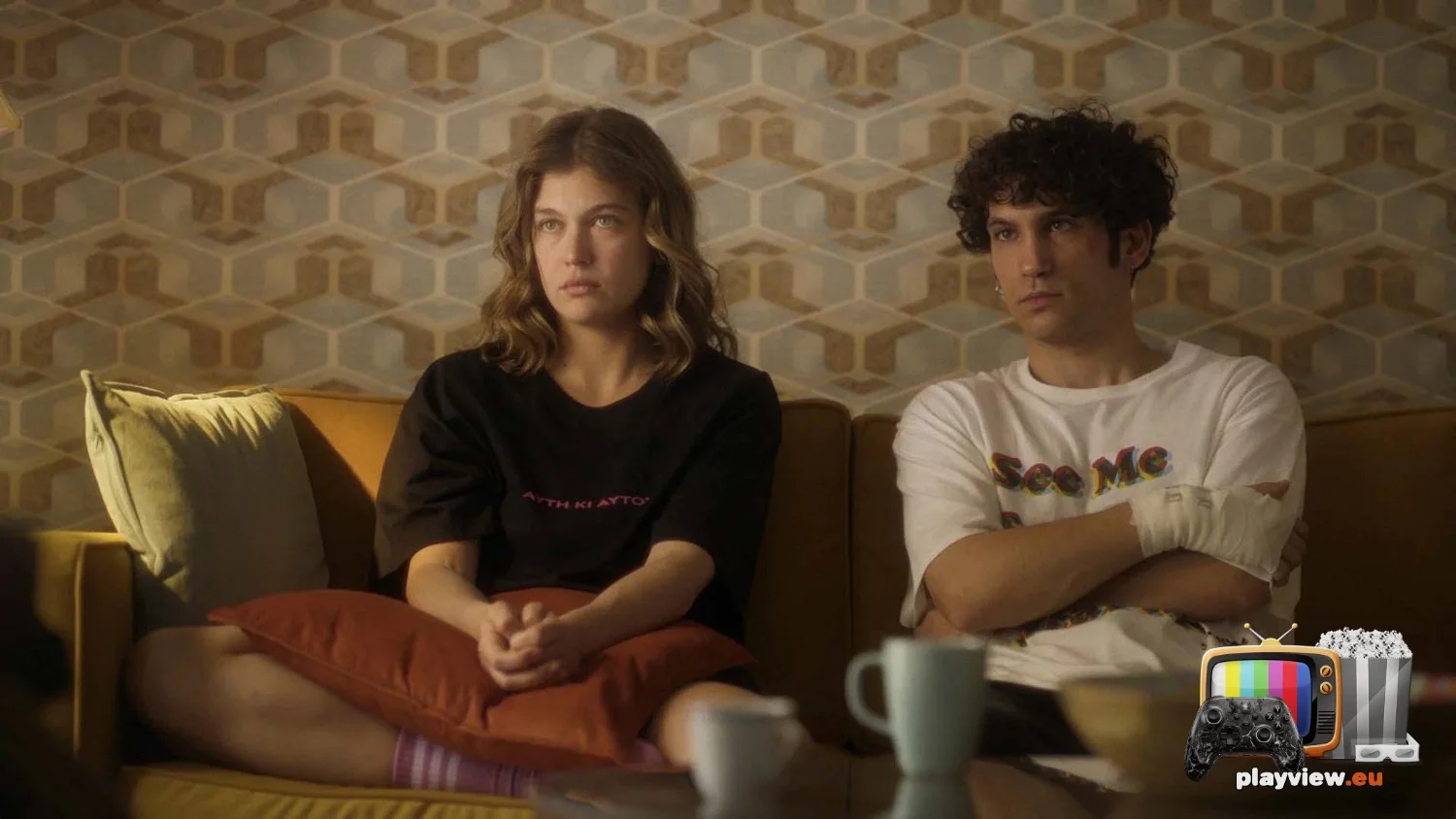
LeisureByte was more positive about the third season, praising the performances, the music, and the cinematic portrayal of Paxos. Decider, on the other hand, argued that the final season does not entirely justify its existence as a separate instalment, despite bringing the storylines to a close. Overall, Maestro continues to stand out visually and through its performances, although its pacing and handling of the plot do not always reach the same standard.
Looking at the first three seasons as a whole, I still consider Maestro an important moment for Greek television. Christoforos Papakaliatis brought a production to the screen with a clear personal identity, striking visuals, and characters who cannot easily be placed into simple categories of good and evil. The second season expanded the story, perhaps more than necessary, while the third tried to resolve the outstanding threads with less time at its disposal. Despite its shortcomings, the performances, music, and atmosphere of Paxos remain compelling reasons to return to this series.
And now there is one final stop. The fourth season has been announced as the series’ final chapter, filming has been completed, and Maestro is scheduled to return in December 2026. According to the information published so far, it is expected to arrive on Netflix in Greece and Cyprus on December 3, while December 28 has been reported as the release date for other countries. We are waiting to see how the characters’ stories will conclude and whether Papakaliatis can deliver an ending worthy of the journey they have taken us on.
If the first season introduced us to a world full of secrets, the next two showed us how difficult it is to live once those secrets come to light. Now all that remains is to see whether the final chapter will offer the closure we are hoping for or whether, as often happens in real life, some characters will simply have to learn to live with what they have done.
Because, in the end, Maestro was never just the story of a musician who travelled to Paxos. It was the story of people searching for love, freedom, and a second chance in a world where the past never truly stays behind.


